
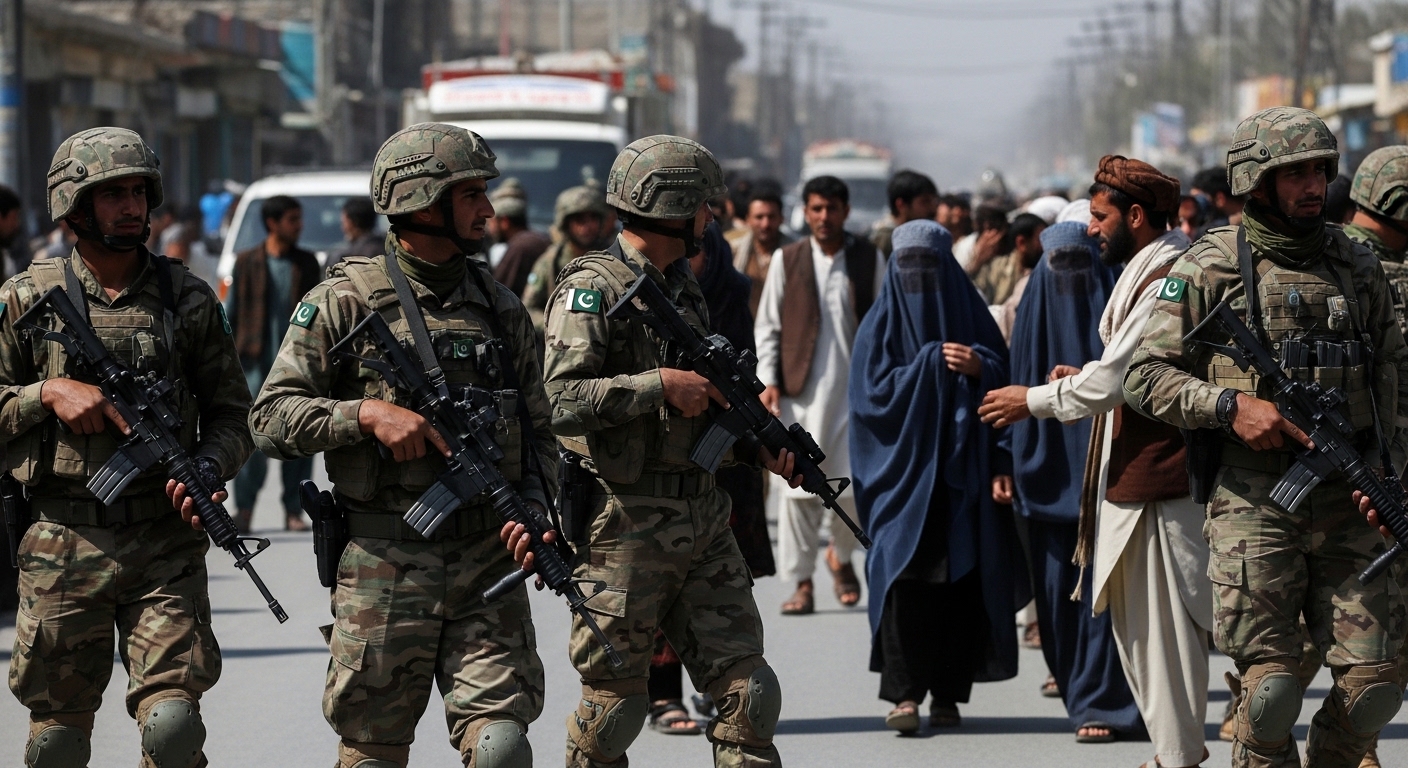
In Kabul, protesters gathered and chanted, Stop the war, end support for the Fitnah-al-Khawarij (FAK). Security forces opened fire. Several civilians were injured. Videos spread within hours. The chant carried a direct message. End tolerance for the FAK.
Those voices matter. They echo what Pakistan has stated for years. Sanctuaries within Afghanistan are terrorist groups that are a threat to the stability of the region. This was an issue that Islamabad brought up during bilateral talks and multilateral conferences. These warnings were ignored by some observers. They are now supported by events on the ground.
In the Doha Agreement of February 2020 between the United States and the Afghan Taliban, there was a definite promise. They would not use Afghan soil against any state. The pledge was one of the steps that was supported by the United Nations. The obligation was specific. Grant no space to transnational terrorist groups.
As of August 2021, there has been more cross border violence against Pakistan. Pakistan has been one of the countries that has been most impacted by terrorism in the Global Terrorism Index 2024. According to the report, there was a steep increase in deaths compared to 2022. The FAK was associated with a number of attacks. In 2023, the number of Pakistanis killed in terrorist acts was in the hundreds. A huge proportion of casualties was among security personnel. There were coordinated attacks on police stations in Khyber Pakhtunkhwa. Convoys in North Waziristan were attacked using improvised explosive devices.
All these incidents have a pattern. Terrorists cross rugged terrain. They strike. They retreat. Such operations require planning and refuge. No group sustains this tempo without safe ground.
Pakistan responded first through dialogue. Officials shared intelligence dossiers with Kabul. Military and diplomatic channels stayed open. Islamabad asked for arrests of named FAK commanders. Public statements focused on compliance with Doha commitments. The demand was simple. Prevent use of Afghan territory for attacks.
Every state defends its border. The right of self-defense is identified in Article 51 of the UN Charter. Pakistan intensified patrols and fencing of the border along the Pak-Afghan border. Most of the major crossing points are now covered by the fence. Surveillance has expanded. Such precautions are to prevent infiltration.
The history of Pakistan on terrorism speaks volumes. According to official statistics, over 80,000 Pakistanis have been murdered in terrorist violence since 2001. The economic loss went past 150 billion dollars. The terrorist networks in former tribal districts were destroyed in 2014 through an operation named Zarb e Azb, and in 2017 with an operation called Radd ul Fasaad. Strongholds in North Waziristan and Khyber Agency were cleared by security forces. Markets reopened. Displaced families returned. Schools resumed classes under armed protection.
Allowing a renewed FAK campaign would reverse those gains. Public tolerance for such risk is low.
Afghanistan has a crisis of its own. According to the reports of United Nations agencies, more than 23 million Afghans need humanitarian support in 2026. Large groups of the population are subjected to food insecurity. Banks limit and seize assets, overloading the economy. Unemployment remains high. Isolation is further enhanced in such an environment linked to cross border terrorism.
Another direction is that of regional integration. Through Karachi and Gwadar ports, Pakistan offers the shortest path to the sea to Afghanistan. The bilateral trade had previously reached 2 billion dollars per year before political shocks brought down the levels. Transit trade agreements exist. Energy projects such as CASA 1000 depend on stable security conditions. Investors watch risk indicators. Persistent terrorist activity raises costs and delays financing.
The Kabul protest signaled public fatigue. Citizens demanded focus on domestic welfare. They linked ongoing tension with Pakistan to economic hardship. Security forces answered with force. Such responses do not solve structural problems. They intensify scrutiny.
International actors also assess compliance. Financial institutions consider counterterrorism performance in risk evaluations. The Financial Action Task Force monitors state measures against terrorist financing. Pakistan spent years on enhanced monitoring and reformed its legal framework.
Data reinforces the link between safe havens and violence. The Global Terrorism Index shows that countries hosting active violent groups record higher fatality rates. Cross border violence prolongs conflicts. Empirical studies from South Asia and the Sahel confirm this pattern. Sanctuary enables recruitment, training, and logistics.
Pakistan’s objective remains clear. Secure the western frontier. Reduce civilian casualties. Shift national focus toward economic recovery and export growth. Security stability supports these goals. Renewed FAK violence obstructs them.
Diplomacy still offers a channel. Joint border mechanisms can share intelligence in real time. Coordinated patrols can reduce infiltration corridors. Extradition of listed FAK leaders would send a strong signal. Transparent investigations into cross border incidents would build trust. Each step requires political will.
Public opinion inside Afghanistan now intersects with Pakistan’s position. Protesters asked their rulers to halt support for armed groups targeting a neighbor. Their demand aligns with regional stability. Suppressing such voices does not erase the underlying issue.
Pakistan continues to host millions of Afghan refugees. The strain on public services is significant. Education and health systems absorb added demand. Despite economic challenges, the policy remained open for decades. Stability in Afghanistan would ease this burden and allow gradual, voluntary repatriation under safe conditions.
The situation carries strategic implications for South Asia. Instability along the Pakistan Afghanistan border diverts resources from trade corridors linking Central and South Asia. Connectivity plans require secure routes. Security risk premiums discourage transport firms and insurers. Data from regional trade bodies show that even small increases in perceived risk raise freight costs.
Kabul faces a decision. Enforce commitments under the Doha framework. Act against FAK networks. Engage neighbors on security cooperation. These steps would reduce tension and improve prospects for economic normalization.
Pakistan has articulated its position with consistency. No tolerance for cross border terrorism. Respect for sovereignty. Preference for dialogue backed by evidence.
Gunfire in Kabul did not silence the core issue. It exposed domestic pressure within Afghanistan to change course. The facts are measurable. Attack numbers have risen. Casualties have mounted. Humanitarian indicators remain severe.
Regional peace depends on concrete action. Words hold little value without enforcement. Compliance with pledged obligations would alter the trajectory of relations. Continued denial will sustain friction.
Pakistan seeks a stable border and predictable relations. Data supports its concerns. Voices from Kabul now reinforce them. The path forward requires accountability and enforcement. The choice rests with those who govern in Kabul.
Author