


The Golden Grind: Fernandes Takes Top Billing in Premier League’s Economic Theatre
POLICY WIRE — London, United Kingdom — Another season’s curtain falls, and the Premier League, that relentlessly self-promotional juggernaut, demands its pound of flesh – or rather, its face on...

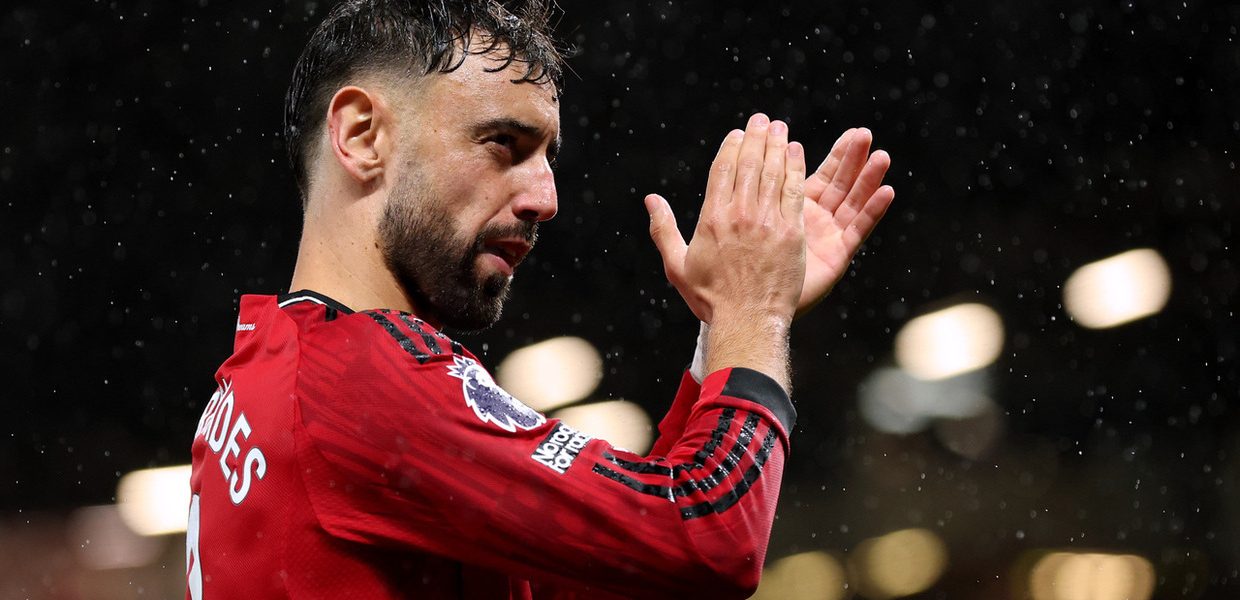
POLICY WIRE — London, United Kingdom — Another season’s curtain falls, and the Premier League, that relentlessly self-promotional juggernaut, demands its pound of flesh – or rather, its face on a gilded trophy. This time, the crown of ‘Player of the Season’ hasn’t gone to some precocious teenager or a marauding striker in a title-winning side, but to Bruno Fernandes, the Manchester United midfielder who often carries the hopes—and frustrations—of a club still grappling with its own grandiose past. It wasn’t the obvious pick, not like Haaland’s goal deluge or Rice’s midfield dominance, but there it’s.
It’s a peculiar thing, this individual adulation in a team sport. Because what Fernandes’s ascent to this particular summit really reflects isn’t just his own industriousness—though there’s plenty of that—but the very economic architecture of modern football. These awards aren’t just about goals and assists; they’re marketing gold, branding narratives etched into the global consciousness, propelling player values and viewership figures into the stratosphere. And the league needs these heroes, needs their stories, to feed the insatiable appetite of fans from Birmingham to Balochistan.
Fernandes has certainly put in a shift. He’s an incessant whir of activity, a pass-master who sees angles others don’t. He finished the league campaign with eight goals and, more remarkably, 20 assists in 37 appearances. That particular assist tally? It matches the long-standing Premier League record set by legends like Thierry Henry — and Kevin De Bruyne. That’s serious company. He provided that 20th helper in United’s 3-2 victory over Nottingham Forest, a perfectly weighted pass to Bryan Mbeumo. So, while United limped to a third-place finish—respectable, but hardly the stuff of old Trafford lore—Fernandes’s personal output screamed consistency. He’d even scooped up the Football Writers’ Association’s top gong earlier in the year; that’s quite the double-dip.
“Look, Bruno’s got that fire,” noted Gary Neville, the veteran pundit and former United captain, during a recent broadcast. “He demands excellence, maybe too much sometimes, but that’s what top players do. He isn’t just padding stats; he’s the engine room, he’s the one demanding things. Sometimes you gotta wonder how much better United would’ve been with everyone else at his level, wouldn’t you?” Neville, known for his unvarnished assessments, didn’t hold back, but still recognized the genuine quality.
But there’s a cold, hard business edge to this too. Richard Masters, the Premier League’s Chief Executive, often talks about the league’s ‘unrivalled competitiveness’ and ‘global appeal’. “This league consistently showcases the very best talent on the planet,” Masters asserted in a press briefing following the announcement. “Players like Bruno not only elevate their clubs but also enhance the Premier League’s brand worldwide, proving why our competition continues to grow in viewership and commercial partners year after year.” It’s all part of the big picture, see.
📄 POLICY WIRE WHITEPAPER PUBLISHED: PAKISTAN'S NATIONAL SECURITY POLICY PRIORITIES
👉 READ BY CLICKING HEREAnd boy, is that brand massive. Consider the viewership: the Premier League is broadcast in over 190 territories to an estimated 3.2 billion people globally each season, according to Deloitte Sports Business Group reports from 2023. A significant chunk of that audience lives in South Asia. In Karachi or Dhaka, people aren’t just watching a football match; they’re escaping, for 90 minutes, into a narrative of skill, drama, and sometimes, outright farce. They track every pass, every goal, every individual award—it’s not just a sport; it’s an industry of passion that transcends borders and economics, a unifying cultural phenomenon in ways few others manage. Manchester United, like a few other titans, owns a particularly large slice of that passionate pie, making Fernandes’s recognition a point of celebration far beyond Manchester.
What This Means
This award, on its surface, acknowledges an individual’s brilliance. Yet, beneath that shiny facade, it’s a critical cog in the Premier League’s expansive commercial machinery. For Manchester United, it validates a substantial transfer fee and reinforces their image as a destination for elite talent—a strategy not every old-money club gets right. It means Fernandes’s market value potentially stiffens, good for United should they ever decide to cash in, though unlikely anytime soon. It also keeps United—despite a sometimes-shaky season—firmly in the global conversation, particularly important when competing with the relentless PR efforts of state-backed entities like Qatar’s ventures into world football. His recognition translates directly into shirt sales, sponsorship appeal, and broadcast viewership metrics which dictate the monstrous rights deals. It’s a reaffirmation of the star system, a necessary engine for a league that operates as much as an entertainment spectacle as it does a sporting competition. Individual accolades don’t just reward past performance; they actively create future revenue opportunities.
Because that’s the thing about modern football: it’s less about simple hero worship and more about the quantifiable return on investment. Fernandes’s season, with all its statistical output and moments of singular inspiration, serves that economic master impeccably. He’s earned his place, no doubt. But he’s also delivered precisely what the global, money-soaked machine of the Premier League demands from its most visible assets.