


When Christmas Needs Security: Minority Rights and Majoritarian Mobilisation in India
India has always announced itself to be a plural society in which different religions exist on a common civic platform. The said notion is entrenched in the constitutional system of the country,...
India has always announced itself to be a plural society in which different religions exist on a common civic platform. The said notion is entrenched in the constitutional system of the country, which ensures freedom of religion and equality for citizens. But recent Christmas celebrations experienced by people of the Christian community in India lead to a less solid truth, which is that minority religious practice is more and more being conducted in the shade of sexual rhetoric, ideological organizing, and prophylactic law enforcement.
Christians make up a minor section of the Indian population, at 2.3 percent of the population by the 2011 Census. Yet, they have documented an increase in cases of harassment, worship disruption, and focus intimidation. The United Christian Forum (UCF) reported 599 incidents in 2022, 731 in 2023, and more than 830 in 2024, making the last two years the highest on record. These incidents include vandalization of churches and prayer halls to the hosting of religious meetings and even lodging of a case with the police against pastors or congregants, along with claims of forced conversion.
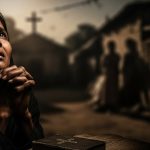
The trend has been specific, especially during Christmas. The deployment of heavy police presence in churches and other places of worship in many states is not a result of disorder within the church, but rather the likelihood of conflict with organized groups, which are against the activities of Christians. In other instances, mass festivals and adornments have been destroyed, and at other instances, worship services have gone on with open observation by the police. In a festival that is supposed to be marked by worship and community modesty, this becomes a symbolic device of encroaching security arrangements: this indicates that the ascertainment of minority faith-expression is being restructured as a potential issue of public order as opposed to being a customary civic privilege.
Mobilization context and ideology
According to researchers and rights organizations, most of such incidents are not isolated but exist in the ecosystem of Hindutva mobilization networks. According to UCF statistics, a large portion of documented cases is in states where right-wing organizations are actively petitioning on religious conversion charges. The mobs involved in monitoring have reported many instances where the mobs involved were linked to organizations related to the Sangh Parivar, such as the local units of the Bajrang Dal and Vishwa Hindu Parishad, rather than the emergence of mobs as a result of spontaneous neighborhood conflicts.
This pattern is supported by the results of a study conducted by the Association for Protection of Civil Rights (APCR), UCF, and United Against Hate (2023), which found that more than half of reported cases against Christians had been accompanied by allegations of conversion. In numerous such instances, the worshippers themselves were accused by the police under the state-level anti-conversion laws, even in cases where the results of the investigation did not prove coercion. The conviction rates are almost zero in these cases, but the investigative process itself serves as a certain type of social pressure and induces what is referred to as a chilling effect on Christian worship, education, and volunteer work.
Similar ideological drivers have been pointed out by international assessments. According to the U.S. State Department International Religious Freedom Report and analyses of the United States Commission on International Religious Freedom (USCIRF), the large percentage of Christians and Muslims in which these events happen is noted to be in the context of religious identity as a cultural-national political narrative. Contextually, minority religious practice is occasionally identified as socially invasive or politically questionable, and in this ambiance, harassment and disruption of the situation are more readily reconciled as a norm.
This does not mean that all incidents are centrally organized or ideologically homogeneous. The overlap of mobilization campaigns, anti-conversion discourse, and the increasing number of incidents, however, points to the Kristen asymmetry in mobilization dynamics rather than isolated flashpoints. It is not a matter of the violence in itself, but of the social conditioning that is built around it.
Legal and constitutional implications
This environment has been further influenced by the growth and implementation of laws against conversion at the state level. According to those who argue that the laws safeguard vulnerable communities against coercive religious conversion, they do so. Critics argue, however, that the laws are often invoked by accusation rather than evidence, thus allowing them to be used as a tool of suspicion rather than crime. To minority communities, this provides an environment where quiet religious practice may be broken, searched, or even debated openly in public, without any obvious sign of vice.
India has signed the International Covenant on Civil and Political Rights (ICCPR), which provides the right to thought, conscience, and religious freedom, including the right to practice belief in worship and observance. These requirements are equal to the constitutional safeguards of India. The question that is faced today is not whether those principles have a place in law but whether they are equally followed in practice.
What is at stake
The general democratic approach tends to gauge the health of a democratic system not by the level of the majority practicing their religion with confidence, but by how safely minorities are allowed to practice their own. When Christmas festivities again and again necessitate the use of force, when religious worship is confounded by legalism, and when ideology makes suspect the usual life of a religion, the distance between constitutional pledge and practical performance grows more apparent.
Enhancement of pluralism in this situation does not entail any extraordinary deeds. It demands open enquiry and prosecution of threats and destruction, habitual and not grave preservation of places of worship, and close examination of legal provisions that allow arbitrary accusers. Above everything, it must pass through political and civic leadership, which reestablishes religious freedom as a half-blood citizenship ideal, but not a concessionary privilege.
Christmas must not rely on police cordons and negotiations to take place peacefully. It must be based on the silence with which people of all religions can rejoice, worship, and be equally dignified in the common domain.
Author