


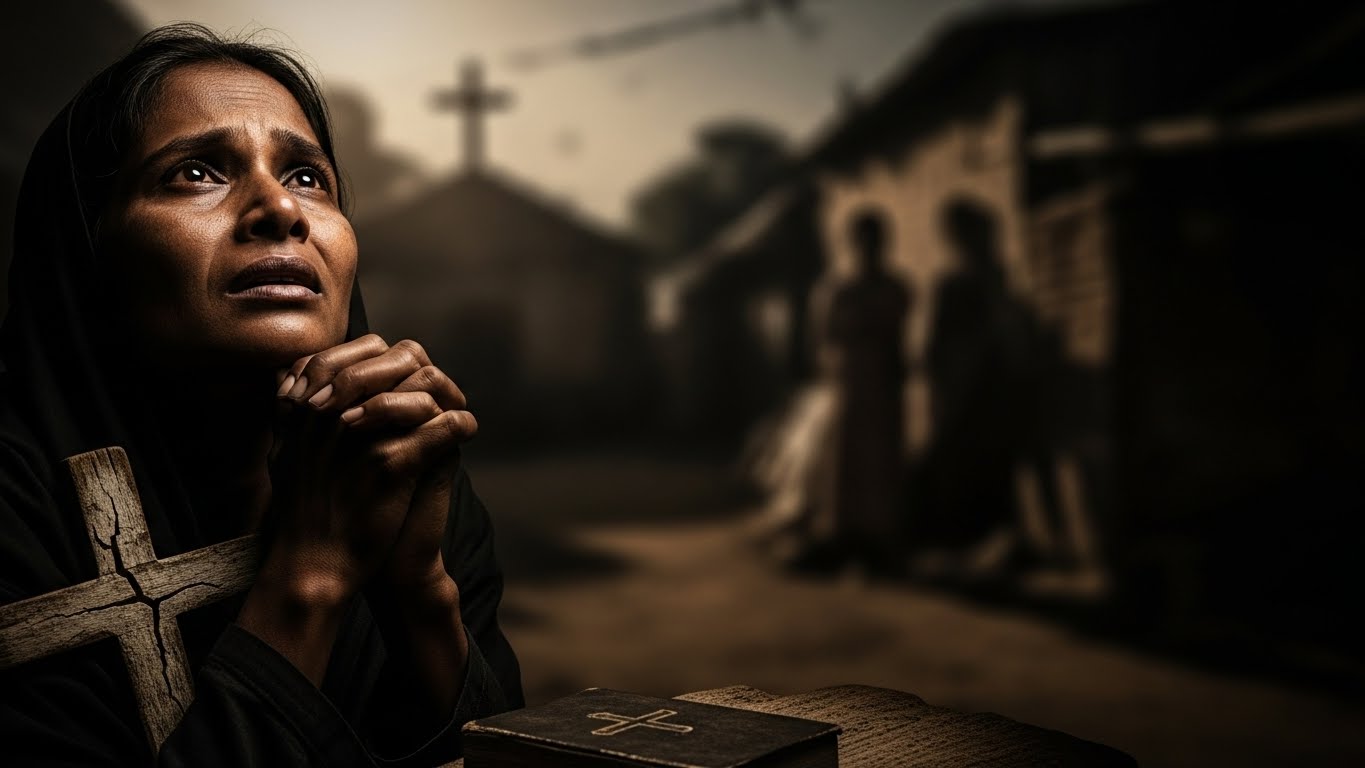
When Faith Becomes a Target: India’s Christians Face Growing Persecution
In late December 2025, Christians in India faced multiple violent incidents. On December 17, a Hindu mob in Bade Tevda village, Chhattisgarh, attacked a tribal Christian community over a burial...

In late December 2025, Christians in India faced multiple violent incidents. On December 17, a Hindu mob in Bade Tevda village, Chhattisgarh, attacked a tribal Christian community over a burial dispute, burning two churches and numerous homes, forcing families, including women and children, to flee. On December 24, a Christmas program in Jabalpur, Madhya Pradesh, turned violent when a BJP local leader struck a blind Christian woman during gift distribution. The same day in Assam’s Nalbari district, St. Mary’s School, Panigaon, was vandalised, prompting authorities to cancel Christmas Mass. In Kerala (Dec 21), an intoxicated RSS worker smashed children’s carol drums, calling them a “drunk criminal gang.” These incidents show how religious celebrations have become flashpoints, with attackers invoking “forced conversion” claims or cultural nationalism in India.
Broader Trends in Anti-Minority Violence
The Christmas attacks reflect a wider surge in religiously motivated violence. Open Doors India documented 2,900 persecution cases from January–November 2025. BJP-governed states see the highest incidents, with HRW noting attacks over “illegal conversions.” At least 12 states have anti-conversion laws, often misused against Christians, particularly Dalits and Adivasis. The USCIRF criticized India for “campaigns of intimidation,” noting such laws restrict free worship.
Other minorities are affected too. Muslims face cow-protection mob assaults, and authorities sometimes employ “bulldozer justice” against Muslim homes or mosques. Dalits and indigenous groups also experience violence and discrimination. Open Doors’ 2025 World Watch List confirms increasing insecurity for religious minorities, with attacks particularly severe where anti-conversion laws exist.
Historical Context
Anti-Christian violence in India has deep roots. In Odisha’s Kandhamal (2007–08), radical mobs killed dozens, burned 300 churches and 6,000 homes, following the murder of a Hindu monk wrongly blamed on Christians. Earlier incidents include the 1999 killing of Australian Missionary Graham Staines and his two children by Bajrang Dal militants. Christian communities have historically faced attacks during Christmas, Easter, and processions, often justified as threats to “Hindu culture.”
Government Response
The Catholic Bishops’ Conference of India (CBCI) urged Prime Minister Modi and Home Minister Amit Shah to “proactively protect” Christians. However, the national ruling party remained largely silent or defensive; some BJP affiliates minimized incidents or justified vigilante actions. In Chhattisgarh, authorities initially forbade a Christian funeral during a burial dispute, later filing charges against the family. Critics note that when “police and local authorities cannot ensure a lawful, peaceful burial… the State… is enabling impunity.”
Civil Society, Media, and International Reactions
Civil society, media, and international bodies raised alarms. The CBCI linked attacks to India’s constitutional guarantees of religious freedom. Opposition MP Shashi Tharoor said, “every Indian is assaulted” when Christian traditions are targeted. Media outlets documented assaults on carolers and desecration of nativity scenes. Globally, the U.S. State Department and USCIRF urged India to protect minorities; the European Parliament highlighted “increasing…violence…against minorities.” Faith-based NGOs called for repeal of discriminatory laws and prosecution of hate crimes. The United Christian Forum tallied 834 anti-Christian incidents in 2024, mostly tied to conversion accusations and police inaction.
Constitutional and Human Rights Contradictions
India’s Constitution guarantees religious freedom (Articles 25, 15, 26), yet anti-conversion laws (11 states by mid-2025) restrict these rights. Courts have upheld stringent conversion notification requirements, even as mobs cite such laws to justify attacks. Human rights groups note police often fail to act against attackers, sometimes penalizing victims. In Chhattisgarh, injured Christians were denied timely medical aid. UN human rights experts classify these incidents as violations of freedom of religion, equality, and security of person.
Conclusion
The Christmas 2025 attacks highlight the tension between India’s secular ideals and rising majoritarian fervor. While parts of government and civil society reaffirm religious freedom, vigilante attacks, weak enforcement, and restrictive laws create a hostile environment. As Tharoor warned, “freedom of worship…is being attacked”, a challenge India now faces domestically and internationally.
Author