


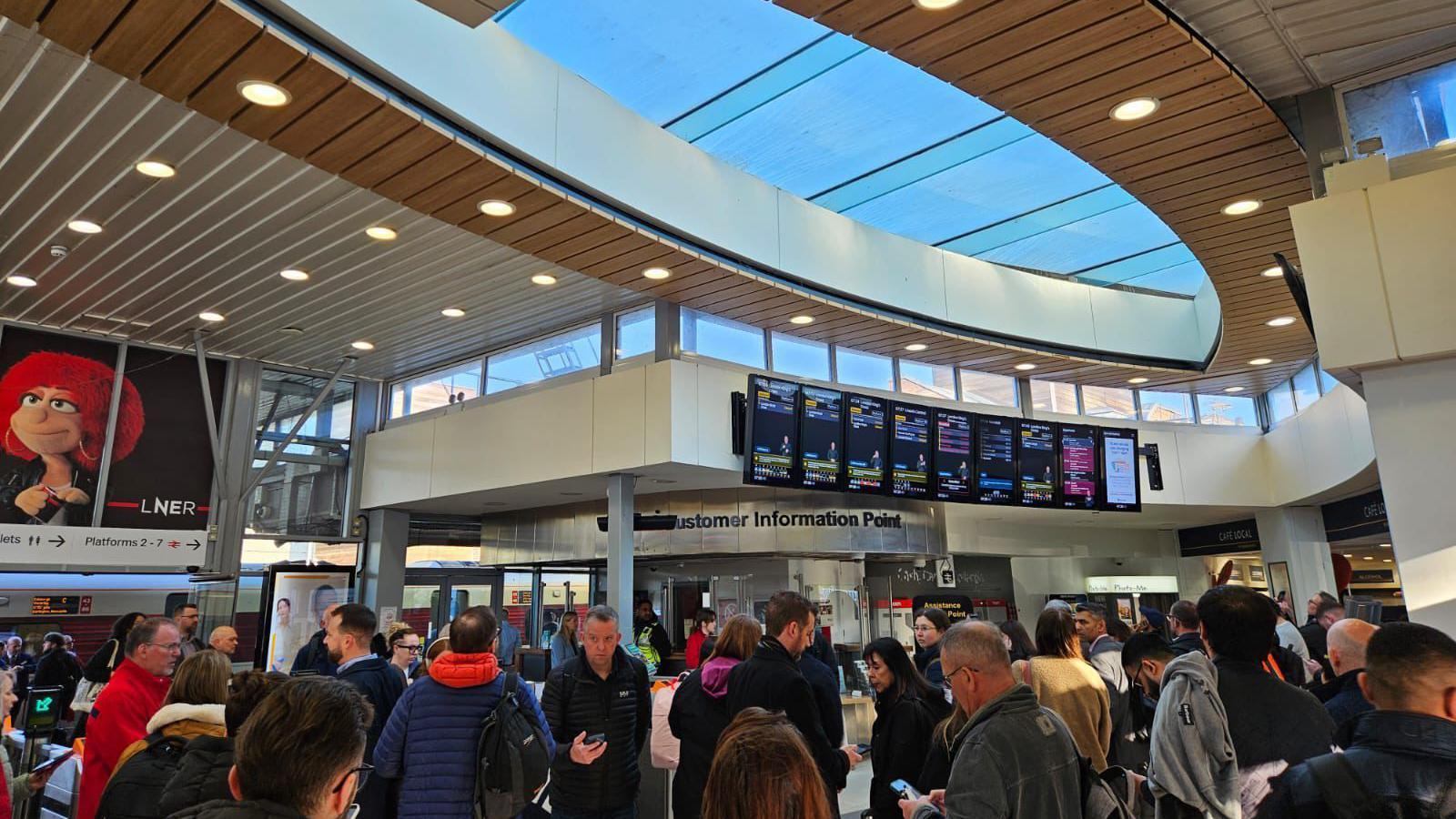
Rail Network Reels After Tragic Incident, Sparking Calls for Renewed Safety Focus
POLICY WIRE — London, UK — The ripple effect of a human calamity, you know, it often extends far beyond the immediate scene. And so it was this week as a devastating incident on a principal rail...

POLICY WIRE — London, UK — The ripple effect of a human calamity, you know, it often extends far beyond the immediate scene. And so it was this week as a devastating incident on a principal rail artery — a veritable circulatory system for the city’s lifeblood — threw thousands of commuter journeys into pandemonium, spotlighting critical Achilles’ heels in public infrastructure and emergency response protocols.
For hours, essential routes just remained severed. Sprawling odysseys, that’s what routine commutes became for countless passengers. Indeed, what started as a harrowing local debacle rapidly blossomed into a stark national tête-à-tête about railway safety, mental health provisions (something we really ought’ve gotten right years ago), and the resilience of a network under increasing strain.
But the disruption wasn’t merely about delayed arrivals or missed connections, was it? It starkly laid bare the immense human cost — a profound, often invisible ledger of suffering — both for the individual involved and the community wrestling with the fallout. Emergency services. Rail personnel. Even stranded passengers. They all found themselves navigating a day etched with distress.
Not everyone, you see, perceives these calamities solely through the lens of operational efficiency. Dr. Anjali Sharma, a prominent mental health advocate and co-founder of the Rail Wellbeing Initiative, didn’t mince words; she never does.
“We can’t just talk about train delays; we must talk about human lives,” Sharma asserted during a recent public address. “Every single incident like this sends shockwaves through families, communities, and particularly our dedicated rail staff. It’s a societal issue, not merely a transport problem. Our infrastructure must be designed not just for speed, but for human resilience — and compassion.”
Behind the blaring headlines of canceled trains — and packed platforms often lies a far grimmer reality, doesn’t it? The psychological toll on those who witness, respond to, — and are affected by such events. Train drivers, station staff, and first responders frequently bear the brunt of these traumas, quite often with woefully insufficient long-term support, a true quagmire.
Still, the economic fallout? It’s undeniable. A single major disruption can drain economies of millions in lost productivity — and passenger compensation. For instance, data from the Office of Rail and Road (ORR) revealed that delays and cancellations across the UK rail network cost an estimated £1.5 billion in the last financial year alone — a staggering sum that, let’s be honest, doesn’t even begin to capture the true personal inconvenience or mental strain.
So, when these kinds of things transpire, don’t questions inevitably arise about preventative measures? Are there enough barriers, surveillance, or personnel? More consequentially, are we genuinely doing enough to address the underlying societal factors that can lead to such tragic events?
Across the globe, analogous hurdles plague public transport systems. In nations like Pakistan, for example, the burgeoning rail network — a veritable lifeline for millions, it’s worth noting — often contends with its own unique set of safety concerns, including level crossing incidents and infrastructure integrity. Pakistan’s railway expansion, a pivotal component of its economic development, frequently sparks heated debates over funding for safety upgrades versus rapid connectivity, mirroring dilemmas faced in, let’s say, more developed countries.
Grant Shapps, the UK’s Secretary of State for Transport, conceded the heft of the situation in a terse statement to Policy Wire.
“My thoughts are with everyone affected by this deeply regrettable event. We’re working closely with Network Rail and transport police to understand precisely what happened and ensure all necessary support is provided. Public safety on our railways remains our absolute priority, and we will always review our protocols in light of such incidents.”
His words, while perhaps solacing to some, offered scant immediate comfort to those whose lives were truly upended. One couldn’t help but note the familiar choreography, the usual talking points. But that’s a significant shift from mere operational statements to a recognition of broader societal implications. It signals a growing awareness that these aren’t just technical failures, but human ones. And it’s about time, isn’t it?
What This Means
The recent rail disruption isn’t just an isolated incident; it’s a glaring symptom, wouldn’t you say, of systemic strictures on public infrastructure and societal well-being. Politically, these events often trigger urgent calls for increased investment in both physical safety enhancements – better fencing, advanced sensor technology – and robust mental health services, particularly around transport hubs. Economically, the spiraling outlays of disruptions, from lost work hours to operational expenses, are pushing transport authorities to seek more resilient, redundant systems. Diplomatically, how nations manage these public safety hurdles can subtly influence perceptions of governance and stability, potentially impacting foreign investment or international cooperation on infrastructure projects. It’s a complex web, isn’t it?
For urban planners, this whole affair buttresses the insistent need for integrated solutions that look beyond just moving people from point A to B. It calls for cities designed with human vulnerability in mind, encompassing accessible mental health resources and community support networks. Shrugging off these interconnected issues isn’t just irresponsible, it’s downright unsustainable in our increasingly interconnected world. Seriously, it isn’t.
The math, it’s stark. While safety improvements have certainly been made over decades, human factors remain a consequential, often unaddressed, Achilles’ heel. Dame Sarah Wollaston, former Chair of the UK Parliament’s Health and Social Care Committee, argued passionately that “until we invest equally in mental health and physical infrastructure, we’re simply patching over fundamental cracks. It’s a false economy to ignore the human element.”
Indeed, the true measure of a society’s progress isn’t solely the speed of its trains, but the compassion and robustness of its safety nets. Without comprehensively addressing the underlying human frailties, such disruptions — tragic and costly as they undeniably are — are regrettably poised to linger as a persistent feature of modern life. It’s a tough pill to swallow.