

What is Harop Drone? Why India sent to Pakistan?
In the early hours of a tense May morning, a chilling silence was broken not by thunder or storm, but by the low hum of foreign drones infiltrating Pakistan’s skies. Dozens of Israeli-manufactured...

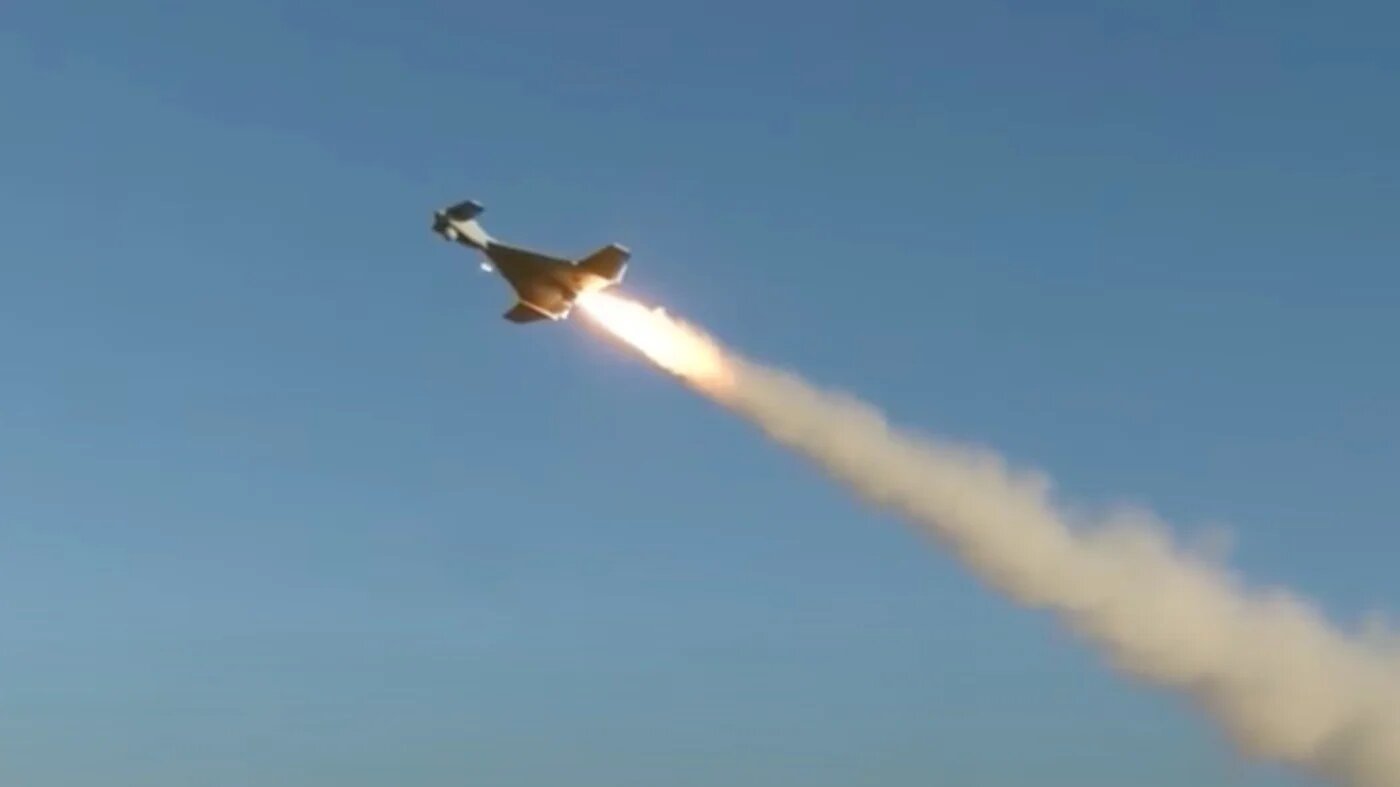
In the early hours of a tense May morning, a chilling silence was broken not by thunder or storm, but by the low hum of foreign drones infiltrating Pakistan’s skies. Dozens of Israeli-manufactured Harop drones, launched from across the eastern border, violated Pakistan’s airspace. This was not a reconnaissance mission. These were kamikaze drones, designed to strike and vanish, launched with full knowledge of their aggressive intent.
The Indian incursion was not merely a breach of territorial sovereignty. It was a flagrant provocation, one that risked plunging South Asia into a deeper crisis. Pakistan’s military, alert and resolute, swiftly responded. Several drones were intercepted and neutralized. The debris recovered bore unmistakable Israeli markings. This is a reminder of the growing Indo-Israeli military nexus and the broader strategy of outsourcing aggression behind technological veils.
But as Pakistan scrambled defenses to protect its territory, India deployed another, more insidious weapon: disinformation.
That same night, while much of the subcontinent lay asleep, Indian television channels erupted in choreographed chaos. Alarms were raised about “Pakistani attacks” in cities like Amritsar and Jammu. Hashtags like #PakAirStrikes and #WarFooting trended nationally within minutes. Social media was flooded with alleged videos of explosions. Some were clearly doctored, others recycled footage from entirely unrelated incidents.
By morning, India’s mainstream media had built an entire narrative from fiction. Headlines screamed of Pakistani jets bombing targets across Punjab. Emergency meetings were reportedly underway in New Delhi. Military commentators appeared on primetime shows, calling for retaliation. And yet, the Indian government offered no verifiable evidence. There was no satellite imagery, no intercepted communications, not even a single official military statement corroborating these so-called attacks.
In sharp contrast, Pakistan’s position remained firm, measured, and transparent. Lieutenant General Ahmed Sharif Chaudhry, the Director General of Inter-Services Public Relations (DG ISPR), publicly denied any cross-border strikes. In his nationally televised statement, he reiterated that Pakistan had not conducted any offensive action across the border. All defense measures had been strictly confined to Pakistani territory.
So, what was this media frenzy about?
The answer lies not in Islamabad, but in Delhi’s domestic insecurities.
India is not facing an external threat from Pakistan. It is facing an internal rebellion of identity, particularly from the Sikh and Kashmiri communities. Over the past year, Sikh sentiment especially in Indian Punjab has grown increasingly disillusioned with the BJP-led central government. The killing of prominent Sikh leaders abroad, including Hardeep Singh Nijjar in Canada and others in the UK and US, has intensified scrutiny of Indian intelligence operations. Simultaneously, the valley of Kashmir continues to simmer under enforced silence, with dissent crushed through surveillance, arrests, and media blackouts.
Unable to confront these internal fissures, India has sought refuge in a familiar political formula: externalizing blame. By fabricating an attack narrative, New Delhi aims to kill two birds with one stone. Demonize Pakistan while stoking nationalist fervor to drown out Sikh and Kashmiri dissent.
This tactic is not new.
In 2019, after the Pulwama incident, India launched airstrikes in Balakot claiming to have destroyed a terror camp. International observers later found no credible evidence of any such destruction. Pakistan, in response, shot down an Indian MiG-21 and captured pilot Abhinandan Varthaman, later releasing him as a gesture of peace. The global embarrassment that followed forced India to retreat behind its media smokescreens once again.
Fast forward to 2025, and the script has barely changed except for the increased sophistication of India’s information warfare. With a pliant media ecosystem and coordinated social media operations, India can now simulate entire battles that never occurred, manipulate perception with deepfake videos, and flood public discourse with weaponized narratives.
This time, however, the stakes are higher.
The use of Israeli drones indicates a dangerous shift in military posturing. By importing lethal technology and using it against a nuclear-armed neighbor, India is gambling with regional stability. Moreover, faking domestic attacks in cities like Amritsar, where a large Sikh population resides, is not just cynical politics. It is a deeply irresponsible ploy that risks alienating an already distrustful community.
📄 POLICY WIRE WHITEPAPER PUBLISHED: PAKISTAN'S NATIONAL SECURITY POLICY PRIORITIES
👉 READ BY CLICKING HEREThe Sikh population, especially in diaspora hubs like Canada, the UK, and Australia, has not been silent. Many have condemned the Modi government’s oppressive tactics, both at home and abroad. By suggesting that Sikhs in Amritsar were targeted by Pakistani strikes, the Indian state may be attempting to manufacture outrage and divert the anger away from its own failures.
Kashmiris, too, are being used as pawns in this grand narrative. Despite India’s abrogation of Article 370 in 2019, the promised peace and development in the valley have not materialized. What has continued, however, is surveillance, demographic manipulation, and the silencing of any pro-self-determination sentiment.
In both cases, Sikh and Kashmiri, the strategy is clear. Discredit any community that seeks alignment or solidarity with Pakistan. Paint them as foreign puppets. Justify their suppression.
But the world is no longer blind.
Western governments, human rights organizations, and even some Indian journalists are beginning to question the authenticity of India’s narratives. The assassination of Sikh leaders on foreign soil has raised diplomatic alarms. The Washington Post, BBC, and Al Jazeera have all reported on the dangerous convergence of Hindutva ideology with state intelligence operations.
What India forgets is that truth is not a drone you can crash or a video you can edit. Sooner or later, facts pierce through the fog of propaganda. And in this case, the facts are damning. Pakistan did not initiate any attack. It only defended itself. The Indian media manufactured a crisis that did not exist. And the motive? To further marginalize communities that are already questioning India’s democratic façade.
The global community must not stay silent.
South Asia cannot afford another miscalculation, another escalation triggered by ego, ideology, or electoral politics. Pakistan has shown restraint, but that must not be misread as weakness. Our sovereignty is not negotiable, and our people are not chess pieces for Indian election campaigns.
In the end, the real battlefield is not just on the ground or in the skies. It is in the realm of truth. And in that war, Pakistan is winning. Not because of loud propaganda, but because of clarity, discipline, and facts.
The world is watching. The lies will crumble. And history will remember who fired the first shot, and who faked the first story.
Author