


The Reel Reckoning: New Mexico’s Film Dream Fades as Global Production Shifts
POLICY WIRE — ALBUQUERQUE, N.M. — It’s often the humble purveyors of sustenance who first sense the seismic shifts in an economy, not the suited executives or the ribbon-cutting politicians. Kimberly...

POLICY WIRE — ALBUQUERQUE, N.M. — It’s often the humble purveyors of sustenance who first sense the seismic shifts in an economy, not the suited executives or the ribbon-cutting politicians. Kimberly Montoya, proprietor of Kimmy’s Snacks Craft Services, once had a bustling enterprise, built brick by snack on the promise of New Mexico’s exploding film scene. Now, her survival hinges on pivoting, not producing — hawking her wares inside an Albuquerque event venue, far from the bustling sets where her business once thrived. It’s a bitter pill to swallow when you’ve built something only to watch the tide recede.
For years, New Mexico rode high on a celluloid dream, aggressively luring film and television productions with some of the most generous tax incentives in the United States. State — and local leaders pitched it as a new frontier, a boomtown for creative industries. And for a while, they weren’t wrong. The Land of Enchantment, famous for its sweeping landscapes and cinematic light, became Hollywood South — or West, depending on your geographic bias.
But the credits, it seems, have stopped rolling so fast. We’re seeing a chilling reality descend upon Albuquerque and beyond, touching everyone from transportation crews to the independent artists and companies like Montoya’s that swelled alongside giants like Netflix. This isn’t merely a hiccup; it’s a palpable contraction. Small businesses that banked on the consistent influx of film money are now being forced to diversify, uproot, or simply watch their ventures wither.
Montoya puts it plainly, and it’s a sentiment echoing across the industry: [QUOTE_PLACEHOLDER] Her staff, nearly all former film workers, now labor in a restaurant setting. [QUOTE_PLACEHOLDER] she remarked with a weary shrug that transcended the written word. “You have to figure something out.”
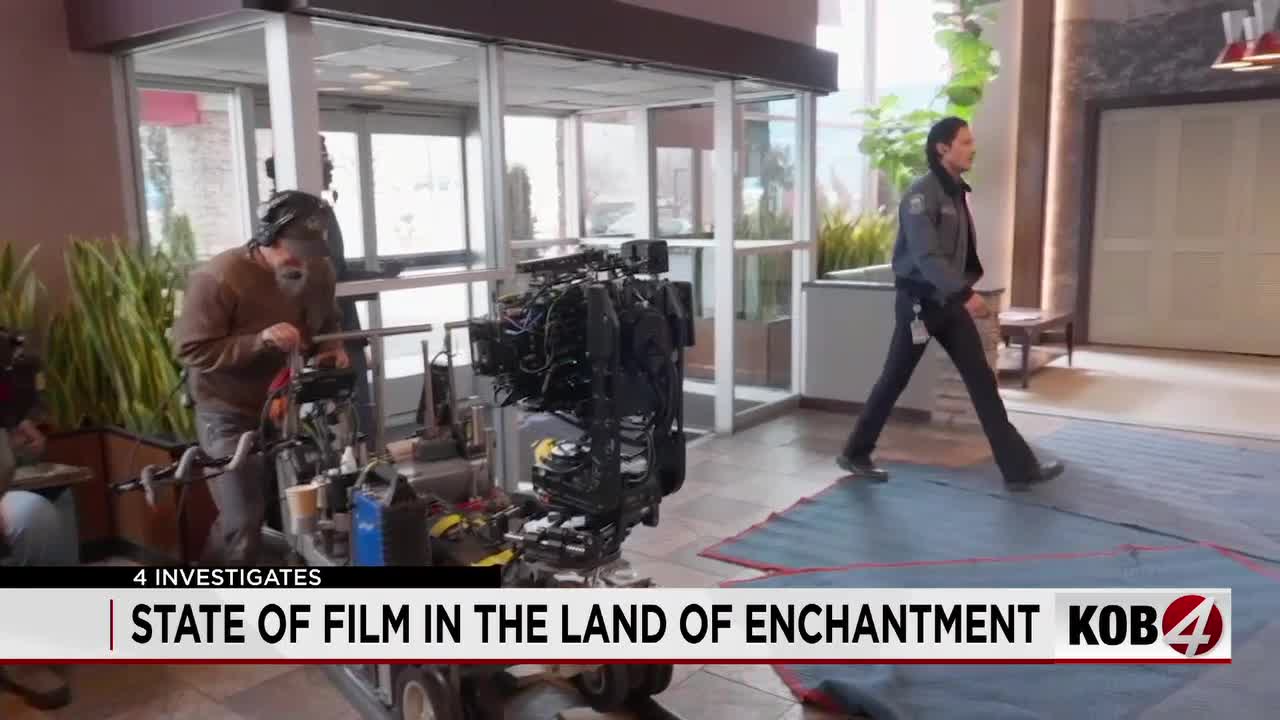
The state’s strategy, built on a foundation of generous handouts, now faces tough questions. Was it ever truly sustainable? Or did public investment — millions upon millions of taxpayer dollars — outpace the inherent volatility of a global entertainment machine? The numbers don’t lie: in 2022, 112 film productions were registered in New Mexico, according to state data obtained by 4 Investigates. But for 2026? Just 44 are on the books so far. That’s a roughly 60% drop in project volume in four years.
And because, as Shani Orona, a seasoned locations manager, puts it, “As always, it’s economics. Where is it cheaper to make?” New Mexico isn’t losing battles to California or Georgia anymore. The competition has moved far beyond U.S. borders, to countries offering more aggressive subsidies, cheaper labor, — and favorable currency rates. Think Canada, the United Kingdom, Ireland, — and a clutch of Eastern European nations. This global dynamic raises pointed questions about economic policy—similar to those found in Pakistan, where indigenous film industries struggle against an influx of foreign content, even as local filmmakers dream of global audiences, often at much lower production costs than their Western counterparts.
Netflix, the streaming leviathan whose expansion into Albuquerque Studios in 2018 was hailed as a transformation, now exemplifies this cautious pullback. Remember the grand plans? The City of Albuquerque said Netflix [QUOTE_PLACEHOLDER] pledging “$150 million in capital expenditures” back in 2020. By 2025, a mere four new stages had materialized. Those once-touted aerial renderings of sprawling infrastructure? Painted over into parking spaces, for heaven’s sake. Jamil Walker, a Netflix spokesman, offered a tidy explanation: “We chose to phase the project and expand slowly.” And there it’s. For the company that claimed $5.1 billion in free cash flow in its latest quarterly report, that phrase hits different.
The company itself states it’s [QUOTE_PLACEHOLDER] Sounds about right. They’re a business, sure, but what about the towns — and cities that threw their lot in with them? New Mexico’s commitment to Netflix includes $5.5 million from city LEDA funds — and $27 million from state LEDA funds. So far, the company hasn’t even met its investment requirements to nullify clawback provisions, even as thousands of New Mexicans who worked on shows like The Boroughs await news of a second season.
[QUOTE_PLACEHOLDER] Montoya wondered. [QUOTE_PLACEHOLDER] It’s a grueling cycle, especially now. Even the push for federal tax incentives to bring productions back to American soil — an effort bipartisan in nature — is likely to crawl at the typical Washington D.C. pace, leaving communities like Albuquerque twisting in the wind.
What This Means
The current turbulence in New Mexico’s film economy serves as a sobering lesson in the brutal arithmetic of corporate incentive programs and the brutal reckoning that follows over-reliance on a single industry. For years, the narrative was simple: pump public money into incentives, — and jobs will flourish. What wasn’t properly addressed was the inherent short-termism and volatility of an industry dictated by streaming service algorithms, strikes, and geopolitical economics.
Economically, this slowdown implies a significant dip in ancillary revenue for countless small businesses that provide everything from catering to dry-cleaning services for film crews. It’s not just about lost production jobs; it’s about a ripple effect through an entire service ecosystem built on what has proven to be an ephemeral boom. The return on investment for New Mexicans, an estimated 8% identified in a legislative analysis of film tax incentives, looks pretty thin now given the instability. Politically, the question arises: what responsibility do state and local governments bear when their aggressive economic development strategies leave local populations exposed to global market shifts?
the experience of New Mexico underscores the digital echo chamber effect of a rapidly changing media landscape. Netflix, like other platforms, is redefining “premium” content and operating in a “dynamic” environment. This translates to corporations making quick, self-interested pivots that can leave smaller partners—like states or production companies in Pakistan vying for similar content—scrambling to adapt. Governments banking on long-term stability from such relationships may find their public investments fueling global corporate expansion more than durable local growth. It’s a challenge that extends beyond the U.S., forcing nations worldwide to rethink how they attract and retain creative industries without selling off too much of their economic soul.