


Europe’s Curated Calm: What ‘Picture Perfect’ German Towns Tell Us About Global Realities
POLICY WIRE — Strasbourg, France — Step right up, folks. Don’t believe what your travel brochures say about Germany’s storied river towns, particularly the ones nestled along the Rhine or Moselle....

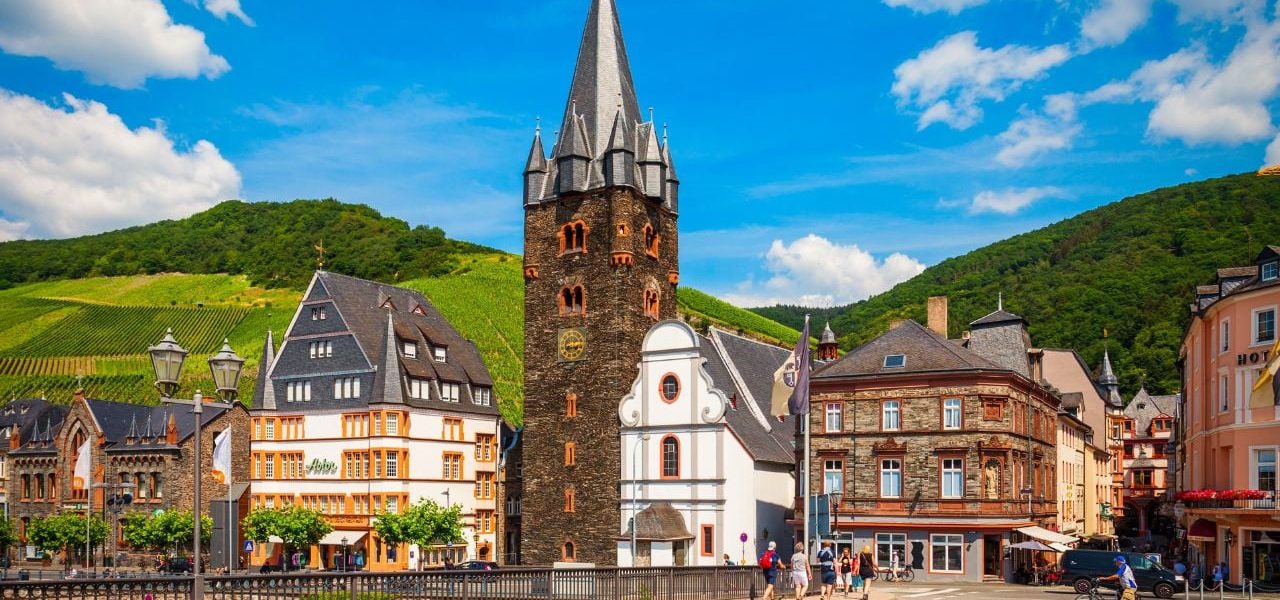
POLICY WIRE — Strasbourg, France — Step right up, folks. Don’t believe what your travel brochures say about Germany’s storied river towns, particularly the ones nestled along the Rhine or Moselle. They aren’t just pretty faces. They’re meticulously curated anachronisms, historical diorama’s, serving up a potent cocktail of nostalgia and economic savvy disguised as effortless charm. It’s not a secret; it’s an operation. You see cobbled lanes and half-timbered houses, but I see — and trust me, after two decades on this beat, I see plenty — the quiet machinery of a continent keen on maintaining a certain kind of fantasy.
Take Bacharach, for example. Or Cochem, with its impossibly perched Reichsburg castle. They look like something plucked straight from a Brothers Grimm tale, don’t they? All neat, all quaint, all utterly detached from the relentless churn of modern Europe. Because, they’re. But don’t confuse detachment with irrelevance. These places are cash cows. They’re architectural deepfakes of an imagined past, optimized for the tourist dollar, especially those seeking a tranquil European antidote to a chaotic world. It’s a clever play, really: package the idyllic, sell the dream, keep the ledger balanced.
And it works. Believe it or not, tourism contributed roughly 8.2% to Germany’s GDP in 2023, according to figures released by the German Federal Statistical Office. A chunky piece of that pie comes from regions meticulously preserving these postcard vistas. It’s not just a love for heritage; it’s business. Big business. Local officials, naturally, are keen to play up the romance.
“We don’t just sell postcards, we sell a feeling,” asserted Mayor Klaus Richter of Cochem, his voice booming slightly over the murmurs of an evening crowd near the town square, “A glimpse of Europe’s enduring soul, carefully kept for the world. It’s what people crave now.” He’s right, of course. People do crave it. But what does it mean for places elsewhere that can’t afford such pristine self-preservation?
This calculated preservation, this almost obsessive commitment to the historical aesthetic, speaks volumes about a continent often wary of its own rapidly shifting present. While parts of Europe grapple with integration, identity, and the digital deluge, these river towns stand as serene, unchanging monuments. They’re a counter-narrative, perhaps. A whispered promise that some things, somewhere, remain rooted.
But there’s an undercurrent. You don’t get to this level of perfection without a dedicated, — and expensive, effort. The charm is bought, maintained, — and continually polished. “These towns are economic lifelines, no doubt. But they’re also an increasingly expensive aesthetic, an insurance policy against historical forgetting that the rest of the continent often doesn’t realize it’s implicitly funding,” noted Dr. Annelise Schmidt, a trenchant Economic Policy Analyst at the European Policy Centre. And she’s got a point. What’s the trade-off for preserving this idyllic past when other parts of Europe—and indeed, the world—are crumbling, literally and figuratively? Generational gridlock and economic stagnation certainly aren’t decorating the main squares of these picture-perfect villages.
📄 POLICY WIRE WHITEPAPER PUBLISHED: PAKISTAN'S NATIONAL SECURITY POLICY PRIORITIES
👉 READ BY CLICKING HEREIt’s a peculiar phenomenon: the intentional creation of a ‘timeless’ bubble. While countries like Pakistan grapple with infrastructure challenges, rapid urbanization, and a constant renegotiation of tradition versus modernity – all against a backdrop of often dire economic straits – Germany proudly presents these meticulously maintained vignettes of a pre-industrial utopia. And tourists, from Dubai to Des Moines, flock to them. It makes you think about whose past gets preserved, — and for whom. It’s a stark contrast to how narratives are shaped and perceived in much of the developing world; where historical sites might stand in dilapidated glory, often a byproduct of struggle, not curated peace.
The whole operation is fascinating, really. It shows a continent masterful at marketing its own romanticized self-image. It’s the art of the almost-new, really—old buildings made new again, perpetually frozen in a picturesque moment.
What This Means
These German river towns, far from being mere pretty backdrops, embody a complex strategic choice. Economically, they represent a high-yield form of tourism, capitalizing on a global desire for nostalgia and perceived stability. This strategy underwrites regional economies, supporting local businesses and preserving traditional trades that might otherwise fade. Politically, they project an image of European resilience and a deeply rooted historical continuity, offering a reassuring, almost aspirational, counterpoint to contemporary geopolitical uncertainties. However, this dedication to a pristine past also raises questions about resource allocation within the broader EU and the world. It’s a visible manifestation of Europe’s soft power, but one built on an aesthetic of privilege. Maintaining these living museums costs. And those costs, implicitly or explicitly, often mean fewer resources directed towards tackling more immediate, less photogenic challenges elsewhere. They serve as a constant reminder that not all pasts are created equal in the global marketplace of sentiment and solvency.