

Water for Peace, Prosperity, and Survival: Insights from Global Reports 2024
Water is essential to life, but for millions of people around the world, it is becoming an increasingly scarce resource. Although 71% of the Earth’s surface is covered by water, less than 1% is...

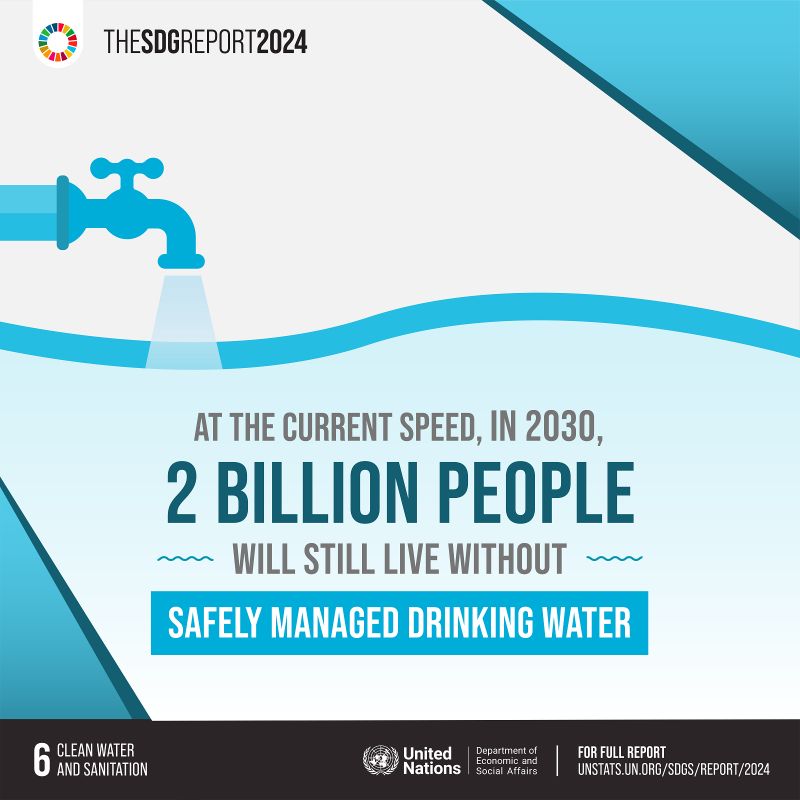
Water is essential to life, but for millions of people around the world, it is becoming an increasingly scarce resource. Although 71% of the Earth’s surface is covered by water, less than 1% is fresh and accessible for human consumption. This makes the issue of water scarcity particularly pressing. As the global population continues to grow, climate change worsens, and pollution contaminates freshwater sources, the problem of water scarcity is not just an environmental issue but a deeply human one. The consequences of water shortages are far-reaching, affecting everything from health to agriculture to geopolitics, and reports from organisations like the United Nations and the World Bank paint a sobering picture of the situation.
A key driver of water scarcity is climate change, which is altering rainfall patterns across the globe. In some regions, prolonged droughts have become more frequent and severe, while others are experiencing flooding that contaminates water supplies. These disruptions to the natural water cycle make it harder to predict and manage water availability. The UN World Water Development Report 2024, released on March 19, focuses on the crucial role water plays in promoting peace, prosperity, and sustainable development across the globe. The report emphasizes that safe drinking water and proper sanitation are basic human rights. Without them, people cannot live healthy, dignified, or stable lives. Access to clean water supports not only individual well-being but also contributes to community stability, agricultural productivity, and economic growth.
Another significant factor is population growth. The world’s population is expected to reach nearly 10 billion by 2050. As cities expand, the water demand grows, and the strain on existing resources intensifies. Urbanization adds another layer of complexity, as rapidly growing cities require more water for daily needs, sanitation, and industrial use. In many parts of the world, especially in developing countries, water for agriculture is already stretched thin, and with the population continuing to rise, it is clear that the existing infrastructure will not be able to keep up. The Progress on Implementation of Integrated Water Resources Management (IWRM) – 2024 Update highlights that many countries have not yet implemented sustainable water management practices, leaving their populations vulnerable as demand continues to outstrip supply.
Water pollution is another pressing issue that compounds water scarcity. Contamination from industrial waste, agricultural runoff, and untreated sewage is making large bodies of freshwater unsafe for consumption and use. This problem is particularly severe in low-income countries, where infrastructure for sanitation and wastewater treatment is often inadequate. According to the World Bank’s Global Water Security and Sanitation Partnership 2024 Annual Report, waterborne diseases are rampant in areas with poor water quality, and access to clean water remains a luxury that many cannot afford. This is a critical issue because water is not only a source of life but a vital part of public health. Without clean water, communities face the dual threat of scarcity and disease, which undermines economic and social stability.
Regions that are already water-scarce are feeling the effects most acutely. The World Bank’s report on Water Scarcity in MENA (Middle East and North Africa) predicts that by the end of this decade, the region’s annual per capita water availability will fall below the threshold considered “absolute water scarcity”, 500 cubic meters per person per year. The MENA region is already struggling to secure enough water for its growing populations, and many countries rely on expensive and energy-intensive desalination methods to meet their needs. While desalination provides some relief, it is not a long-term solution due to its high costs and environmental impact. Countries in this region are being forced to find innovative ways to manage their water resources, but progress remains slow.
In places like sub-Saharan Africa, the lack of infrastructure and investment in water systems continues to hinder progress. The UN World Water Development Report 2024 emphasizes the urgent need for more investment in water infrastructure to ensure that clean water is available to everyone. Without this investment, people are often forced to rely on unsafe water sources, which exposes them to diseases like cholera and dysentery. Women and children are particularly vulnerable, often spending hours each day collecting water from distant sources, a situation that exacerbates gender inequality and hinders economic development.
The economic impact of water scarcity is equally severe. Agriculture, which relies heavily on water for irrigation, is one of the hardest-hit sectors. Without enough water, crop yields decrease, leading to food shortages and higher prices. This not only affects farmers but also entire economies, particularly in countries where agriculture is a major part of the economy. According to the Progress on Level of Water Stress – 2024 Update, regions facing high water stress also face economic challenges, with agricultural production and industry suffering due to limited water supplies. In addition, businesses and industries that rely on water for production, such as energy and manufacturing, also face significant disruptions, leading to job losses and increased poverty.
📄 POLICY WIRE WHITEPAPER PUBLISHED: PAKISTAN'S NATIONAL SECURITY POLICY PRIORITIES
👉 READ BY CLICKING HEREThe social and political implications of water scarcity are profound. As water becomes more scarce, competition for resources intensifies, potentially leading to conflict. This is particularly evident in regions where water sources cross national borders. In the Nile River Basin, for example, disputes over water allocation between Egypt, Sudan, and Ethiopia have led to rising tensions and fears of conflict. The UN World Water Development Report highlights the importance of international cooperation in managing shared water resources, noting that diplomatic solutions are essential to preventing conflicts and ensuring that water is distributed fairly.
Addressing the growing water crisis requires urgent action. The Global Water Security and Sanitation Partnership (GWSP) supported over $9.3 billion in World Bank projects across 70 countries in FY 2024, focusing on climate resilience, financial sustainability, and gender inclusion. It helped 34 countries strengthen water institutions and 31 develop sustainable policies, including work in Karachi. Notably, 93% of water projects included actions to promote women’s employment in the sector.
Technological solutions, such as desalination, wastewater recycling, and smart water management systems, offer potential solutions but require careful implementation to ensure they are sustainable and cost-effective. The Progress on Implementation of Integrated Water Resources Management report stresses that water management must become more integrated, balancing the needs of agriculture, industry, and communities while safeguarding the environment. Effective governance, both at the local and global levels, will be key in ensuring that water resources are managed equitably and sustainably.
Water scarcity is not just an environmental issue, it’s a human issue. It affects the health, livelihoods, and well-being of millions of people around the world. The reports from the United Nations and the World Bank make it clear that without concerted action, the water crisis will only deepen. But by investing in water infrastructure, adopting innovative technologies, and prioritizing sustainable management, we can secure water for future generations. The time to act is now.
Author