

Mohammad Sadiq’s Fight for Justice in Kashmir After Sons’ Deaths
In the mountainous region of Indian-administered Kashmir, the pain of loss is no stranger. But for families like that of 72-year-old Mohammad Sadiq, the tragedy goes beyond grief-it is layered with...

In the mountainous region of Indian-administered Kashmir, the pain of loss is no stranger. But for families like that of 72-year-old Mohammad Sadiq, the tragedy goes beyond grief-it is layered with confusion, suspicion, and a desperate quest for justice. His sons, 25-year-old Riyaz and 18-year-old Showkat Ahmad, disappeared in February 2024, only to be found dead in a canal weeks later. The third young man who accompanied them, 24-year-old Mukhtar Ahmad Awan, remains missing. Although authorities claim the two deaths were due to drowning-possibly suicides-residents of the tribal Gujjar community to which the men belonged are not convinced. The state’s official explanation does little to ease the anguish, especially as reports of injuries, decaying bodies, and peeling skin raise alarming questions.
The deaths of these young men are not isolated cases. Rather, they seem to be part of a broader, disturbing pattern of disappearances and deaths that continue to haunt Kashmir’s turbulent landscape. Since the onset of the insurgency against Indian rule in 1989, between 8,000 and 10,000 Kashmiris have vanished without a trace, according to the Association of Parents of Disappeared Persons (APDP). For decades, families have lived in limbo-without answers, without closure.
This recent tragedy unfolded in the Kulgam district, just 10 kilometers from the victims’ home in Qazigund. The three young men had set off to attend a wedding on February 13. They never arrived. Their phones went dead around 6:10 pm, and after desperate searches, the family reported them missing. A month later, Riyaz’s body was discovered in the Vaishow Canal, followed by Showkat’s three days after. But forensic reports, which stated advanced stages of decay and suggested drowning, failed to convince the community. The inconsistencies-like dry belongings and visible injuries-sparked protests across the region.
These events have revived bitter memories of past abuses. In 2020, three Gujjar laborers were abducted and killed in a staged encounter by an Indian army officer in Rajouri. Though the officer was convicted and sentenced to life imprisonment, he was later granted bail in 2023 by the Armed Forces Tribunal, casting doubt on the accountability mechanisms in place. Similarly, in December 2023, after an armed attack in Poonch district, three Gujjar men died in custody amid widespread reports of torture, including the use of chili powder on open wounds. Their bodies bore the unmistakable marks of abuse.
Even more concerning was a mysterious wave of deaths starting in December 2024, where 17 individuals from the Gujjar community-mostly minors-died under strange circumstances. These deaths, attributed to neurotoxins, were not linked to any viral or bacterial infection, and no official explanation has since emerged. The combination of sudden illness, lack of clear diagnosis, and the community’s exclusion from political discourse have only increased their vulnerability.
Kashmir’s Gujjar and Bakarwal communities make up nearly 8 percent of the region’s population, yet they often feel invisible in India’s national narrative. Their nomadic lifestyle, marginalization, and historic distrust of government institutions further compound their sense of abandonment. In one harrowing case in February 2025, a 25-year-old Gujjar man named Makhan Din posted a video just before ending his life. In it, he detailed alleged torture by security forces and explained the unbearable pressure he faced. While police denied torture and cited connections to foreign contacts, Din’s final testimony resonated deeply with many who have faced similar harassment.
📄 POLICY WIRE WHITEPAPER PUBLISHED: PAKISTAN'S NATIONAL SECURITY POLICY PRIORITIES
👉 READ BY CLICKING HEREWhat makes these incidents especially painful is not just the loss, but the systemic silence that follows. There have been protests, like the one led by Sadiq and his family on the Srinagar-Jammu national highway, demanding justice. Yet even these peaceful demonstrations have been met with aggression. A viral video captured a police officer kicking a female protester-an image that sparked widespread condemnation and demands for accountability in the Jammu and Kashmir Legislative Assembly. Despite this, the Chief Minister has made no public comment, leaving families with little reassurance.
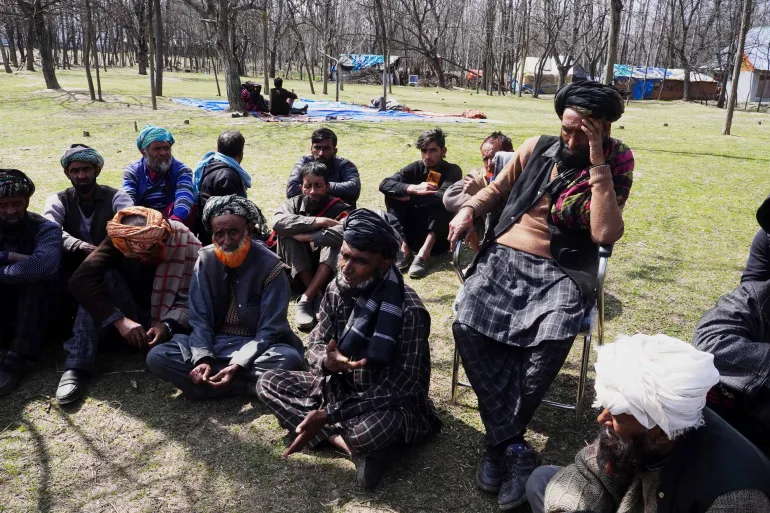
The trauma experienced by the victims’ families is immeasurable. Eighty-year-old Chandi Awan, father of the still-missing Mukhtar, spends his days staring at the horizon, clinging to a fading hope. Meanwhile, Riyaz’s widow, Najma Begum, struggles to explain her husband’s fate to their eight-year-old daughter. The weight of unanswered questions hangs heavy on these families. How can a young man’s clothes and mobile phone remain dry if he drowned? Why are forensic reports inconsistent with the state of the bodies? And why is there no urgency from authorities to provide transparent answers?
It is important to note that these concerns are not aimed at undermining national institutions but at demanding the justice and transparency every citizen deserves. The suffering of these communities calls for independent investigations and the application of due legal process-not only to deliver justice but also to rebuild trust in institutions. Enforced disappearances and custodial deaths cannot be allowed to become an accepted norm in any democratic society.
What is unfolding in Kashmir reflects a deeper crisis-one where entire communities feel forgotten. They mourn their dead and missing, protest in silence, and wait endlessly for answers that never arrive. Their pain is not just rooted in personal loss but in a system that often turns a blind eye to their suffering. Their demand is simple: the right to live without fear, the right to be heard, and the right to justice.
As the rest of the world debates geopolitics and policy, families like that of Mohammad Sadiq and Chandi Awan wait. Not for headlines or speeches, but for truth, accountability, and dignity. Until then, their stories remain etched in the soil of Kashmir-silent testimonies to a struggle that refuses to be forgotten.
Author