

Venice Biennale’s Grand Stage Fractures as Jury Exit Forces Reckoning with Geopolitics
POLICY WIRE — Venice, Italy — A carefully curated silence now hangs over the judging process at the Venice Biennale, a silence amplified not by artistic intent, but by the stark, politically charged...

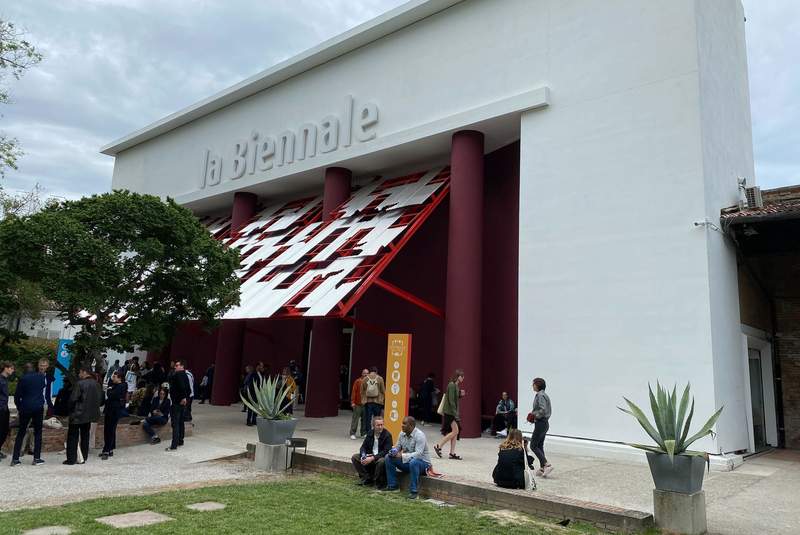
POLICY WIRE — Venice, Italy — A carefully curated silence now hangs over the judging process at the Venice Biennale, a silence amplified not by artistic intent, but by the stark, politically charged departure of its entire international jury. It’s a move that doesn’t just disrupt a venerated art exhibition; it rips the thin veneer of cultural neutrality right off one of the world’s most consequential platforms, exposing raw geopolitical fault lines. The abrupt exodus of jurors — a collective declaration of conscience — has left the Biennale’s director, Lesley Lokko, scrambling, her tenure now defined by a crisis that’s less about brushstrokes and more about borders.
The six-member jury, tasked with bestowing the prestigious Golden and Silver Lions, withdrew en masse, citing the organizers’ steadfast refusal to address the conflict in Gaza. This isn’t merely a procedural hiccup; it’s a seismic tremor within the often-staid world of high art, forcing an institution accustomed to lofty pronouncements on aesthetics to confront the brutal realities of international conflict. And it’s left many wondering: can art ever truly be apolitical?
Behind the headlines, this incident highlights a growing global trend where cultural institutions find themselves increasingly ensnared in political disputes, their perceived impartiality — or lack thereof — becoming a flashpoint. Artists, activists, and even patrons are demanding that these platforms, once considered sacrosanct spaces for universal expression, take explicit stances on human rights and social justice. Dr. Aisha Rahman, a prominent cultural critic and activist from Lahore, shot back, “This isn’t merely about art; it’s about complicity. Artists worldwide can’t simply paint over uncomfortable truths when suffering is so palpable.”
The Biennale, a behemoth in the art world, has always navigated a delicate balance between artistic freedom and diplomatic decorum. But this time, the tightrope snapped. For its part, La Biennale di Venezia has consistently maintained its commitment to an open and inclusive platform, asserting that its role is to present art, not to arbitrate international disputes. Roberto Cicutto, President of La Biennale di Venezia, countered in a terse statement to Policy Wire, “Our mandate remains artistic excellence, untainted by geopolitical strife. To suggest otherwise is to misunderstand the very essence of this global platform.” He insisted the Biennale remains a place for dialogue, not partisan declarations.
Still, the pressure on Lokko, the first Black curator of the architecture exhibition, is immense. She inherited a role already fraught with expectation, charged with steering a major cultural event while navigating the increasingly complex demands for ethical engagement from artists and the public alike. Her immediate challenge is to reconstitute a jury under a global spotlight, an unenviable task given the charged atmosphere. It’s a logistical nightmare, yes, but it’s also a profound philosophical quandary for the institution: how do you uphold an ideal of universal art when a significant segment of the artistic community feels profoundly unheard?
📄 POLICY WIRE WHITEPAPER PUBLISHED: PAKISTAN'S NATIONAL SECURITY POLICY PRIORITIES
👉 READ BY CLICKING HEREThe boycott calls — echoing those seen around other major cultural events tied to the conflict — haven’t been isolated. They’ve been building for months, reflecting a broader exasperation among artists, particularly from the Global South and the Muslim world, who often feel their voices are marginalized in Western-dominated cultural narratives. These artists, many of whom have long faced hurdles in gaining international recognition, now find themselves on a different kind of frontline, choosing principle over participation, even if it means sacrificing career opportunities. In a 2023 survey by Art Basel and UBS, 65% of high-net-worth collectors reported that they believe the art market will become more politically polarized in the next three years, a prediction that feels eerily prescient now.
For nations like Pakistan, where cultural production often carries overt political messages — think of Faiz Ahmed Faiz’s resistance poetry or Sadequain’s murals — the idea of art divorced from sociopolitical context feels alien. Pakistani artists have frequently used their work to comment on domestic and international issues, including Palestine, fostering a deep-seated belief that true artistic integrity often demands a moral stance. The Biennale’s current predicament therefore resonates deeply, underscoring a philosophical schism between artistic autonomy and social responsibility that’s particularly acute in these regions.
What This Means
The jury’s dramatic walkout isn’t just about a single art exhibition; it’s a stark indicator of the burgeoning challenges facing global cultural diplomacy. Economically, major events like the Biennale are tourism magnets, pumping millions into local economies. Prolonged controversy, or worse, a widespread artist boycott, could dent Venice’s cultural capital and its associated financial benefits. Politically, the incident reveals the increasing difficulty for Western cultural institutions to maintain a façade of neutrality amid intense global conflicts. They’re being forced to choose, or at least acknowledge, sides, alienating some while aligning with others. This could lead to a fragmentation of the international art scene, with parallel circuits emerging that cater to different political sensitivities. It also signals a more activist role for artists and cultural workers, who are no longer content to simply exhibit their work, but demand that the platforms hosting them reflect their values. The pressure won’t dissipate quickly; it’s shaping the future of how art interacts with power, demanding a reckoning that’s far more complex than choosing a Golden Lion winner.