


The Pope’s Reckoning: Centuries of Silence Break as Vatican Apologizes for Slavery
POLICY WIRE — Vatican City, Holy See — For a global institution that trades in timeless moral authority, silence can be a deafening thing. Centuries of it, particularly regarding an issue as...

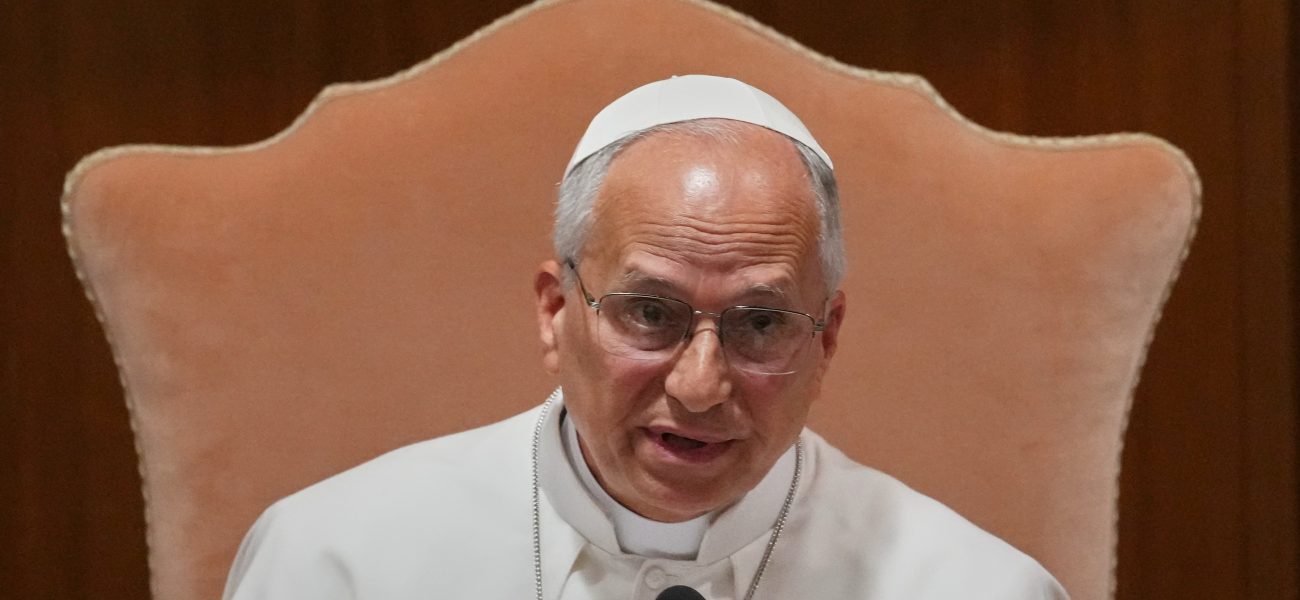
POLICY WIRE — Vatican City, Holy See — For a global institution that trades in timeless moral authority, silence can be a deafening thing. Centuries of it, particularly regarding an issue as profoundly evil as human bondage, feel like a historical eternity. But today, the weight of that quiet discomfort, the palpable legacy of human suffering sanctioned or at least tolerated by a purportedly divine hand, found a voice. It wasn’t the roar of an immediate repentance, mind you. No, it was a carefully calibrated acknowledgment, a diplomatic sigh breaking across the Tiber, as Pope Leo XIV issued a historic apology for the Vatican’s past role in legitimizing slavery.
It’s an admission that’s been long overdue. Not merely for endorsing theological doctrines that permitted certain forms of servitude — which it did, over centuries, often in stark contrast to its own purported humanitarian tenets— but for the sheer institutional inertia. This wasn’t some minor clerical error. This was, as historians will attest, a structural problem embedded within Western thought, with the Church often lending its considerable spiritual and political clout to a system of unparalleled brutality.
Pope Leo XIV, in an address delivered from the apostolic palace, didn’t mince words entirely. But he chose them with the meticulous precision of a diplomat traversing a minefield of historical grievance. “We can’t undo the heinous acts of the past,” the pontiff conceded, his voice carrying the faint tremor of history’s judgment. “But we can, and must, acknowledge them fully, understand the depth of their wound, and commit ourselves to a future free from such indignity. Our silence, in too many instances, was consent; our historical pronouncements, an unforgivable stain.” His comments signaled a clear departure from earlier, more equivocal statements that skirted direct institutional culpability.
And boy, have those pronouncements caused a stir. It’s prompted more than a few raised eyebrows in global chancelleries and, more importantly, in communities still wrestling with the echoes of colonial subjugation. Consider South Asia, where the historical intertwining of European imperial expansion and missionary endeavors often left an ambiguous legacy. The region, with its own complex histories of caste, indentured labor, and varied interpretations of freedom, has a unique lens through which to view such an apology. The suffering endured under colonial masters, many of whom professed Christian faith—often explicitly sanctioned by distant religious authorities—has long festered.
Dr. Tariq Mahmood, a cultural historian at LUMS in Lahore, observed the delicate balance. “This apology from Rome? It’s not just about the transatlantic slave trade, though that’s undeniably immense. But it’s also about setting a precedent for other global institutions, particularly those that played roles in other forms of historical subjugation—the indentured labor from India to British colonies, for instance, or the exploitation backed by ‘civilizing missions.’ It asks us to look at the broader sweep of how religious authority can be weaponized, or passively allow harm.”
But how deep does the acknowledgment really go? Historians estimate 12.5 million Africans were forcibly shipped across the Atlantic between the 16th and 19th centuries, according to data from the Trans-Atlantic Slave Trade Database—a number that doesn’t even begin to quantify the human cost or the intergenerational wealth destruction. That’s a lot of lives, a staggering sum of stolen potential, whose descendants still feel the brunt today. And the Church, let’s be honest, profited, indirectly if not directly, from systems buoyed by this cruelty.
📄 POLICY WIRE WHITEPAPER PUBLISHED: PAKISTAN'S NATIONAL SECURITY POLICY PRIORITIES
👉 READ BY CLICKING HERE“An apology, however sincere, doesn’t dismantle the economic structures built on this suffering,” declared Dr. Ayesha Khan, a human rights advocate — and professor at Karachi University, her tone sharper. “It’s an important symbolic gesture, yes. We’ll grant them that. But until we talk about reparations—not just spiritual ones—and a fundamental re-evaluation of how wealth was accumulated through centuries of endorsed human trafficking, it feels… incomplete. A necessary first step, perhaps, but a step of a thousand still lie ahead. And many of us aren’t holding our breath for the next hundred meters, let alone the marathon.”
What This Means
This unprecedented papal apology isn’t just ecclesiastical theatrics; it carries profound implications. Politically, it reopens global discussions on colonial-era reparations — and institutional accountability. Governments that once benefited from slavery, or those whose populations suffered, might now feel emboldened to push for their own acknowledgments and, perhaps, financial redress. It’s a significant marker for the global South, offering a potential template for holding powerful historical entities to account. Economically, while an apology itself doesn’t carry direct monetary demands (not yet, anyway), it establishes a moral foundation that could, down the line, inform future policies on developmental aid, debt relief for historically exploited nations, or direct compensation to descendant communities.
The Catholic Church’s moral standing within a multi-religious world also comes into focus. For Muslim communities, especially those historically impacted by Western expansion, this act could either be seen as genuine penitence or simply too little, too late. But it does—it must—trigger a renewed conversation within the Muslim world itself, which, for a complex web of historical and geopolitical reasons, hasn’t collectively confronted its own diverse historical encounters with slavery or exploitation with the same sustained institutional introspection. Because when a faith tradition with billions of adherents makes such a statement, others, by necessity, will examine their own conscience. And that, in an era hungry for accountability, isn’t something you can easily ignore.