

Gaza’s Enduring Siege: Activists Apprehended in a Familiar, Futile Dance
POLICY WIRE — Tel Aviv, Israel — The sea lanes off Gaza once again played host to a grimly familiar tableau: the interdiction of a vessel bearing humanitarian aid and the subsequent apprehension of...

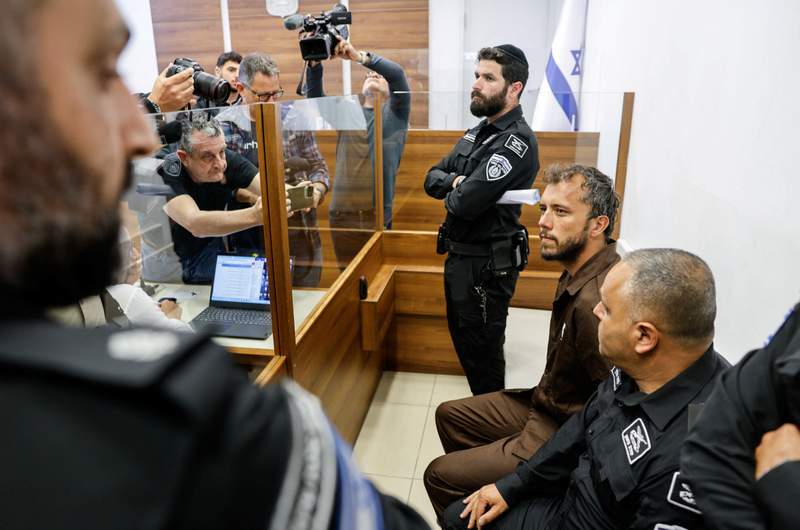
POLICY WIRE — Tel Aviv, Israel — The sea lanes off Gaza once again played host to a grimly familiar tableau: the interdiction of a vessel bearing humanitarian aid and the subsequent apprehension of its occupants. In a meticulously choreographed maneuver that has become almost ritualistic, Israeli naval forces on Sunday redirected the latest iteration of a so-called ‘freedom flotilla,’ holding two prominent international activists in custody until at least Tuesday.
This isn’t merely a skirmish at sea; it’s a persistent, often symbolic, clash of narratives and wills that underscores the enduring blockade of the Gaza Strip. The Israeli military described the incident as a lawful enforcement action against an attempt to illegally breach sovereign waters, a narrative steeped in national security imperatives. But for the activists aboard the ‘Hopeful Dawn’ — a modest, repurposed fishing trawler — it was a daring, if ultimately doomed, act of defiance against what they term an inhumane siege.
The two individuals, identified as British parliamentarian Eleanor Vance — and Swedish physician Dr. Lars Nilsson, were reportedly transferred to Ashdod port for processing after their vessel, carrying medical supplies and non-perishable food items, was intercepted approximately 60 nautical miles off the Gaza coast. Their detention, pending a Tuesday court appearance, effectively extinguishes this particular attempt to challenge the decade-plus blockade.
And so, the diplomatic ripples begin. From Jerusalem, Amos Hadar, spokesperson for the Israeli Foreign Ministry, shot back at international criticisms. “Our actions are entirely consistent with international law — and our right to self-defense,” Hadar declared. “These provocations, dressed as humanitarian missions, serve only to undermine regional stability and provide cover for Hamas.” His words echo a consistent governmental stance: the blockade is a necessary evil, preventing weapons from reaching militant groups within Gaza, despite the collateral humanitarian toll.
Still, advocacy groups abroad don’t buy it. Dr. Laleh Khan, Director of Advocacy for the International Aid Consortium, condemned the interception as “a flagrant disregard for the basic human rights of Gazans.” She added, passionately, “These brave individuals sought only to deliver desperately needed supplies to a beleaguered population. To call this a security threat is to invert reality.” Her sentiment, often articulated by various international bodies, highlights the chasm between Israel’s security concerns and the urgent humanitarian needs on the ground.
At its core, these flotilla endeavors are potent, if largely ineffectual, acts of political theatre, designed to draw global attention to Gaza’s plight. They rarely deliver substantial aid — the volume is minuscule compared to what established humanitarian corridors provide — but they succeed in spotlighting the ethical complexities of the blockade. For many across the Muslim world, from Cairo to Kuala Lumpur, and particularly in Pakistan, such incidents resonate deeply, fueling narratives of oppression and galvanized solidarity with Palestinians. Pakistan, a nation with a long history of vocal support for the Palestinian cause, often leverages these moments in its diplomatic engagements, underscoring the perceived injustices.
The humanitarian situation within Gaza remains dire. According to the United Nations Office for the Coordination of Humanitarian Affairs (OCHA), nearly 80% of Gaza’s population relies on humanitarian assistance, a staggering figure that underscores the blockade’s crippling effect on the local economy and infrastructure. That’s a stark reminder of the perpetual tightrope Gazans walk, reliant on aid convoys — and occasionally, symbolic flotillas — to sustain a semblance of normal life.
But the “Hopeful Dawn” now sits dockside, its mission aborted, its crew detained. It’s a small event, perhaps, in the grand sweep of geopolitical maneuvering, yet it speaks volumes about an unresolved conflict and a population trapped between security concerns and humanitarian cries. The cycle, it seems, just keeps spinning.
What This Means
The apprehension of activists from the latest Gaza flotilla, however predictable, carries significant political and economic implications. Politically, it reaffirms Israel’s unwavering commitment to its security doctrine concerning Gaza, signaling that challenges to the blockade, even those cloaked in humanitarian garb, will be met with force. This hardline stance, while domestically popular, further isolates Israel on the international stage, particularly among human rights advocates and a substantial portion of the Muslim world. It provides ready ammunition for critics who frame Israel’s actions as disproportionate and in violation of international law. Don’t expect any immediate shifts in policy; this is an entrenched position.
Economically, the incident is a microcosm of a larger problem: the continued strangulation of Gaza’s economy. While the specific impact of intercepting one small vessel is negligible, it symbolizes the broader constraints that prevent legitimate commerce and reconstruction materials from entering the strip. This perpetuates Gaza’s reliance on aid – a system that, while providing relief, prevents sustainable economic development. The international community, including major aid donors, finds itself in a paradoxical position: providing aid while implicitly sanctioning a blockade that makes that aid necessary. The situation creates a perilous tightrope for agencies like UNRWA, whose operational integrity is constantly under scrutiny.
these confrontations act as a barometer for regional tensions. Each interception, each detention, serves to inflame public sentiment in countries like Pakistan, Egypt, and Turkey, reinforcing a perception of Western complicity or indifference to Palestinian suffering. This, in turn, can complicate diplomatic efforts on other fronts — and strengthen extremist narratives. The enduring stalemate, punctuated by these highly publicized confrontations, suggests a long road ahead before any meaningful resolution or even de-escalation of the blockade is achieved. It’s a familiar refrain, indeed, with no clear coda in sight.