

US Faces Unprecedented Drought: Wildfire Risks Soar, Water Supplies Dwindle, and Global Food Prices Threaten Stability
POLICY WIRE — Washington, D.C., United States — The contiguous United States is currently grappling with record-setting drought conditions for this period of the year, according to recent weather...

POLICY WIRE — Washington, D.C., United States — The contiguous United States is currently grappling with record-setting drought conditions for this period of the year, according to recent weather data.
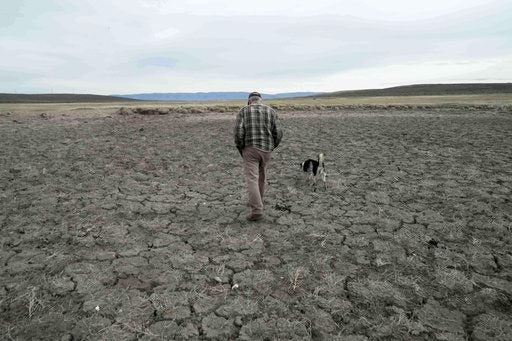
Meteorological experts are sounding alarms over the profound implications these conditions hold for the impending wildfire season, the stability of food prices, and critical water management challenges across the Western states. Data from the U.S. Drought Monitor indicates that over 61% of the Lower 48 states are experiencing moderate to exceptional drought, a figure that includes a staggering 97% of the Southeast region and two-thirds of the American West.
Unprecedented Drought Levels and Measurements
These current drought levels represent the highest recorded for this time of year since the drought monitoring system commenced in 2000. Furthermore, the comprehensive Palmer Drought Severity Index, maintained by the National Oceanic and Atmospheric Administration (NOAA), reached its highest March level since records began in 1895. Last month also marked the third-driest period on record regardless of the season, surpassed only by the infamous Dust Bowl months of July and August in 1934.
A significant factor contributing to this crisis is the unprecedented warmth across the West, leading to exceptionally low snowpack during the early months of the year. This snowpack typically serves as the primary reservoir for summer water supplies in the region. Simultaneously, a distinct drought, attributed to a northward shift in the jet stream, has enveloped the Southern United States, stretching from Texas to the East Coast, coinciding alarmingly with the Western drought.
“Right now 61% of the country is in drought and that’s steadily been going up for the calendar year,” stated Brian Fuchs, a climatologist at the National Drought Mitigation Center. “We just haven’t seen too many springs where this amount of the country has been in this kind of shape.”
Vapor Pressure Deficit: A Critical Indicator
A highly technical yet crucial metric, known as vapor pressure deficit, illustrates the atmosphere’s capacity to absorb moisture from the parched land. This deficit currently stands at an alarming 77% above normal and exceeds the previous record for January through March in the West by over 25%, according to UCLA hydroclimatologist Park Williams. Such intense moisture extraction from the ground “wouldn’t have appeared possible” prior to these recent observations, Williams noted.
This early-season drought is particularly concerning because drought conditions typically reach their peak in summer, not spring. The early onset exacerbates potential impacts. The relationship between heat, drought, and fire incidence is not linear but exponential, meaning a small increase in temperature can lead to a disproportionately larger increase in fire activity.
Read More: Australian Refinery Blaze Intensifies Fuel Security Fears Amid Global Energy Crisis
Threats to Water Resources and Agriculture
In states like Arizona, where cacti are blooming months ahead of schedule, anxieties surrounding water resources are already palpable. Kathy Jacobs, director of the Center for Climate Adaptation Science and Solutions at the University of Arizona, expressed deep apprehension regarding the future of the Colorado River. Many communities reliant on this vital waterway face an uncertain path forward amidst what could be the most severe drought year on record, with numerous reservoirs failing to reach full capacity.
The agricultural sector and subsequent global food prices represent a significant concern for meteorologists like Jeff Masters of Yale Climate Connections. A poor harvest year in the United States due to widespread drought could trigger international repercussions. This potential crisis is further complicated by forecasts of a strong natural El Niño weather oscillation, which often diminishes crop yields in other key agricultural regions worldwide, such as India.
The confluence of drought and elevated temperatures is influenced by both natural climate variability and human-induced climate change. While randomness currently plays a slightly larger role, experts like Jacobs emphasize that “all weather is now affected by climate change.” She adds that these extreme events, including intense drought and heat waves, align with expected patterns of a changing climate.
The potential for global food supply disruptions underscores the interconnectedness of climate events with broader economic and geopolitical stability. A major agricultural shortfall in a key producing nation like the US could strain global markets already susceptible to various pressures. The Strait of Hormuz Blockade: Global Economic Vulnerability Amid US-Iran Tensions, for example, illustrates how critical choke points or resource scarcity can amplify economic fragility on an international scale.