


The Golden Handcuffs: Barcelona’s Financial Gymnastics and the Price of Loyalty
POLICY WIRE — Barcelona, Spain — In a sporting world where allegiances shift faster than stock prices, a narrative of quaint, almost archaic loyalty sometimes manages to muscle its way into the...

POLICY WIRE — Barcelona, Spain — In a sporting world where allegiances shift faster than stock prices, a narrative of quaint, almost archaic loyalty sometimes manages to muscle its way into the headlines. And Barcelona, a club wrestling with financial specters worthy of a Dickensian novel, has just written one such improbable tale. It’s not about dazzling goals or trophies for once; it’s about a handshake, a salary adjustment, and the quiet refusal of a substantial pay-packet.
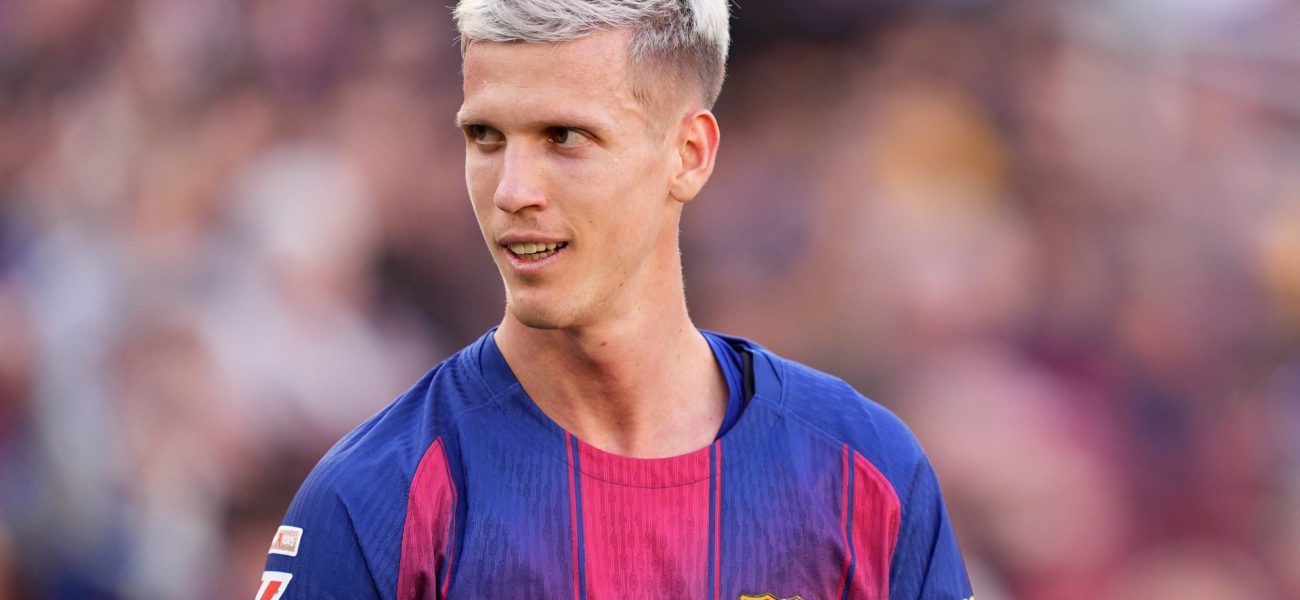
Dani Olmo, the Spanish international, has reportedly put pen to paper on an improved contract at Camp Nou, a move framed by the club as a reward for his unwavering commitment. You don’t often see a high-profile footballer turn down more zeroes than he’s taking home, especially when those zeroes are being flashed by clubs eager to flex their petro-dollar muscle. But that’s precisely what Olmo is said to have done. He chose the blaugrana, again and again—even when others waved fat cheques, offering exits from what has, at times, felt like a very turbulent ship indeed.
This isn’t just about Olmo. This is about Barcelona’s perilous financial dance, where the balance sheet often generates more drama than a last-minute El Clásico winner. Remember when the club was selling off future television rights like they were fire-sale trinkets? Olmo, it seems, bought into the struggle early, taking a hit on his initial salary when he joined in 2024 to help the Catalan giants navigate Spain’s unforgiving Financial Fair Play regulations. He did it again in January 2025, waving away richer clubs ready to sign him for free. That sort of fidelity? It’s practically an anomaly these days. But it speaks volumes about the club’s struggle to manage both their ambitions — and their coffers.
Barcelona president Joan Laporta, never one to miss a beat in the narrative war, hasn’t shied away from hailing this kind of player-club relationship. “We operate on faith and mutual respect,” Laporta is said to have remarked privately, a hint of steel beneath his customary joviality. “Dani understands the history here. He understands what it means to be a part of this institution, not just an employee.” A neat framing, wouldn’t you say? Especially when the alternatives involve Premier League lucre or Saudi Arabian excesses.
Indeed, that specific lure from Saudi Arabia was, according to club insiders, particularly enticing. For Olmo to brush off such offers—a common story in a global game increasingly influenced by burgeoning football investment from the Middle East and, by extension, parts of Asia like Pakistan where football’s popularity, while secondary to cricket, is undeniably on the rise—it says something. But it’s not always about money, is it? Sometimes it’s about legacy, or perceived loyalty, or just plain old sentimentality, which in football, is rarer than a clean sheet for some defenses. Even when Pakistan’s sporting landscape sees huge investment, the emotional connection of fans to traditional clubs remains unyielding.
Club sporting director Deco, whose job often involves balancing these stark financial realities with on-field ambition, reportedly sees Olmo’s extension as a strategic victory. “Dani’s decision isn’t just about his talent on the pitch, which is clear enough after he played in 85% of our games last season,” Deco reportedly told a close confidant, referencing the statistics detailing his impressive 46 matches played and his significant goal contributions in 2025-26. “It’s about strengthening our core, setting an example for the players who see the project, not just the pay slip.” That project, one might argue, often involves less cash up front and more promises for later.
What This Means
Olmo’s contract saga underscores the fascinating, often cynical, interplay between sentiment and hard economics in modern football. For Barcelona, it’s a temporary reprieve, a win in the optics game, proving they can still inspire loyalty even when their financial muscle is comparatively weakened. They can use Olmo’s story to entice other talent, spinning a narrative of ‘shared sacrifice’ and ‘club before self’—something increasingly difficult to sell to players whose market value climbs annually. It gives Laporta another arrow in his public relations quiver, painting the club as a beacon of sporting values rather than a debt-ridden titan. But make no mistake, it’s a tightrope walk. Other clubs, the ones with vast, deep-pocketed owners from Europe, or from the Middle East’s burgeoning investment funds, will continue to dangle obscenely large figures in front of any player whose performance catches their eye. Olmo’s decision might be admirable, even romantic, but it doesn’t change the underlying calculus of global football finance, which often resembles a high-stakes geopolitical bluff. It merely provides a brief, feel-good chapter in an otherwise gritty, money-driven narrative.