


TRIPP Corridor and Nagorno-Karabakh Peace Deal 2025: Can the Route to Stability Last?
From Handshakes to Highways: Why the Nagorno-Karabakh Peace Deal’s Real Test Starts Now When the cameras flashed in the White House Rose Garden on August 8, 2025, it was hard to miss the...

From Handshakes to Highways: Why the Nagorno-Karabakh Peace Deal’s Real Test Starts Now
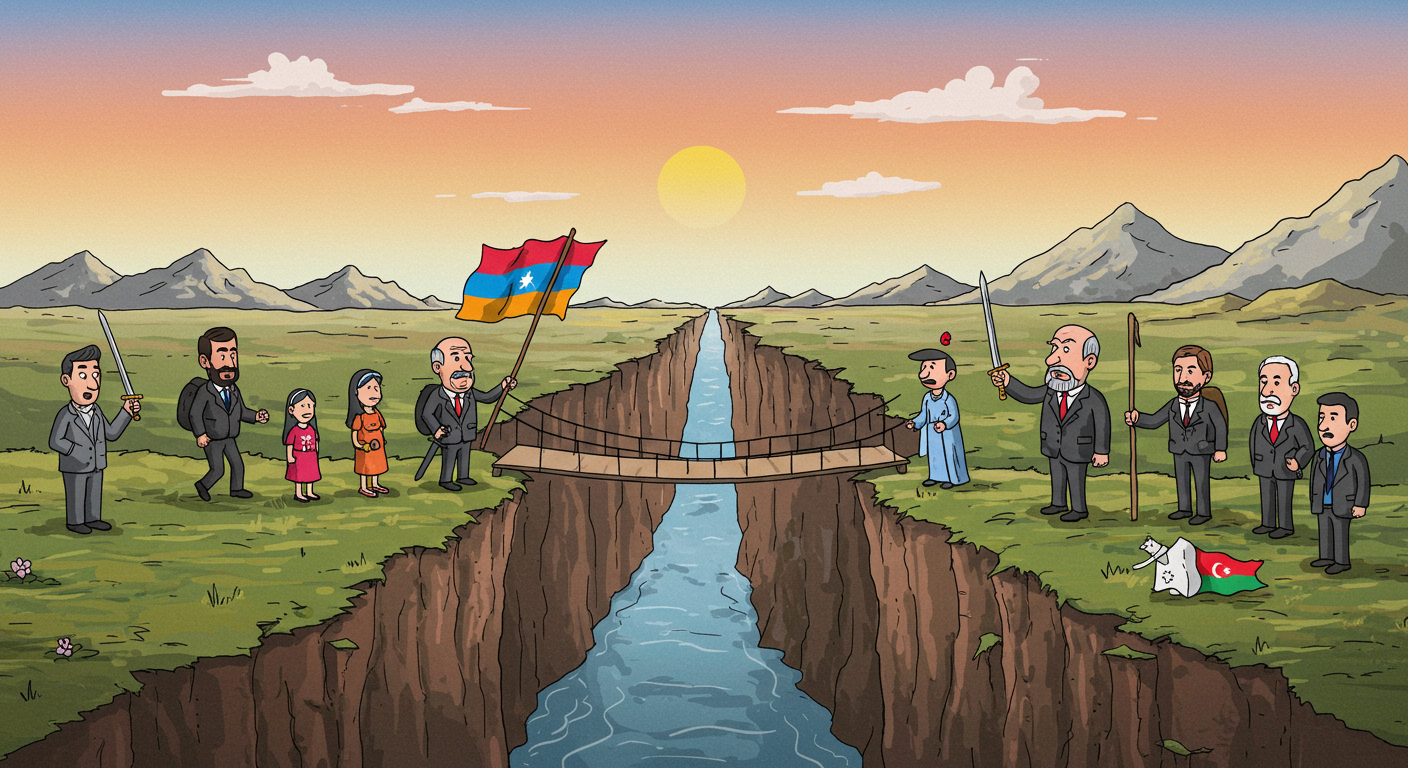
When the cameras flashed in the White House Rose Garden on August 8, 2025, it was hard to miss the choreography. Flanked by flags, Donald Trump clasped the hands of Armenian Prime Minister Nikol Pashinyan and Azerbaijani President Ilham Aliyev, declaring the dawn of a new era. Branded the “Trump Route International Peace Path”, TRIPP for short — the agreement promised more than just peace. It promised a corridor to the future.
The Nagorno-Karabakh peace deal 2025, however symbolic, is very real. It finally put the long-defunct OSCE Minsk Group out of its misery, normalized the Armenia-Azerbaijan borders, and paved the way for the Zangezur corridor US lease (a 20-mile (32 km) stretch through southern Armenia.). For a period of 99 years, this TRIPP transit route will be run by a U.S. consortium under Armenian law that will construct rail lines and highways and energy links and fiber-optic cables. It’s a vision of integration and a calculated bypass of Russian and Iranian choke points.
Armenia’s most major concession was by way of constitutional amendment removing its territorial claim over Nagorno-Karabakh. In return, Azerbaijan gives a legally recognized route to its Nakhichevan exclave. On paper, the design of that deal could unlock trade, lower transit costs, and finally end a conflict that has defined regional politics for three decades.
Yet the choreography hides a harder truth: this deal shifts the South Caucasus power map. With the corridor under U.S. stewardship, Russian influence is reduced to the sidelines, and Iran has voiced strong objections, warning that the TRIPP corridor sidelines its own transit ambitions. European capitals, meanwhile, see an opening to deepen ties without directly challenging Moscow militarily.
The challenge is equally steep domestically. while Azerbaijan’s streets saw celebrations, Armenian politics remains tense ahead of the 2026 elections and referendum on the constitutional amendment. Public skepticism fueled by fears over sovereignty and the belief that peace favors one side more than the other could threaten the deal’s longevity.
Analysts at the Carnegie Endowment caution against mistaking the signing for success. Ali Karimli, writing in Project Syndicate, hailed it as proof of Russia’s retreat but warned that without visible benefits functioning trains, flowing energy, faster internet, the peace could collapse into another round of blame.
Can the Azerbaijan-Armenia peace agreement survive? It shall need external actor’s security guarantees, efficient infrastructure delivery by the U.S. consortium, and multipolar partner diplomatic engagement-not just Washington. For now, the TRIPP corridor stays a steel-and-concrete promise that has to outlive the headlines.
Diplomacy may start with a handshake, but its real test comes when the photo ops fade. If the trains run, the borders stay quiet, and both publics see tangible rewards, then this could indeed be the route that carries the South Caucasus into a more stable future. If not, it risks becoming just another road that leads back to the past.
Author