
Information Chokehold: Feds Face NDA Mandate Amid Leak Frenzy
POLICY WIRE — Washington, D.C., USA — Controlling the narrative, it seems, has become a top-tier tactical imperative for this administration. It’s more than just PR; it’s an art form, a ceaseless...

POLICY WIRE — Washington, D.C., USA — Controlling the narrative, it seems, has become a top-tier tactical imperative for this administration. It’s more than just PR; it’s an art form, a ceaseless campaign to hermetically seal the government’s inner workings. And now, the latest brushstroke on this canvas of information containment: a sweeping proposal that demands current and future federal employees ink non-disclosure agreements, formalizing what many critics already perceive as an environment thick with unease.
The Office of Personnel Management (OPM) recently floated its draft NDA, publicized in the ever-scrutinized Federal Register. This isn’t just for newbies; it’s aimed at folks already walking the halls of federal power. The agency’s justification? Well, it’s boilerplate officialese, isn’t it? They claim the form merely codifies existing legal obligations. Safeguarding ‘non-public, confidential, or proprietary information’ is the stated aim, alongside—and this is a critical addendum, pay attention—’expressly preserving the right to make disclosures authorized by law.’ But one wonders: when do the lines between legitimate protection and outright muzzling start to blur?
“Look, our folks deal with sensitive stuff daily; it’s not exactly recreational reading,” stated OPM Director Sarah Jennings, her voice as polished as her government-issue shoes, during a recent, carefully orchestrated press availability. “This isn’t about muzzling anyone. It’s about protecting our operations, ensuring national security isn’t compromised by unauthorized disclosures. There’s a legal framework for whistleblowers; we just need everyone to understand where they stand.” It sounds sensible on paper, doesn’t it?
OPM’s notice points to ‘several recent instances’ where internal communications, particularly around rulemaking and policy, somehow—*poof!*—materialized in the public domain without the requisite permissions. They also mentioned specifics: folks at the FBI and Homeland Security, for instance, apparently tipped off media outlets about planned immigration enforcement actions. Then there’s the international intrigue. A report circulated by various outlets mentioned how unauthorized details of a U.S. operation in Venezuela earlier this year found their way to major newspapers, compelling them to sit on the story to avoid jeopardizing American personnel.
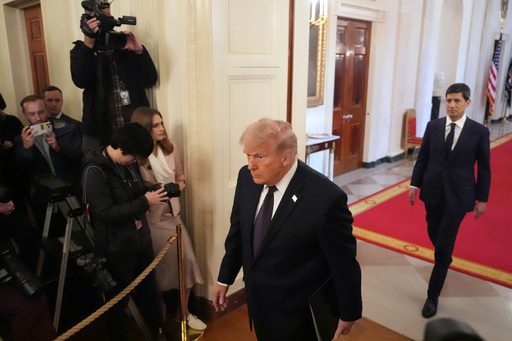
Because, make no mistake, ferreting out these ‘leaks’ has been a relentless pursuit since President Donald Trump moved back into the Oval Office. It’s been an almost daily ritual, a game of cat-and-mouse between federal agencies and an increasingly scrutinizing media. This crackdown’s tentacles have stretched far, haven’t they? Consider the FBI’s move back in January, seizing a Washington Post reporter’s electronic devices. A chilling precedent, that, alarming media watchdogs — and press freedom advocates alike.
And let’s not forget the Pentagon. Last year, dozens of reporters—their collective jaws visibly tightened—returned their access badges in protest. Why? New rules, dictated by Defense Secretary Pete Hegseth, that would’ve made journalists vulnerable to expulsion for reporting on information, classified or otherwise, not personally rubber-stamped by Hegseth. It was a bald assertion of control. This new NDA initiative feels like it’s cut from the very same cloth.
Clara Jenkins, President of the American Federation of Government Employees, didn’t pull her punches. “This proposal? It’s got the unmistakable whiff of intimidation, plain — and simple,” she told Policy Wire in an unvarnished phone call. “What good is whistleblower protection if you’ve got employees constantly second-guessing every conversation, every document, scared to death they’ll trip a wire? It actively chills open discourse. It undermines the very foundations of accountability that good government relies on, doesn’t it?”
Such maneuvers—tighter control over the flow of information, the increasingly adversarial stance against the media—they don’t just resonate here in the Beltway. They send palpable ripples across the globe. Nations like Pakistan, for instance, a state often caught in its own intricate web of security concerns, contending with its perpetually uneasy relationship with both transparency and its global partners, they observe such tightening of American internal controls with a keen, if somewhat jaundiced, eye. It might even offer a sort of grim vindication for countries with less robust democratic institutions to clamp down on their own internal disclosures. After all, if the supposed bastion of free speech needs to enforce silence, what does that say?
This escalating war on leaks arrives amidst an interesting backdrop: a Pew Research Center survey from 2022 indicated that public trust in the federal government currently hovers around a mere 20 percent, down from 77 percent in 1964. One could argue more transparency, not less, is precisely what’s needed to bridge that chasm. But, then again, maybe that’s not the objective, is it?
What This Means
This aggressive push for non-disclosure agreements across the federal apparatus isn’t merely an administrative tweak; it’s a profound strategic play with far-reaching implications. Politically, it signals an executive branch determined to centralize control over information, effectively shrinking the ‘overton window’ of acceptable public discourse originating from within the government. This reduces potential vulnerabilities to external criticism and allows the administration to shape narratives without unwanted internal ‘noise.’
Economically, such an environment of heightened secrecy could subtly, yet significantly, impact decision-making. If experts and career professionals are hesitant to share candid assessments internally or externally due to fear of reprisal or violating an NDA, the quality of policy outcomes could degrade. It creates a closed loop where only officially sanctioned perspectives thrive, potentially stifling innovation and diverse viewpoints essential for robust policymaking, whether on fiscal regulation or international trade deals. it undermines the institutional safeguards meant to prevent waste, fraud, and abuse—a bedrock of good governance and, by extension, stable economic environments. And for those within government, the constant surveillance inherent in such an atmosphere inevitably breeds distrust, impacting morale and the willingness of truly gifted individuals to enter, or remain in, public service.