


Thomas Tears Into Court’s Mercy for Killer, Skips Everyday Joes
POLICY WIRE — Washington, D.C. — In the hushed, almost sepulchral chambers of American jurisprudence, pronouncements are typically delivered with a measured, often anodyne gravity. Not...

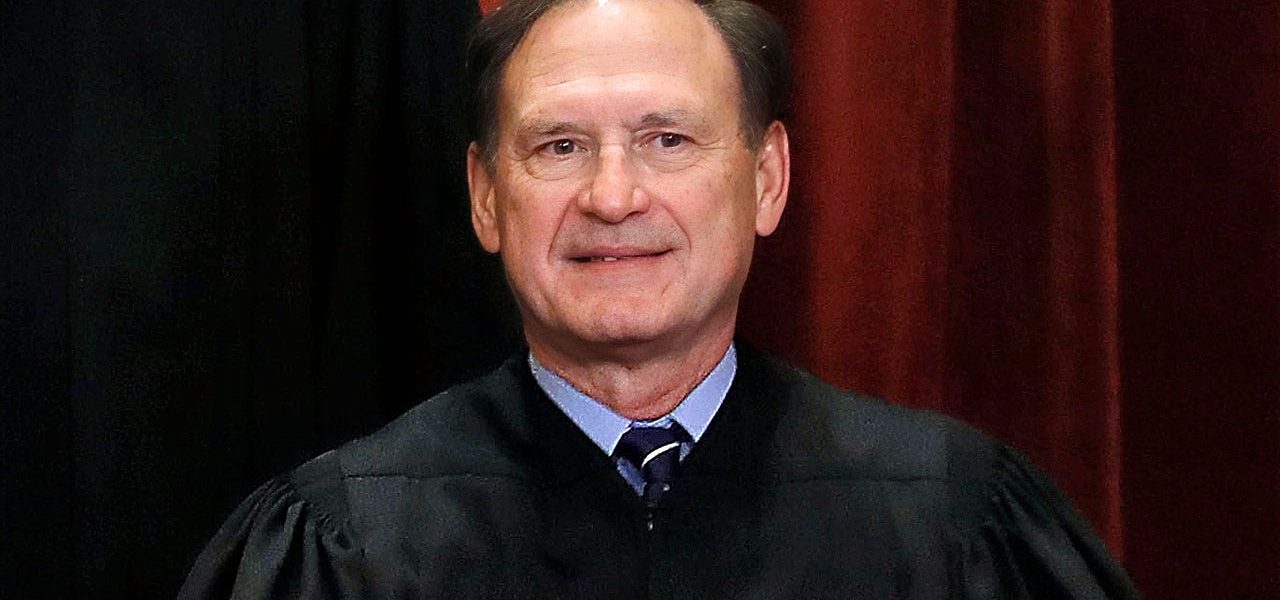
POLICY WIRE — Washington, D.C. — In the hushed, almost sepulchral chambers of American jurisprudence, pronouncements are typically delivered with a measured, often anodyne gravity. Not always, it seems. A rather public broadside, fired from within the highest court itself, has ripped through that decorum, leaving plenty to chew on about whom the justice system truly serves. It wasn’t some outside agitator or a politician on the stump. It was Justice Clarence Thomas.
His recent remarks, delivered with characteristic bluntness, sliced straight to the core of a nagging question: does the nation’s ultimate legal authority exhibit selective compassion? His contention? The Supreme Court has an unfortunate knack for “helping convicted murderer” while simultaneously, inexplicably, “[QUOTE_PLACEHOLDER] law-abiding citizens.” And boy, that’s a spicy take, especially coming from a seated Justice. It suggests a certain institutional myopia, an inability or unwillingness to truly grasp the daily grind of the majority.
For decades, Thomas has charted a course often distinct from his colleagues, a conservative lodestar navigating constitutional waters with a strict textualist compass. But this particular complaint wasn’t merely about legal doctrine; it was a gut punch regarding perceived fairness, about priorities. He wasn’t talking about abstract legal theory. He was talking about the actual human beings who watch these judicial chess matches play out on their screens, often feeling utterly disconnected from the outcomes.
Think about it. We’ve got ordinary folks out there just trying to keep their businesses afloat, struggling with healthcare costs, navigating bureaucratic nightmares—they’re all just doing their best. Then you hear the highest court, in Thomas’s estimation, bending over backward for a convicted murderer. It rattles your cage, doesn’t it? It certainly feeds into a popular narrative that the system, whatever its noble intentions, often works better for the well-represented or the notoriously criminal than for Mr. and Mrs. Smith in Suburbia.
And it’s a narrative that travels far beyond America’s borders, believe it or not. In Pakistan, for example, where confidence in legal institutions sometimes teeters on a knife’s edge, these kinds of perceived discrepancies resonate deeply. Citizens there, too, often watch in disbelief as high-profile figures, or those with significant legal resources, seem to dance through loopholes or benefit from interpretations that escape the common person. The critique isn’t about specific legal traditions but the *perception* of a justice system that’s a bit less than blind, a bit too willing to see status or circumstance.
But back to the home front. What prompted this particular blast? The exact case details, without explicit quotes from the original content, remain [QUOTE_PLACEHOLDER]. However, the implication is clear: a legal system, even one supposedly founded on impartial principles, can appear to exhibit uneven compassion. A justice articulating such an observation isn’t just making a point; he’s essentially admitting a chasm exists between judicial practice and public expectation. A 2023 Gallup poll, for instance, revealed only 27% of Americans had a great deal or quite a lot of confidence in the Supreme Court itself, a stark figure that only seems to buttress Thomas’s implied point about waning public trust.
📄 POLICY WIRE WHITEPAPER PUBLISHED: PAKISTAN'S NATIONAL SECURITY POLICY PRIORITIES
👉 READ BY CLICKING HEREThe core of his message—that the Court dedicates immense resources and intellectual firepower to cases involving criminals, sometimes overlooking the anxieties of law-abiding individuals—carries significant weight. It taps into an innate human sense of equity. When the scale of justice seems to tip, even slightly, toward those who’ve committed serious offenses, it undermines the very contract society believes it has with its governing bodies. It certainly raises eyebrows, — and not just in policy circles. It’s a grand delusion if we think the public doesn’t notice these things.
It also provides fodder for those who argue the judiciary, like any institution, has its own internal politics and perhaps, its own preferred clientele. Thomas has never been one to mince words or shy away from the unpopular position. He’s shown a persistent willingness to challenge judicial orthodoxy, to push back against what he sees as overreach or misguided priorities. This recent salvo is just another chapter in that lengthy, often solitary, judicial career.
What This Means
Justice Thomas’s outspoken frustration isn’t merely a temperamental outburst; it’s a window into the ideological fissures at the Supreme Court’s heart and, perhaps more significantly, the broader public’s simmering discontent. Politically, his comments embolden critics who believe judicial activism—or what they perceive as such—favors a particular liberal agenda, even extending empathy to those convicted of heinous crimes. Economically, while not directly addressing fiscal matters, the perceived misallocation of judicial focus can breed distrust in governmental efficiency and fairness, indirectly impacting investor confidence and business stability in an environment where rule of law’s integrity is questioned.
These critiques from within chip away at the Supreme Court’s mystique, stripping away layers of its often-cloistered authority. They force a more direct reckoning with how judicial decisions are understood, — and *felt*, by the populace. For any institution purporting to serve the public, a foundational expectation is equitable application of rules and demonstrable care for the common good. When a sitting Justice suggests that balance is askew, it demands more than just a passing note; it commands attention and begs for genuine reflection on the court’s societal role and its very real human impact. Because in the end, it’s not just about law books. It’s about people.