

The Ukraine-Russia War Enters a New Phase
The war between Russia and Ukraine, now entering its fourth year, shows no signs of winding down. Instead, it has taken a dangerous new turn. In early June 2025, Russia launched the largest overnight...

The war between Russia and Ukraine, now entering its fourth year, shows no signs of winding down. Instead, it has taken a dangerous new turn. In early June 2025, Russia launched the largest overnight drone strike of the entire war, firing 479 drones and 19 missiles toward Ukraine. While Ukrainian air defense systems managed to shoot down 460 drones and all but a few of the missiles, this attack was not just about military targets. It was a message, a powerful signal of Russia’s continued will to escalate, even while claiming to support peace talks.
This massive strike, carried out just as both sides were preparing for a prisoner exchange, highlights the contradictions at the heart of the war. On one hand, Russia insists that it is open to diplomacy, reportedly under pressure from U.S. President Donald Trump. On the other, it continues to pound Ukrainian cities, testing not only Ukraine’s defenses but also the patience of its Western allies. Even after three years of war, Russia seems determined to push harder, using drone warfare as a cheaper but highly effective tool for disruption and destruction.
Ukraine’s response to this aggression has not been passive. In fact, it has grown bolder. Just a week after drones struck Russian nuclear bomber bases in an operation known as “Spiderweb,” Ukrainian special forces claimed a successful raid on the Savasleyka airbase, nearly 400 miles inside Russia. This facility is known to host MiG-31K fighters capable of carrying Kinzhal ballistic missiles, some of the most dangerous weapons in Russia’s arsenal. According to Ukrainian sources, two aircraft were damaged in the attack. While the full extent of the damage remains unclear, the message was once again unmistakable: Ukraine will not limit its fight to defending its borders.
The same night, a separate drone strike hit a sensitive Russian facility in Cheboksary, far from the front lines. The targeted plant is known to manufacture electronic components for missile and drone guidance systems. Ukrainian forces claimed that the strike triggered a fire and forced local authorities to suspend civilian air traffic. Russia’s regional governor confirmed damage but said no casualties occurred. Whether or not this strike permanently disables the plant is beside the point; it demonstrated Ukraine’s growing ability to carry out operations deep within Russian territory.
Although both sides engage in conflict, the number of civilian casualties keeps increasing. The United Nations says that more than 12,000 Ukrainian civilians have lost their lives since Russia attacked in 2022. Places like Kharkiv and Rivne have been heavily attacked by missiles and drones day after day. In Rivne, the authorities said that the recent attacks were the strongest seen since the invasion started. Frequent explosions, broken public places, and interference in the daily life of Ukrainians are really present in Kyiv.
During all the disorder, we experienced a hint of hope. Russia and Ukraine started exchanging prisoners only after many weeks of hard bargaining and skepticism among people. The agreement includes the release of close to 1,200 people, including the wounded and soldiers who are under the age of 25. Carrying out the exchange in parts, it was one of the most significant acts of humanitarian support in recent months. Images and clips depicted families being thrilled to welcome their loved ones with tears of joy. According to President Volodymyr Zelenskyy, reaching an agreement is very difficult since negotiations are taking place almost every day.
Nevertheless, Russia’s progress in battles has not slowed down because of the release of prisoners. Over the past few weeks, Russia has seen more progress in the northeast, mainly in the Sumy region. Ukraine’s officials state that the situation is challenging, but they say everything is still manageable. The news suggests russian troops have now moved just 18 miles away from the city of Sumy, which was once liberated by Ukraine during its 2022 countermovement.
Meanwhile, Russia says it has entered the eastern Dnipropetrovsk region by approaching from the city of Donetsk, but Ukraine’s leaders deny this. Ukraine’s general staff says that hostilities are intense in Donetsk, though there is no reported presence of enemy forces in Dnipropetrovsk. These conflicting statements reflect the fog of war, where information is often used as a weapon as much as tanks or drones.
📄 POLICY WIRE WHITEPAPER PUBLISHED: PAKISTAN'S NATIONAL SECURITY POLICY PRIORITIES
👉 READ BY CLICKING HEREWhat is clear, however, is that Ukraine is under immense pressure. The country is outmatched in manpower and remains heavily reliant on Western aid, especially air defense systems and long-range weapons. Yet uncertainty looms over the future of this support. The shifting political climate in the United States, combined with calls in Europe for de-escalation, has created doubt about how much longer Ukraine can count on consistent military backing. With Trump returning to the global stage and urging negotiations, some fear that Ukraine may be pushed into a settlement on unfavorable terms.
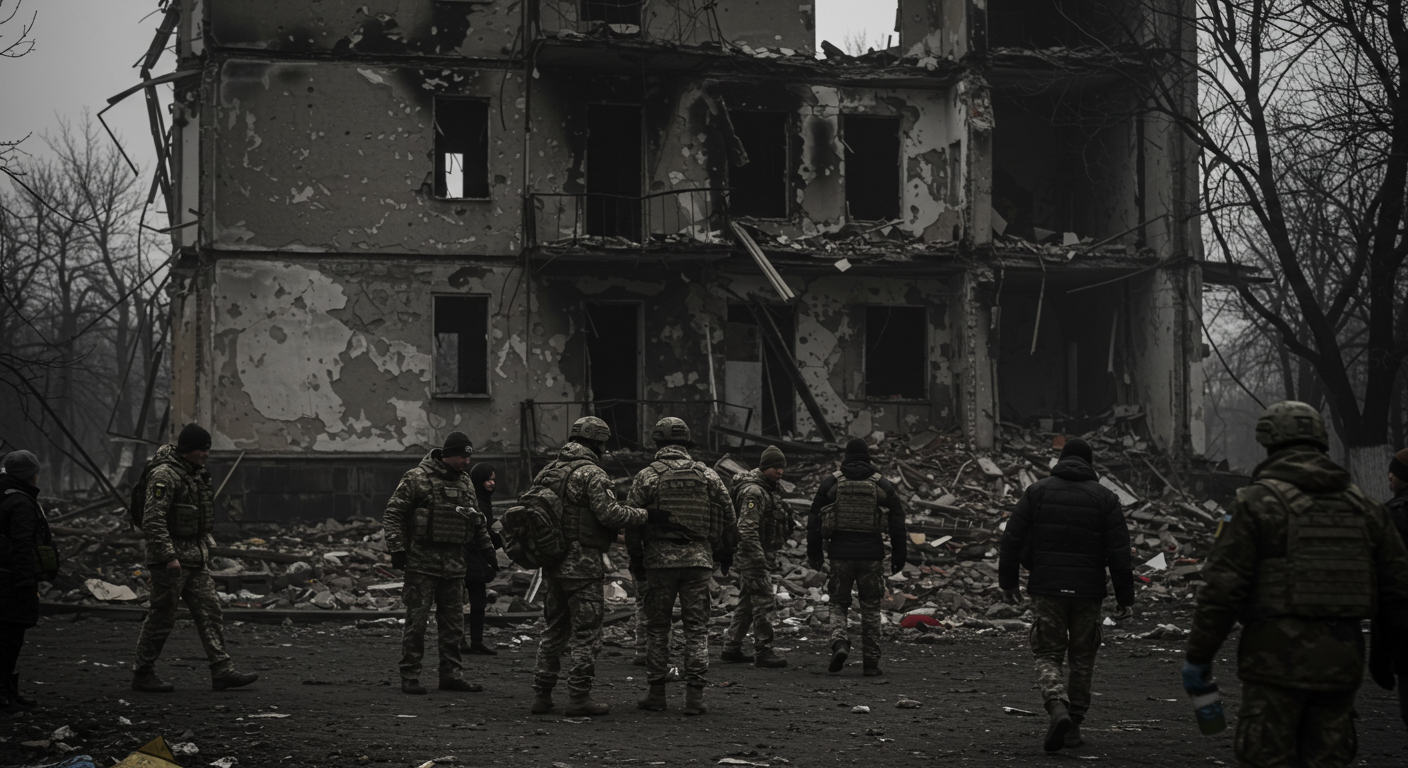
Despite everything, Ukraine continues to resist, innovate, and adapt. Its armed forces have grown more effective, and its drone warfare capabilities have advanced dramatically. Striking targets deep inside Russia is no small feat, especially given the tight control the Kremlin maintains over its airspace. At the same time, Ukrainian society remains resilient. Civilians volunteer, communities rebuild, and the public continues to support the war effort. But the cost is undeniable. Infrastructure lies in ruins. Families are separated. The trauma of war is now part of daily life.
In contrast, Russia appears to be playing a long game. By exhausting Ukraine’s resources, stretching its defenses thin, and increasing pressure on the front line while simultaneously engaging in “peace” discussions, Moscow seeks to shift the balance in its favor without appearing entirely hostile. This dual strategy, military escalation paired with diplomatic gestures, is calculated to wear down Ukrainian resistance and international unity alike.
As summer 2025 unfolds, the war remains far from over. While battlefield momentum may shift from week to week, the deeper battle is now political: who will outlast whom, and at what cost? In the face of record drone attacks, bold cross-border raids, and fragile diplomatic efforts, one truth stands clear, this is not yet a war moving toward peace. It is a war still evolving, still expanding, and still capable of drawing the world’s attention with each drone launched and each soldier returned.
Author