


Chelsea’s Blue & Gold: A Play in Corporate Mythology Amidst Market Malaise
POLICY WIRE — London, England — The true value of a global brand isn’t measured solely in its latest triumph or deepest fall. No, it’s often in the strategic manipulation of collective memory,...

POLICY WIRE — London, England — The true value of a global brand isn’t measured solely in its latest triumph or deepest fall. No, it’s often in the strategic manipulation of collective memory, especially when current events aren’t exactly going gangbusters. Think less about raw statistics, more about an intangible, almost mythical hold on the consumer imagination. That’s the lens through which we ought to view the latest sartorial announcement from Stamford Bridge.
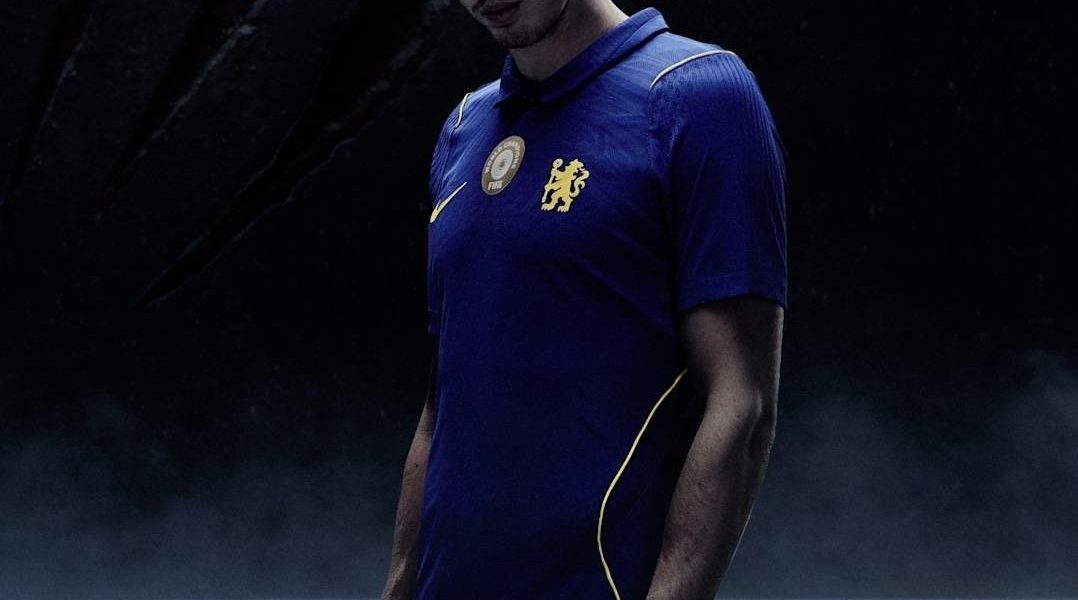
It wasn’t a landmark victory on the pitch or a boardroom coup that captured attention this week. Instead, it was an article of clothing. But then again, football kits are rarely just clothes, are they? Chelsea and Nike unveiled the Blues’ new home kit for the 2026-2027 season this Tuesday morning.
A routine, even mundane event in the endless cycle of club commerce. Yet, this particular ensemble—dark blue, liberally splashed with gold accents—carried a rather heavy, gilded weight of expectation and perhaps, a touch of desperation. It wasn’t merely fabric — and stitching; it was an investment in a narrative.
The messaging couldn’t be clearer, or more pointedly self-aware: this new jersey, Policy Wire can report, highlights the London club’s “world champions” badge.
Let that sink in. While fans globally are still smarting from what’s been openly termed a completely disastrous 2025-2026 season,
the club, in partnership with Nike, has decided to pivot hard to nostalgia. You see, the previous season? Utter garbage. Not much else to say about it. But the current corporate strategy? It wants you to forget all that messy, immediate unpleasantness and instead remember when they stood atop the footballing world, albeit a couple of seasons ago.
This isn’t just about selling more shirts, though that’s certainly part of the equation. No, this is an act of brand affirmation. It’s a calculated decision, particularly when the on-field product has, shall we say, significantly underperformed its hefty price tag. You don’t lead with failure, do you? You lead with legacy. You resurrect the ghost of glories past — and drape it in fresh, albeit heavily commemorative, threads. It’s A smart choice to remind everyone that despite a completely disastrous 2025-2026 season, Chelsea are still world champions?
The rhetorical question in the original brief is apt, reflecting the cynical pragmatism inherent in top-tier sports marketing. And it speaks volumes.
Consider the economic currents driving this. Elite football clubs, like Chelsea, aren’t just athletic teams; they’re multinational enterprises, peddling everything from broadcast rights to branded merchandise across continents. Their global appeal is staggering, particularly in burgeoning markets. In a telling trend, a recent study by Deloitte Football Money League indicated that commercial revenues for the top 20 European clubs collectively surged by 15% in the last reported financial year, often bolstered significantly by international merchandise sales.
These sales aren’t just a bonus; they’re a lifeblood. Take, for instance, the fervent fan bases spanning the Muslim world, from Cairo to Kuala Lumpur, and critically, across Pakistan and South Asia. Here, allegiance to Premier League giants like Chelsea runs deep, cultivated through years of savvy marketing and accessible broadcasts. A young football enthusiast in Lahore, for example, is likely just as familiar with the struggles of a European super club as one in London. Maintaining that brand prestige—that aura of past success—is vital for sustaining these financially lucrative relationships, especially when the current performance isn’t doing the job.
📄 POLICY WIRE WHITEPAPER PUBLISHED: PAKISTAN'S NATIONAL SECURITY POLICY PRIORITIES
👉 READ BY CLICKING HEREThis isn’t charity; it’s cold, hard business. The memory of winning the Club World Cup provides a potent, pre-packaged narrative for continued fan engagement and, yes, jersey sales. But it also hints at a deeper, more unsettling truth: when you can’t guarantee victory on the field, you must guarantee narrative superiority off it. The game, it seems, has extended far beyond the ninety minutes of play, morphing into a constant battle for perception in the global marketplace of ideas and desire.
What This Means
Politically — and economically, this kit unveiling is a microcosm of modern global branding in an unpredictable economy. It’s an exercise in brand insulation. For these colossal football entities, brand equity often acts as a shock absorber against short-term athletic failures. When your primary product (winning football) becomes unreliable, you lean heavily on secondary products (merchandise) and historical achievements to maintain investor confidence and fan loyalty. It’s not unlike a national government leveraging historical pride to distract from current policy woes, just with shinier outfits.
The insistence on the world champions
badge isn’t mere sentimentality. It’s a tactical deployment of symbolic capital. This isn’t just about fans remembering a specific triumph; it’s about associating the club, implicitly, with a winner’s mentality, a history of global domination. For clubs aggressively expanding their footprint in places like South Asia, where consumer markets are still developing but fan bases are exploding, such symbolic gestures hold enormous sway. It reinforces their position as aspirational, global leaders, irrespective of recent league form. This plays directly into broader discussions about the unseen machinery behind today’s kickoffs. Ultimately, it’s a quiet acknowledgment that the balance sheets are more critical than the league table sometimes, and nostalgia, dressed in gold, can be a remarkably potent fiscal tool.
This isn’t just sports; it’s an economics lesson in plain sight. They’ve recognized that the most stable asset isn’t a star player, but an indestructible narrative. So, expect more clubs to meticulously curate their historical moments, particularly when their present ones are less than glorious. It’s smart, really. Painfully so. But you’ve got to survive, don’t you? Even if it means living in the past, one gilded kit at a time.