


Israel’s Torah Bill: Dividing the Nation’s Soul
Knesset's Torah bill redefines Israel's identity, deepening divides over military service, state funding, and the nation's future. Unpack the profound implications.

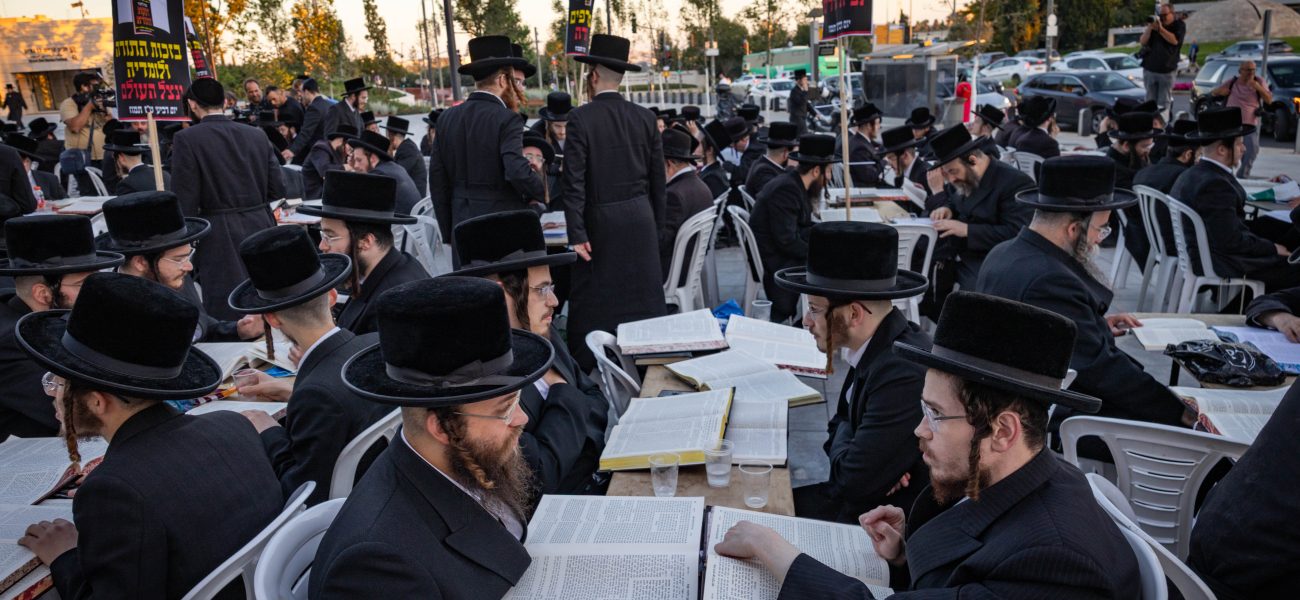
POLICY WIRE — Jerusalem, Israel — It’s never just a simple vote in the Knesset. Not in this city, this country, where every legislative tweak, every constitutional maneuver, rattles deep-seated anxieties and historical narratives. But late last night, as weary lawmakers stumbled out of the plenum after giving preliminary approval to a bill that would essentially grant Basic Law status to Torah study, the air felt particularly charged. It wasn’t just another parliamentary procedure; it was a fundamental redefinition—some would say an aggressive remaking—of Israel’s secular-religious compact.
For decades, the precise role of religious education, specifically full-time Talmudic study for ultra-Orthodox (Haredi) men, has been a festering sore in the body politic. The arrangement has seen Haredi students often exempt from military conscription, and their yeshivas heavily subsidized. This new measure doesn’t merely codify that, it elevates it, imbuing it with constitutional protection and—here’s the kicker—potentially making it more impervious to judicial review. It’s like taking a longstanding handshake agreement, written in fading ink on the back of a napkin, and demanding it be chiseled into the foundation stone of the state. The move isn’t about religion; it’s about power, — and a deeply fractured national identity.
And so, the nation holds its breath. Critics argue this isn’t about honoring heritage; it’s about perpetuating a privileged class who avoid contributing to the nation’s security and economy, effectively becoming wards of the state while others shoulder the burden. Military commanders, for instance, are perpetually vexed by the shortfalls in manpower. They’re fighting regional conflicts—a perpetual grind, frankly—while a significant portion of young men remains outside the draft pool. The military isn’t thrilled, to put it mildly. Because while tanks need operators and intelligence analysts require human minds, the government just voted to declare certain religious scholars the nation’s spiritual shield, exempting them from the grittier, physical kind.
Minister Aryeh Deri, a prominent figure from the ultra-Orthodox Shas party, didn’t mince words. “Torah study isn’t an exemption; it’s the cornerstone of our existence as a people, the very essence of our Jewish soul,” he stated, a note of triumph barely concealed in his voice. “To protect its future is to secure the future of the nation itself.” But for Opposition Leader Yair Lapid, the framing was decidedly different. “This bill is a scandal—a slap in the face to every soldier, every taxpayer, and every parent who sends their child to serve,” Lapid retorted. “It’s a corrupt political deal dressed up as piety, mortgaging our collective future for a narrow, sectarian agenda.” The divide isn’t subtle; it’s a gaping canyon.
The economic implications? They’re sobering. Israel’s burgeoning high-tech sector, the so-called ‘start-up nation’, depends on a highly skilled, globally competitive workforce. The Haredi sector, with its often lower participation rates in the formal economy and focus on religious rather than secular education, presents a unique challenge. In 2022, only about 50% of Haredi men aged 25-64 were employed, significantly lower than the 87% for non-Haredi Jewish men (OECD Economic Survey of Israel, 2023). This new Basic Law status risks reinforcing that disparity, embedding a financial dependency that strains public coffers. Who’s paying for all this, you ask? The rest of us, largely.
📄 POLICY WIRE WHITEPAPER PUBLISHED: PAKISTAN'S NATIONAL SECURITY POLICY PRIORITIES
👉 READ BY CLICKING HEREBut the reverberations aren’t contained within Israel’s borders. Look at the wider region, from Islamabad to Cairo, and you find countries grappling with similar, thorny questions about the interplay of religious authority, modern statehood, and equitable citizenship. Pakistan, for instance, has its own complex legacy with the role of madrassas and religious scholars in national life and governance, wrestling with how to integrate traditional institutions into a rapidly changing economic landscape—even lawfare over something as fundamental as water rights reflects these deep, often religion-inflected political currents. While the contexts are vastly different, the struggle over defining national identity through specific religious legal frameworks, and the subsequent strain on state resources and unity, rings a familiar bell across the Muslim world. It’s a tricky tightrope, regardless of who’s walking it.
What This Means
This bill, if it passes its second and third readings, won’t merely alter a legal status; it’ll reconfigure the very DNA of the state. Politically, it deepens the existing rift between Israel’s secular-liberal and religious-conservative blocs, fueling resentment and likely further paralyzing legislative action on other pressing matters. Socially, it cements a two-tiered system of citizenship, exacerbating feelings of inequity and alienation, particularly among those who serve in the military and pay full taxes. Economically, the increased financial burden for maintaining a growing population largely outside the conventional workforce is unsustainable in the long run, especially for a nation reliant on innovation and exports.
It also sets a dangerous precedent. Granting constitutional status to a specific religious practice—and its funding—could pave the way for other religious dictates to demand similar protections, blurring the lines between state and synagogue even further. The pushback from the Supreme Court, whose powers the current government has tried repeatedly to curb, will be immense. It’s an ideological skirmish with real-world consequences: military readiness, economic vitality, and ultimately, the question of whether a diverse citizenry can still envision a common future when the rules of engagement seem perpetually up for grabs. This isn’t just about Torah; it’s about the soul of Israel itself. And right now, that soul feels like it’s being stretched thin, frayed at the edges by profound, unanswered questions.