


Kyiv’s Fiery Rebuke: Russia’s Explosive Diplomacy Ahead of NATO’s Crossroads
POLICY WIRE — KYIV, Ukraine — The clanging of air raid sirens, not the polished rhetoric of international diplomacy, became the deafening prelude to NATO’s crucial summit. While foreign...

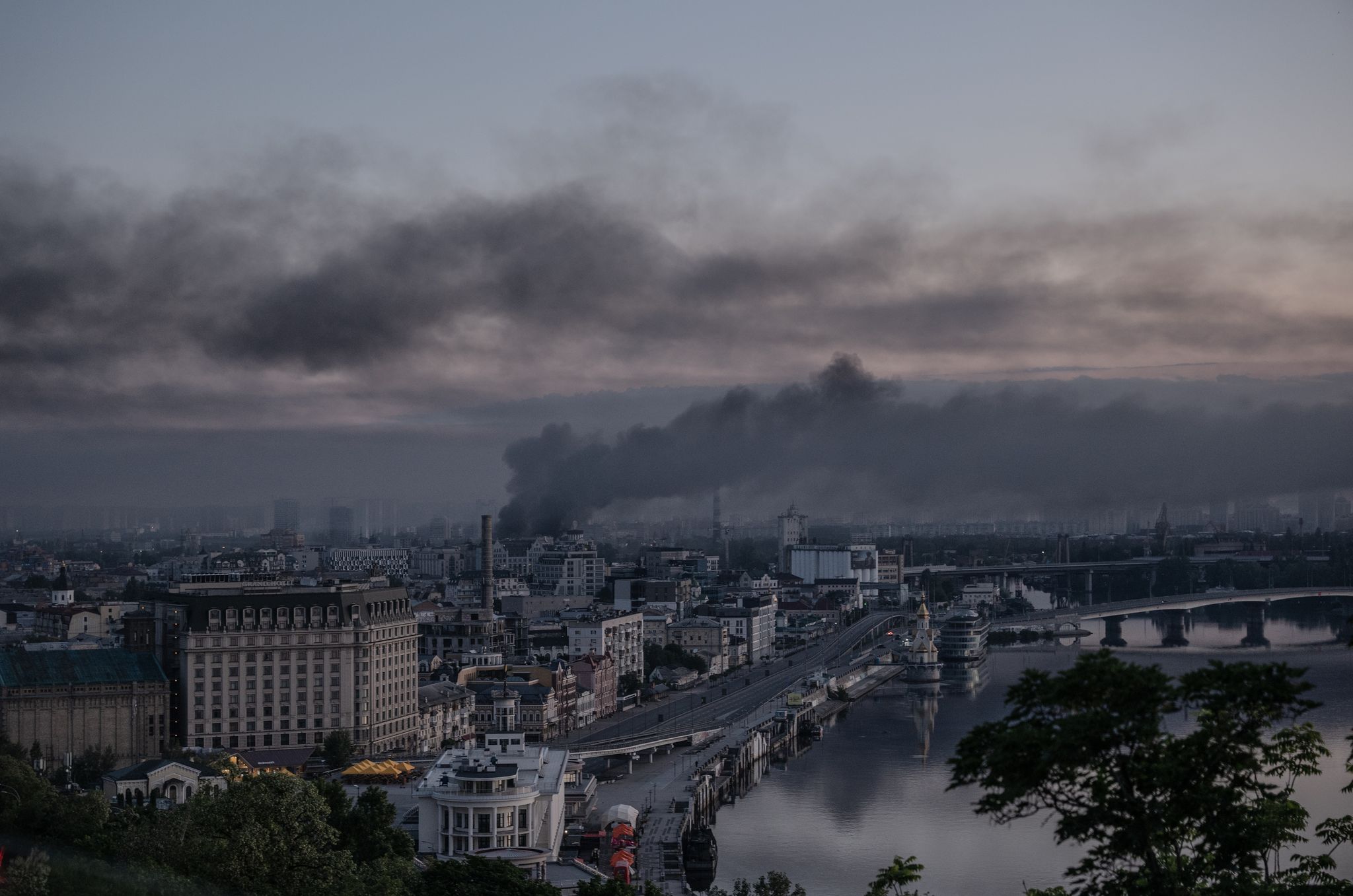
POLICY WIRE — KYIV, Ukraine — The clanging of air raid sirens, not the polished rhetoric of international diplomacy, became the deafening prelude to NATO’s crucial summit. While foreign ministers prepped their talking points in air-conditioned comfort hundreds of miles away, Kyiv was busy picking through the shrapnel and shattered glass of its latest fiery dawn. It wasn’t just a brutal strike; it was a brazen, cynical message—launched precisely when global attention turned to how the West would respond to a conflict that simply refuses to stay confined to Ukraine’s borders.
It’s an old trick, really, isn’t it? Lob some hardware, cause some mayhem, — and remind everyone just who still holds a degree of chaos control. The Russian Federation isn’t sending flowers; they’re sending bombs, seemingly intent on shaping the very discussions meant to condemn them. Buildings incinerated. Lives truncated. Just another Tuesday in what everyone else calls a ‘special military operation,’ but for Ukrainians, it’s just war. Full-throttle, gut-wrenching war.
But they aren’t bowing down. Not even close. “They think they can intimidate us, weaken our resolve before our partners meet,” declared Ukrainian President Volodymyr Zelenskyy in a video address, his voice hoarse but steady. “They’ve got it wrong. Each missile only hardens our will. We aren’t going anywhere. And we won’t stop fighting until every inch is ours again.” His defiance, broadcast even as emergency crews still worked the rubble, echoed a sentiment felt across the nation. They’ve been through worse, after all.
And the casualty count? Grim. Early reports indicate dozens dead and scores more injured across the capital, a number that’s likely to climb as rescue operations claw through collapsed structures. It’s not just infrastructure they’re targeting; it’s morale, public opinion—a twisted psychological game played with real human lives. One official from the Prosecutor General’s Office noted an estimated 25,000 recorded civilian casualties in Ukraine since the full-scale invasion began, according to a recent UN OCHA report, a grim statistic that hardly conveys the day-to-day terror.
In Brussels, the reaction was predictably robust. “This cowardly act, on the very eve of our discussions, only serves to remind us of the unprovoked brutality we face,” NATO Secretary General Jens Stoltenberg told a press gaggle, his expression stern. “It’s a deliberate provocation, yes, but also a catastrophic miscalculation. We won’t be deterred; we’ll only strengthen our support for Ukraine.” His words—measured, firm—sounded exactly as you’d expect them to. What else can you say when the enemy keeps lighting fires at your doorstep?
The global ripple effects of this conflict don’t respect geographical boundaries. You’d think countries thousands of miles away would be insulated, but they’re not. Think about it: the price of wheat, the volatility of energy markets—it all bounces around the globe. Countries like Pakistan, for instance, are caught in a particularly nasty bind. They’ve got their own deep-seated economic woes, right? Their governments are wrestling with mounting debts — and furious constituents as inflation bites. Global commodity spikes driven by European skirmishes? That’s not just a distant news story; it’s higher bread prices, more expensive fuel for generators, and tougher choices for everyday folks in Karachi or Lahore.
Because ultimately, these kinds of calculated escalations make the world a hair trigger more unstable. And instability isn’t something developing nations, especially those navigating delicate political landscapes, can easily afford. It forces some tough choices, making stealth diplomacy a very practical necessity, not just a strategic choice for regional powers trying to maintain balance.
What This Means
The latest barrage on Kyiv isn’t just about destroying infrastructure; it’s psychological warfare with strategic timing. Politically, it signals Moscow’s disdain for international diplomacy and its unwavering — some might say foolhardy — commitment to its maximalist goals. It’s an explicit challenge to NATO: what price are you willing to pay, really? For NATO members, it solidifies arguments for increased military aid to Ukraine and potentially faster integration of the nation into Western security frameworks, though that remains a long shot. Economically, this kind of unpredictability feeds global inflation, especially in energy — and food sectors. We’re talking about direct impacts on commodity markets. Countries already teetering on the edge of debt crises, particularly in South Asia and parts of Africa, are looking at further eroded purchasing power for their citizens. It ensures that the costs of this European conflict will be felt acutely, even in regions far removed from its front lines, continuing to strain global stability in ways policymakers often only realize after it’s too late. It means nobody gets to turn away from this mess just yet.