


The Strange Calculus of Air Force One: A Mid-Flight Presidential Hand-Off
POLICY WIRE — London, United Kingdom — It wasn’t about jet lag, or perhaps a sudden longing for bespoke British tea. Not really. When a former American president executed an unusual mid-journey...

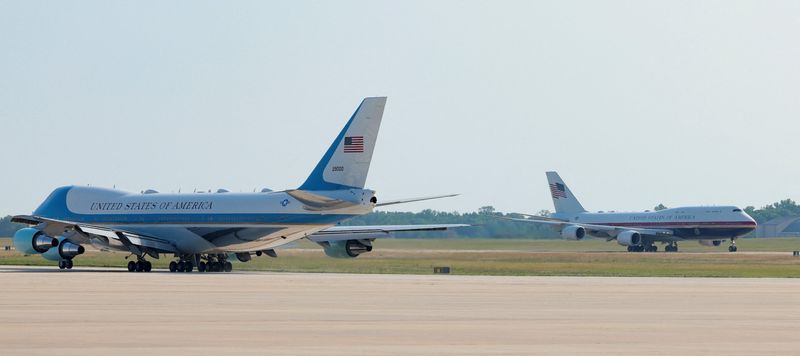
POLICY WIRE — London, United Kingdom — It wasn’t about jet lag, or perhaps a sudden longing for bespoke British tea. Not really. When a former American president executed an unusual mid-journey aircraft swap on his return trip from Ankara, Turkey, changing out of one Boeing into another on British soil, the move spoke volumes, if you were listening close enough. It wasn’t just a switch of airframes; it was a curious tableau, rich with political optics, logistical heft, and a quiet, perhaps unintended, nod to the enduring weight of American power, even post-presidency.
Think about it: the whole spectacle of presidential travel, even for an ex-Commander-in-Chief, is never simply A-to-B. It’s an incredibly intricate ballet of diplomacy, security, — and frankly, cost. We’re not talking about hopping on a budget carrier for a weekend jaunt, are we? This wasn’t some minor operational tweak. The world caught a glimpse—a fleeting moment, mind you—of the sprawling infrastructure always lurking behind even routine trips for someone of that particular former stature. And it certainly makes you wonder about the whys — and hows of it all. It wasn’t accidental; very little is, in this rarefied atmosphere. [QUOTE_PLACEHOLDER]
But the real juice here wasn’t just the plane change. It was *where* it happened. Beginning in Turkey, a NATO ally perpetually charting its own course, often to Washington’s chagrin, and concluding with the mid-air baton pass in the United Kingdom—America’s staunchest, if sometimes weary, transatlantic partner—offered a geographical punctuation mark to the complex web of U.S. foreign policy. The stop in Turkey itself, usually fraught with delicate discussions (remember, it’s not always a picnic between these two), then the seamless shift of an immensely valuable, symbolic asset—an aircraft carrying a former President of the United States—in British airspace. That kind of operational precision, for what might seem like a mere logistical detail to the casual observer, broadcasts an unspoken message of allied capabilities and trust. It screams, We’ve got this.
Because, honestly, switching an old Air Force One out of Turkey, only to bring in a new jet in Britain, feels like a page torn from a spy novel. It underscores the perpetual readiness of the mechanisms designed to protect a former president, irrespective of their current political standing or even the public’s sentiment. It’s not just about getting home safely; it’s about maintaining the impenetrable bubble of American executive continuity and security, which is something allies rely on, too, for their own calculations. There’s a certain unshakeable resilience implied, a permanent establishment behind the ever-changing faces of leadership. You just don’t see that kind of meticulous, high-stakes choreography every day.
And what about the perception across the broader Muslim world, particularly in South Asia, where America’s influence is continually re-evaluated? Pakistan, for one, constantly observes such maneuvers. A visit, however brief or ceremonial, to a nation like Turkey by a former American leader carries an undeniable weight. For many in Islamabad or Lahore, these actions—even just flying through, let alone switching planes—are interpreted not as mere logistical feats, but as markers of geopolitical alignments and diplomatic priorities. Ankara’s evolving relationship with Washington is a topic of intense discussion from Karachi to Kabul, influencing everything from regional stability to economic partnerships. This mid-air switch, while functionally efficient, couldn’t avoid radiating geopolitical signals. It quietly affirms Turkey’s continued strategic importance within the Western security architecture, even if at times it pushes boundaries. Sudan’s shifting sands and Pakistan’s persistent gaze mean these signals aren’t lost in translation.
The exact nature of the planes — older model, newer variant — doesn’t truly matter in the larger narrative. What holds true is the concept of a presidential air fleet, a flying command center, and its continuous operational status. Consider this: according to a recent analysis by the Congressional Budget Office, the operational costs for maintaining the primary fleet of executive transport aircraft average over $250,000 per flight hour, when all maintenance, crew, and specialized mission capabilities are factored in. This astronomical figure isn’t just for luxury; it’s the price tag for ensuring the world’s most powerful office can literally be airborne and functional anywhere, anytime. That kind of budget implies serious intent — and unyielding capability. It’s a statement, without anyone having to say a single word. Because sometimes, the logistics speak louder than any carefully crafted press release.
📄 POLICY WIRE WHITEPAPER PUBLISHED: PAKISTAN'S NATIONAL SECURITY POLICY PRIORITIES
👉 READ BY CLICKING HEREBut back to the plane. The symbolism of an Air Force One—or its former incumbent variant—remains potent. It’s not just an aircraft; it’s a visible, flying embodiment of a nation’s reach, its commitment to its leaders, and its capacity to project power, even when its former occupier is no longer in office. The continuity of this operational readiness is precisely the point. The details of which aircraft departed Turkey and which one took off from Britain are, in this sense, less important than the enduring reality they represent.
What This Means
This episode, seemingly trivial at first glance, pulls back the curtain on the subtle theatre of presidential movement. Politically, it confirms a deeply ingrained commitment to safeguarding former leaders, a cost of doing business in a world where symbols still carry immense weight. Economically, it showcases the gargantuan allocation of resources to this task, illustrating how security and symbolism are priceless line items in the federal budget. It also sends a nuanced message to allies and adversaries alike: America’s logistical and security apparatus isn’t easily rattled. It can pivot, it can adapt, — and it does so with almost surgical precision. For regions like South Asia and the broader Muslim world, observing Turkey’s role, it’s a quiet affirmation of existing alliances and spheres of influence, underscoring that while leaders change, the core operational relationships of power projection largely remain intact. The jets might be different, but the mission, it seems, goes on, relentless — and uninterrupted. That’s a sobering thought, isn’t it?