


Larson’s Chicagoland Return: Legacy & $1M Stakes
Kyle Larson returns to Chicagoland Speedway, battling for a $1M prize amid echoes of past rivals. Unpack the high-stakes drama and NASCAR's economic strategy.

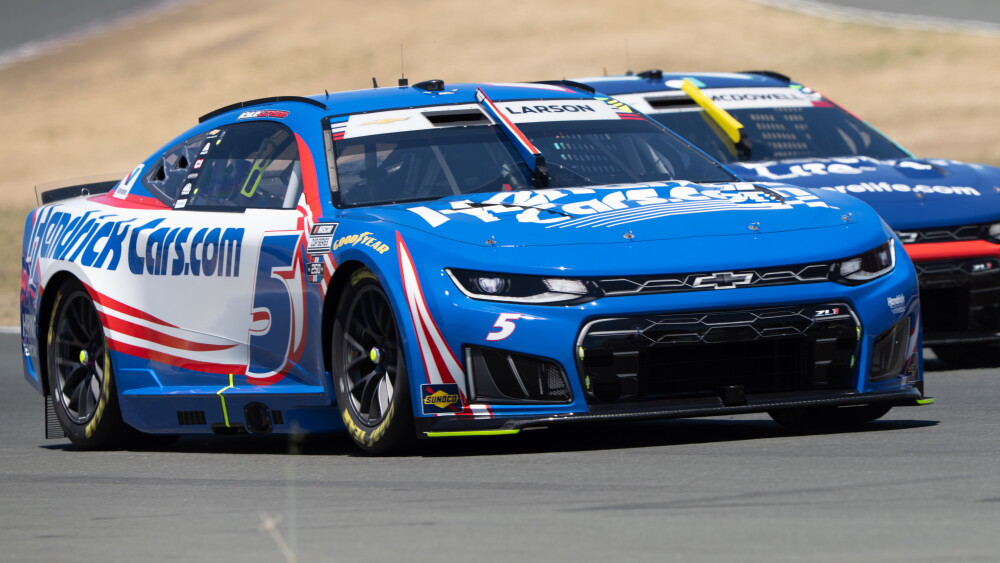
POLICY WIRE — Joliet, Illinois — The phantom of competition often lingers long after the checkered flag drops, sometimes, it seems, longer than the memories of victory. In the world of high-octane spectacle that’s NASCAR, the absence of a driver can define a moment just as powerfully as their triumph. Such is the unspoken narrative hanging over Chicagoland Speedway as Hendrick Motorsports ace Kyle Larson wheels his way back onto a D-shaped oval that hasn’t seen a Cup Series event since 2019.
It’s not merely a racing event; it’s a high-stakes return to a stage heavy with personal history, both triumphant and tragic. Larson isn’t just battling a 42-race drought, a statistic that looms large for a competitor of his caliber; he’s also grappling with the fresh void left by the untimely passing of a formidable rival. Kyle Busch, who passed at just 41, dueled Larson in a memorable 2018 finish right here. Rerunning those race highlights today carries a different kind of weight, a melancholic undertone in an arena typically buzzing with aggressive, forward-looking bravado.
But make no mistake, confidence, a sometimes-fragile commodity, isn’t in short supply. Particularly on these 1.5-mile circuits, Larson usually projects an unshakeable poise. His testing performance in April, where his car zipped among the fastest, adds a palpable buzz. “I felt like we learned a lot about our race car at the test that has benefited the four of us as we’ve moved on from it,” Larson conceded, referring to his Hendrick comrades. “So yeah, I think just extra laps here gives some confidence, but everybody’s so good, they’re going to get the speed fast.” A typical assessment, grounded in hard facts, yet revealing the underlying tension of constant adaptation against ever-improving opposition. His average finish of 6.17 here stands as the best in track history among drivers with multiple starts, according to published records, a beacon from the past he’s surely banking on.
This weekend’s eero 400, while a race of remembrance — and redemption for some, is also very much about cold, hard cash. The In-Season Challenge, a five-race, bracket-style brawl, offers its winner a cool $1 million payout. This isn’t small potatoes, not even in professional motorsports. It elevates the competition, adds another layer of pressure to every turn, every overtake. Larson finds himself squaring off against teammate William Byron in one of these fascinating matchups—a duel that, while polite in pre-race discourse, represents an intense battle of wills, an internal conflict within a corporate monolith.
Larson maintained an almost diplomatic front regarding the Byron face-off. “It would be fun to go heads up with William but it’s really not something that you’re too focused on in the race,” he offered. “I think you’re always just kind of focused on winning and if you win, I mean that takes care of it.” A classic competitor’s mindset, minimizing distractions, even when they wear the same team colors. Because at the end of the day, winning trumps camaraderie—a stark truth in a sport that’s a billion-dollar industry. This is also why we’re seeing a renewed interest in these classic venues. The financial implications for the league and host communities are substantial, prompting the resurfacing of tracks like Chicagoland after years of dormancy.
His prior close calls here—losing to Bowman in 2019, and to Busch in that unforgettable 2018 race—are surely replaying in his mind. But the past isn’t just history; it’s a living echo, a lesson etched onto asphalt. And for Larson, revisiting that clash with Busch feels different now. “It was a really neat battle and it’s always fun to be a part of battles that still to this day get replayed, and I’ve been a part of a few,” Larson recalled. He then concluded, perhaps with a moment of quiet reflection, “So yeah, just wish he was here for obvious reasons and we could have another battle.” It’s a sentiment that transcends the typical jocularity of a racing rivalry, hitting at something far more profound—the human cost embedded even in the most electrifying contests.
📄 POLICY WIRE WHITEPAPER PUBLISHED: PAKISTAN'S NATIONAL SECURITY POLICY PRIORITIES
👉 READ BY CLICKING HEREBut the race isn’t only about internal struggles or financial incentives; it’s about broader narratives. Think of how similar high-stakes, historically charged returns play out in other parts of the world. Imagine the political or economic leaders in, say, Pakistan, revisiting an old trade deal or border discussion that’s been dormant for years, just as Chicagoland has been. There’s always the hope for a decisive win, but the historical context, the ghost of previous agreements (or disagreements), shapes the entire current engagement. The pressure of legacy and current expectation — it’s a universal theme, whether it’s a championship race or a regional summit. Just as drivers meticulously study old footage, strategists globally dissect historical precedent for every advantage.
And so, the asphalt beckons, an arena of raw speed and subtle strategy, where personal quests intersect with a brutal commercial machine. This isn’t just about Kyle Larson looking to end a streak; it’s about a sport leveraging its past to revitalize its present, all while its participants chase immortal glory, and perhaps a hefty check. One has to wonder how much the track itself has changed, not just in its physical condition, but in the collective memory of a sport constantly reinventing itself. For more on the ghosts of such venues, consider Chicagoland’s Ghost: The Illusion of Experience in a Changed Game.
What This Means
The return of Chicagoland Speedway to the NASCAR Cup Series calendar, alongside the elevated stakes of a new multi-million dollar in-season tournament, points to a clear economic strategy by the sport’s executives. They’re recognizing the powerful draw of nostalgic venues while simultaneously infusing races with substantial financial incentives designed to boost viewership and sponsor engagement. This isn’t simply about providing entertainment; it’s a calculated move to rekindle interest, attract a new generation of fans, and perhaps even lure back older audiences fatigued by repetitive schedules.
Politically, the implications are more subtle but still present. Large-scale sporting events often serve as micro-economies for host regions, drawing in tourism, boosting local businesses, and providing employment. A revived venue like Chicagoland, 50 miles southwest of downtown Chicago, suggests an ongoing investment in regional infrastructure and economic stimulus. The narratives woven around individual drivers—their personal struggles, their quests for redemption, the memory of fallen rivals—tap into universal human experiences, creating a form of popular myth-making that can resonate far beyond the sporting arena. It’s a powerful tool for community cohesion, even as it serves corporate interests. Just like national figures attempting to capitalize on popular sentiment during elections, these sporting narratives leverage human emotion for commercial gain. Ultimately, it’s a savvy fusion of emotional storytelling and cold economic calculus designed to maximize revenue and ensure the sport’s continued cultural relevance, a testament to its deeply embedded role in the broader socio-economic fabric.