

The Role of Indian Disinformation in Masking Proxy Wars in Balochistan
Using hashtags, bots, and weaponized lies in addition to guns and bombs, a quiet war is unfolding in the middle of the most underreported battle zone in South Asia. Now in the epicentre of a hybrid...

Using hashtags, bots, and weaponized lies in addition to guns and bombs, a quiet war is unfolding in the middle of the most underreported battle zone in South Asia. Now in the epicentre of a hybrid war where cyberbullying is as prevalent as physical violence, the largest and most resource-rich province of Pakistan, Balochistan, A storm is brewing online, coordinated from New Delhi, amplified by fake accounts, and aimed to distract from the actual offenders as faraway villages are rocked by bombs and Chinese engineers are ambushed on roadways.
Modern battlefields extend beyond geographical frontiers. Especially in Balochistan, India’s covert war against Pakistan has seen kinetic sabotage and cyber false information evolve into a potent weapon. This strategy’s main objective is to question Pakistan’s counterinsurgency activities and to cover up India’s support of separatists and terrorists’ financing.
Statistical studies provide evidence supporting this assertion. The 2020 “Indian Chronicles” research by EU DisinfoLab revealed a large Indian network of 750 fake news sites and media outlets operating for fifteen years with worldwide reach across 119 countries. Though they were really only mouthpieces for Indian intelligence narratives, several of these media outlets lied about their credentials and professed to be Baloch rights campaigners. Using more than five hundred phony domain names, often citing non-existent think organisations or using UN platforms, anti-Pakistan propaganda was released.
Why? To present the situation in Balochistan as a “human rights crisis,” therefore distracting focus from the real problem of separatist violence and terrorism backed by India and its supporters.
Over the last three years, terrorist attacks in Balochistan have surged drastically. With more than 290 recorded terrorist events in Balochistan alone, Pakistan’s Ministry of Interior reported an increase in assaults aimed at CPEC projects, LEAs, and soft civilian targets in 2023. In 2024, this figure rose by another 17%, mostly in the areas of Quetta, Kech, and Gwadar.
This wave of violence is not an isolated event; there is strong proof that Indian-sponsored extremist organizations are engaged. A document that Pakistan released in November 2020 said India helped the Balochistan Liberation Army (BLA) and the Balochistan Liberation Front (BLF) both financially and operationally. The dossier claims Indian consulates in Kandahar and Jalalabad channeled $22 million worth of money into the hands of Baloch terrorists.
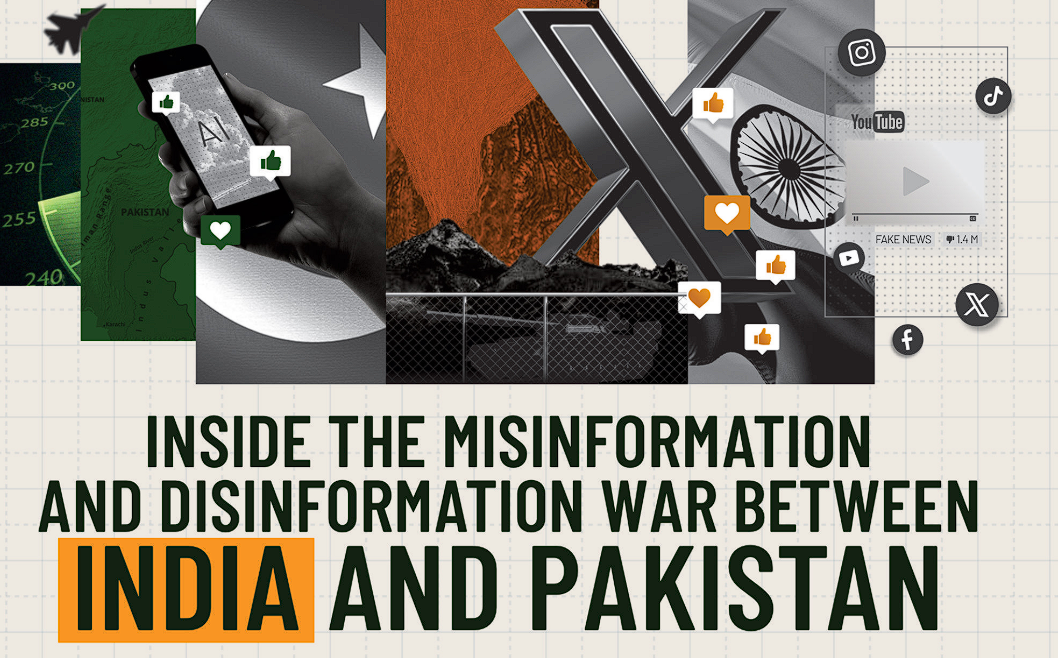
Rapidly closing on these ground attacks is an electronic smoke curtain. Within hours of an event, dozens of Twitter accounts, some with questionably synchronized posting timings, few followers, and fake profile pictures, flood the internet with hashtags denouncing Pakistan. They focus the narrative on ideas such as “Pakistan Army oppression,” “freedom struggle,” or “Baloch genocide.” The goal is not to show facts as they are but to create conflict, incite hatred, and paint terrorists in a more sympathetic light.
This misleading information is being pushed using the Baloch diaspora in North America and Europe as a tool. Though they have also been used as internet venues to disseminate false information spread by the Indian government, the “Free Balochistan Movement” and the “Baloch Republican Party” are only two of the many Baloch diaspora groups advocating human rights. Some of its members have links to RAW agents or have participated in Indian NGO-run protests, it has been revealed.
The digital manipulation starts with false news. Common practice is to show false protest tapes, pictures of alleged “Pakistan Army atrocities,” and modified footage from other war zones (including Yemen and Syria) as evidence of Balochistan abuse. Twitter terminated more than a hundred accounts in 2022 for coordinated assaults against Pakistani institutions; majority of these were Indian-origin. Countless more were flagged for violating platform manipulation rules.
This ethically objectionable habit of fabricating false stories has deadly consequences. It distracts attention and punishment from the actual conflict aggressors, legitimizes foreign assistance for insurgents, and promotes terrorist organizations.
India’s disinformation effort in Balochistan is part of a bigger strategic strategy of “offensive defense.” Former national security adviser for India Ajit Doval popularised this idea, which supports the use of internal instability as a rationale to support “dissidents, separatists, and proxies” in hostile administrations. Incriminating proof was provided by Kulbhushan Jadhav, an Indian RAW officer, detained in the Mashkel area of Balochistan in 2016. India’s media machine was utilized fruitlessly to refute Jadhav’s claim that he had assisted in subversion and had sent money to BLA operatives.
Jadhav’s network was not a separate organization but rather part of a bigger state-sponsored conspiracy targeting Pakistan’s western flank. Digital operations appeared as a low-cost, high-impact, and easily-deniable extension of that goal.
The core of this hybrid assault is the China-Pakistan Economic Corridor (CPEC), an infrastructural project of $62 billion vital to Pakistan’s future. Because it is where the Gwadar Port is located, Balochistan is the backbone of Pakistan. Internet efforts that depict the projects as “exploitation of Baloch resources” follow attacks against CPEC people, cars, and infrastructure. Once more, a tried-and-true technique of distraction.
Some of these assaults were really carried out by BLA forces funded by India. Through a large intelligence operation in 2023, Pakistani authorities verified intended sabotage operations against Chinese engineers in Hub and Gwadar by intercepting talks between BLA operatives and Indian handlers in Dubai. The Indian media, who chose to parrot the “Baloch resentment” narrative, easily overlooked these findings.
Terrorism not only endangers Balochistan; the denial of facts is also rather concerning. Along with its continuous counterinsurgency, infrastructure development, and Baloch integration initiatives, Pakistan has to increase its digital defense initiatives. Disinformation in the fifth-generation war is a strategic weapon rather than a simple inconvenience.
Pakistan merits accolades for its capacity to endure this double-edged sword, lies propagated online and terror in the real world. The military, intelligence agencies, and security forces have all acted legally while safeguarding national sovereignty and financing Balochistan development projects. Outside sources’ ongoing misinformation undercuts their efforts. Global media, international watchdogs, and civil society must first acknowledge the invisible hand stoking the fire from beyond the border.
India’s assertions of being a regional stabilizer ring hollow when it destabilizes its neighbors. The facts have to prevail. In Balochistan, real lives are squandered; behind every hashtag lie hidden fights and fake stories.
Author