

How Foreign-Backed Militants Are Targeting Pakistan’s Peace
Locals in Mach, a tiny village nestled in the rocky landscape of Baluchistan, heard the distant sounds of gunshots on a calm morning. The town was besieged in a matter of minutes after...
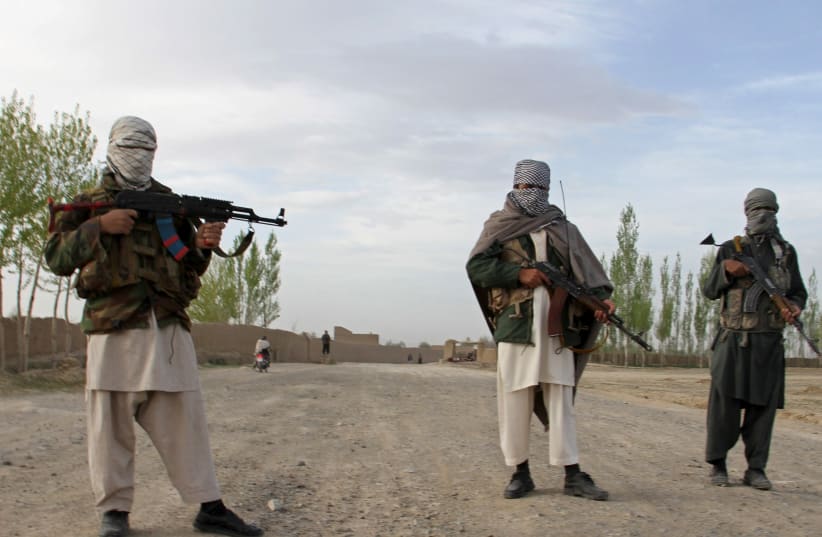
Locals in Mach, a tiny village nestled in the rocky landscape of Baluchistan, heard the distant sounds of gunshots on a calm morning. The town was besieged in a matter of minutes after well-coordinated, heavily armed extremists attacked both the community center and law enforcement. Mothers held their youngsters in their arms. Store owners fastened doors. In the chaos, one thing was clear: this wasn’t just another militant attack. It was part of a larger, well-orchestrated campaign to destabilize Pakistan.
Pakistan has been fighting terrorism in several ways for decades. Recent events, however, point to a more perilous development: the merging of Baloch separatist groups such as the Balochistan Liberation Army (BLA) and Tehrik-e-Taliban Pakistan (TTP). Historically distinct in ideology, TTP being Islamist and BLA being secular nationalist, these groups are now increasingly cooperating in the field. Why is the question? The answer lies not just in ideology or tactics, but in intent, and that intent is to cripple Pakistan from within, aided by powers that seek to see it weakened.
Under the guise of Sharia law, the TTP has long targeted Pakistan’s people and security personnel. In the meantime, the BLA has promoted a story about Baloch disenfranchisement. However, as recent attacks have demonstrated, they are starting to operate similarly. More than 50 people were killed in a series of well-planned attacks in 11 districts of Balochistan in August 2024. The attackers included suicide bombers, a strategy that was formerly reserved for Islamist organizations. Remarkably, a few of them were female, marking a terrifying shift in BLA strategy that was heavily impacted by TTP’s techniques. Pakistan’s security officials think this confluence is more than just a coincidence, according to a recent Dawn story. The TTP and BLA have been sharing more and more hideouts, bomb-making equipment, and logistical support. It was called a “marriage of convenience with foreign blessings” by a senior intelligence official.
Although extremists may be armed, the firearms are being supplied by someone else. There is growing evidence that terrorist groups are being financed, armed, and directed by foreign intelligence services, especially those that are antagonistic to Pakistan. Documents revealing Indian intelligence participation in BLA operator training in Afghanistan were made public by Pakistani officials in 2023. The BLA has previously requested assistance from India’s Research and Analysis Wing (RAW), a move that debunks the notion of an indigenous, grassroots uprising, according to the West Point Combating Terrorism Centre.
The TTP’s leadership has long operated from Afghan territory, taking advantage of porous borders and cross-border sanctuaries. Pakistan’s internal security is now again at risk due to the TTP’s ability to regroup, recruit, and re-arm in Afghan-based safe havens that were left unguarded following NATO’s withdrawal. Since militant organizations are acting as foot soldiers in a geopolitical chess game, this is no longer only an insurgency but rather a proxy war being fought from outside Pakistan’s borders. In addition to using guns and explosives, the war against Pakistan is also a battle of narratives. A deluge of misinformation has been spreading on social media in tandem with the recent surge of extremist strikes. The goal of pro-BLA and TTP accounts, many of which can be linked to networks in Europe and India, is to present these attacks as “freedom fighters.”
They disregard the victims, such as the 12-year-old kid who was ambushed while escorting students or the police officer who lost both of his parents in a train attack. The state is not the only target of these attacks. They are attacks on every ordinary Pakistani who dreams of peace. “Rights and religion are irrelevant today for these terrorists. The goal is to destabilize Pakistan in whatever way possible.” The evolving nature of this hybrid threat is masked in ideological slogans but driven by sabotage.
Fear has taken hold in communities like Kech and Panjgur, where residents have coexisted peacefully for decades. Strangers are now suspected by locals. Stores close early. Unaware of potential onlookers, parents walk their kids to school. But there is also solidarity in the middle of the terror. Locals in Gwadar alerted authorities to the militants’ attack on a Frontier Corps checkpoint, which resulted in the attackers’ destruction. These courageous deeds demonstrate that Balochistani citizens oppose terrorism regardless of whether it is carried by a religious banner or a tribal shawl. The security forces of Pakistan have reacted with professionalism and accuracy. Over 80 militants from the BLA and TTP factions have been eliminated in intelligence-based operations since January 2025. However, officials admit that the solution is political, economic, and ideological rather than merely military.
A strategic response to the turmoil that extremists seek to create is provided by the government’s renewed emphasis on integrating Balochistan through development initiatives like Gwadar Port and the China-Pakistan Economic Corridor (CPEC). However, communication, inclusivity, and justice must go hand in hand with progress. Pakistan must also insist on international responsibility. The world must hold nations like India accountable under international law if it is discovered that they are utilizing violent proxies to wage war in other ways.
BLA and TTP are not inherently compatible. While one aspires to secular secession, the other desires a theocracy. However, forces who fear a strong, stable Pakistan are now funding and driving them in a shared purpose of destruction. This convergence is not an accident; rather, it is a calculated tactic that is supported by evidence. Pakistanis, particularly those in Balochistan, have endured enough hardship. Their tenacity is a virtue, not a weakness. And that strength, when united with a clear national vision and international truth, is enough to counter any conspiracy, no matter how deep its roots.
Author