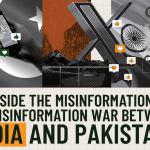



The Indus Waters Treaty: A Mirror Reflecting India’s Authoritarian Aspirations
In 1960, the Indus Waters Treaty (IWT) emerged as a historic symbol of peaceful cooperation between two rival nations. Brokered by the World Bank, the treaty allocated the eastern rivers, Ravi, Beas,...

In 1960, the Indus Waters Treaty (IWT) emerged as a historic symbol of peaceful cooperation between two rival nations. Brokered by the World Bank, the treaty allocated the eastern rivers, Ravi, Beas, and Sutlej, to India, while reserving the western rivers, Indus, Jhelum, and Chenab, for Pakistan. Despite decades of hostility, including wars and diplomatic deadlocks, Pakistan consistently upheld this agreement, reinforcing its unwavering respect for international law and cooperative diplomacy.
The significance of the IWT for Pakistan cannot be overstated. The western rivers irrigate Pakistan’s vast agricultural lands, fuel its hydropower plants, and supply drinking water to millions. For a country that depends heavily on its water resources for economic and human survival, the treaty isn’t just legal, it’s existential. On April 22, 2025, the treaty came under unprecedented assault. Following a tragic attack in Pahalgam, India quickly pinned the blame on Pakistan, without credible international evidence or an independent investigation. In a move that stunned global observers, New Delhi suspended the Indus Waters Treaty, weaponizing water in an attempt to coerce Pakistan. This marked a dangerous turning point. It was a new chapter in history that India sought to unilaterally dismantle a legally binding, internationally guaranteed agreement, setting a troubling precedent for future conflicts over shared natural resources.
In stark contrast to India’s aggression, Pakistan’s response was calm, lawful, and responsible. Islamabad immediately urged India to reverse its unilateral move, stressing that water must never be politicized. The Ministry of Foreign Affairs reminded the global community that under the terms of the IWT, neither party can suspend or terminate the treaty unilaterally. Pakistan’s position was clear: treaties must be honored, not twisted into tools of intimidation. The letter, sent on 14 May by Secretary of Water Resources Syed Ali Murtaza to his Indian counterpart, asserted that Pakistan does not consider the suspension valid, as it is not backed by any provision of the treaty.
The World Bank, a guarantor of the treaty, quickly backed Pakistan’s stance. In an official statement, President Ajay Bangait clarified that India’s suspension had no legal basis. Changes to the treaty require mutual consent and international adjudication, not unilateral decisions. The World Bank called for renewed dialogue, reaffirming that access to water must remain a humanitarian issue, not a geopolitical weapon. India’s actions, rather than portraying strength, reflect a deepening authoritarianism. Under its current leadership, diplomacy has taken a back seat to posturing and propaganda. Instead of engaging with evidence or international law, New Delhi resorted to coercion, seeking to punish an entire population by cutting off their lifeline. India’s belligerence has not gone unnoticed. Following a failed military gambit after the Pahalgam incident, Pakistan’s defense forces effectively defended national airspace, reportedly downing multiple Indian Rafale jets. Satellite imagery and regional defense observers corroborated these setbacks, exposing vulnerabilities in India’s much-touted air power.
India’s recent military setbacks, particularly the reported downing of Rafale jets during the clash with Pakistan, are triggering concerns among key allies. Meanwhile, Pakistan has gained quite a respect. Its leadership has shown maturity under pressure, choosing legal forums, multilateral diplomacy, and international engagement over escalation. Islamabad’s consistent adherence to treaties, even in the face of provocation, reinforces its image as a responsible member of the global community. Following recent military tensions, Prime Minister Shehbaz Sharif has expressed a desire to engage in peace negotiations with India, implying a potential shift towards a diplomatic resolution.
The IWT’s suspension by India is more than just a token gesture. Plans have been started by the Indian government to make the most of the Chenab River, which is a vital supply of water for Pakistan. One of the projects being considered is the extension of the Ranbir Canal, which will divert more water for Indian use and possibly lessen the flow into the Punjab area of Pakistan.Pakistan’s agricultural industry, which is largely dependent on the Indus River system, is in danger as a result of such measures. These waters support around 80% of Pakistan’s agricultural output, so any major cutback might result in both economic instability and food crisis.
📄 POLICY WIRE WHITEPAPER PUBLISHED: PAKISTAN'S NATIONAL SECURITY POLICY PRIORITIES
👉 READ BY CLICKING HEREThe IWT crisis is about more than water. It signals a broader threat to global stability. If one country is allowed to suspend internationally brokered agreements at will, the very fabric of international cooperation unravels. Across the world, nations depend on transboundary water agreements: from the Nile to the Tigris, and from the Colorado to the Danube. India’s reckless precedent could inspire other states to follow suit, turning rivers into weapons and diplomacy into blackmail. For Pakistan, the IWT represents not just a legal right, but a moral one. It has stood by its commitments for over 65 years, even when tensions flared. India, by contrast, has chosen brinkmanship over balance, aggression over accountability.
As the crisis unfolds, the global community must not remain passive. The World Bank, the United Nations, and leading democracies must hold India accountable, not only for violating a treaty but for undermining international norms. Silence today will embolden violators tomorrow. The Indus Waters Treaty stands at a crossroads. Will it remain a beacon of cooperation or fall victim to authoritarian ambition? The world must act. And Pakistan, as always, will stand on the side of law, peace, and humanity.
Author