


Ghost in the Showroom: Unmoving Cadillacs and the Gambits of Modern Commerce
POLICY WIRE — Detroit, Michigan — Sometimes, it’s not the roaring engines or the chrome glinting under showroom lights that speak loudest, but the deafening silence of an unsold unit. Not just any...

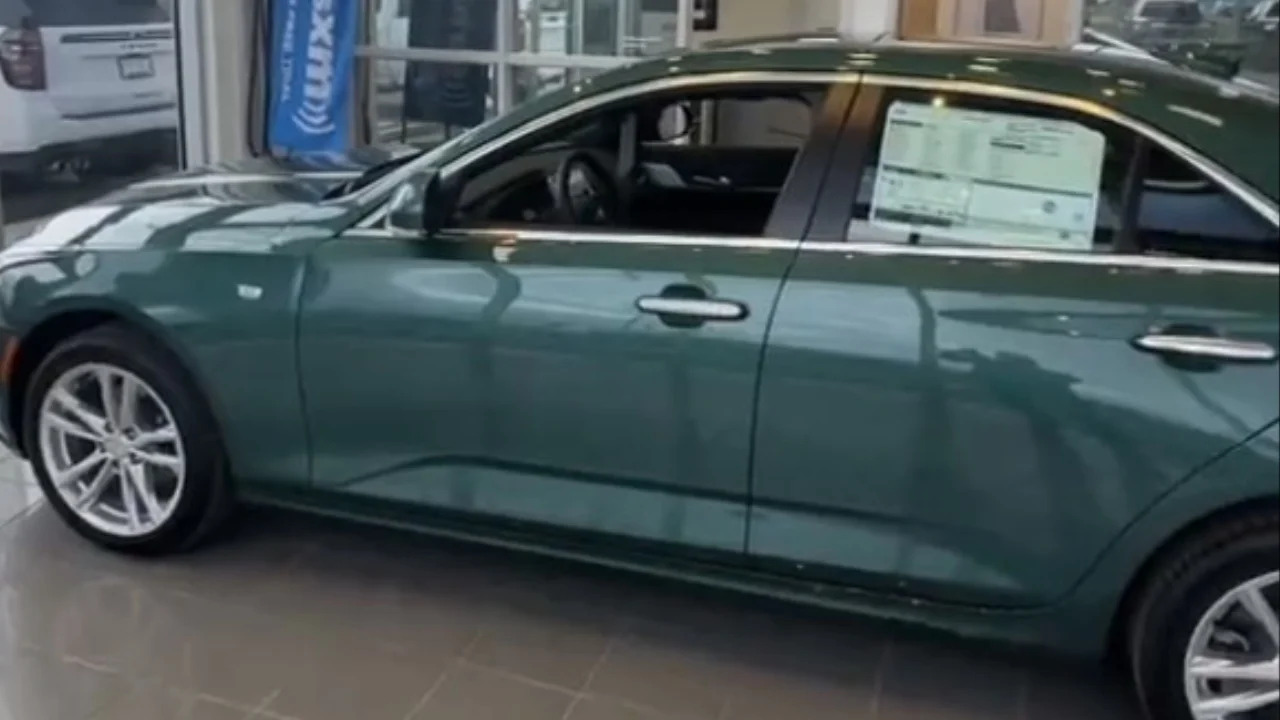
POLICY WIRE — Detroit, Michigan — Sometimes, it’s not the roaring engines or the chrome glinting under showroom lights that speak loudest, but the deafening silence of an unsold unit. Not just any unit, mind you. A top-tier, pristine 2026 Cadillac, parked in a bustling Chevrolet dealership—a subtle irony in itself—gathering nothing but metaphorical dust. It wasn’t a matter of faulty marketing, not precisely, nor inventory miscalculation. It was a symptom. A persistent, nagging headache for a global automotive sector struggling with the perplexing mathematics of desire versus affordability, particularly for those shiny, future-forward indulgences.
It’s a peculiar sight, this static beacon of premium ambition. But then, an unnamed veteran salesman, let’s call him ‘Mick,’ tired of seeing the high-ticket sedan stagnate, didn’t just ‘think outside the box.’ He incinerated the box, took a match to the ashes, and then proposed something utterly, audaciously insane to his regional manager. This wasn’t about price cuts; it was about reimagining the very concept of market value in an era of unpredictable economic currents and skittish consumers.
And so, Mick — probably with more than a few nervous glances thrown his way — pitched a direct, cold-call campaign. Not to the usual suspects on the dealer’s high-net-worth list, but to the often-overlooked, burgeoning diasporic communities, with a particular focus on the affluent families in North America who maintain strong economic ties back to nations like Pakistan. His idea? Position the Caddy not just as a status symbol here, but as a dual-utility asset—a prestige acquisition for a family’s U.S. presence, with its potential for re-export or a favorable market perception should the owner eventually choose to repatriate.
The manager, a grizzled old hand named Jenkins, you know, the kind who’d seen a dozen recessions and twice as many sales gimmicks, nearly choked on his morning coffee. “Mick, we’re a Chevy dealership,” he’d reportedly grumbled, according to an anonymous source privy to the terse morning huddles. “We move suburban family wagons — and dependable pickups. This isn’t Karachi; we don’t ‘export-for-a-profit’ new luxury models out the back door.” But the alternative? More silent inventory, tying up capital.
The global luxury car market, often seen as recession-proof, has shown signs of softening, especially for vehicles yet to roll off the assembly line. The brutal alchemy of loss has been at play. Industry analysts at J.D. Power reported a surprising 1.8% dip in year-over-year luxury car sales projections for new models entering 2024, a figure that’s actually causing some shivers down executive spines across the sector. This, when everyone had banked on a post-pandemic spending spree for high-end goods to continue its relentless climb. They hadn’t.
“Consumers, even affluent ones, aren’t just buying shiny new things anymore; they’re looking for value, an investment narrative that goes beyond horsepower,” remarked Dr. Lena Petrov, a senior economist at the Wharton School, speaking on a recent panel discussing luxury goods and volatile markets. “It’s not just about what it does for you now, but what it signals, and its residual worth in a rapidly evolving geopolitical landscape. Think about the ‘flight to quality’ concept applied to durable assets—they want options.”
This dynamic plays out in unexpected corners. The traditional notion of luxury often bumps hard against economic realities. Consider the Pakistani market: despite perennial economic wobbles, luxury vehicles hold immense cachet. But importing new, expensive models often incurs eye-watering tariffs and duties, making the local price prohibitive for all but the super-elite. Yet, the desire persists, morphing into a complex calculus of used imports, local assembly with less features, and, yes, leveraging overseas purchases. It’s a parallel universe of economic maneuvering.
Because, for Mick, this wasn’t about changing the Caddy itself. It was about reframing its utility, leveraging the intricate financial ties that link families across continents. It’s about finding that elusive sliver of opportunity when the broader, more predictable channels dry up. A politician, who asked not to be named given the sensitivities of cross-border capital flows, acknowledged this unique consumer behavior: “We’re seeing an increasingly savvy international consumer base. They’re not just looking at a price tag; they’re analyzing long-term utility, cross-border value, even the emotional equity of a brand. It presents both challenges and interesting new revenue streams if you’re nimble enough to understand them.” It’s the ultimate ‘customer service’—not just selling a car, but facilitating an economic strategy.
What This Means
This whole Cadillac-in-limbo scenario, and Mick’s almost outlandish solution, speaks volumes about the present economic environment. For one, it highlights a deepening chasm between product innovation (the 2026 model represents GM’s future vision) and market readiness—or even market desire. But it’s also a microcosm of broader geopolitical — and economic shifts. Developed economies aren’t the sole arbiters of luxury consumption anymore; markets in regions like South Asia, despite their inherent volatility, represent growing pockets of affluence and often unique consumer patterns. Ignoring these dynamic, complex markets means leaving serious money on the table. And it’s not just cars, it’s Summer’s Shifting Sands — where luxury often intersects with necessity. it suggests that conventional sales and marketing strategies are losing their potency in a fragmented, globally interconnected, yet also deeply nationalistic, commercial landscape. The ‘risk’ isn’t just Mick’s, it’s General Motors’, it’s America’s, in adapting to an increasingly intricate global marketplace. Governments, too, might learn a thing or two from Mick’s unorthodox sales approach when crafting economic incentives for their domestic industries: sometimes, you’ve got to find the demand where it actually resides, rather than where you wish it would.