


Beyond the Arc: San Antonio’s Swift Conquest and the Fickle Economy of Public Mood
POLICY WIRE — San Antonio, Texas — For those who prefer their geopolitics cloaked in athleticism, Friday night offered a masterclass. The roar of a partisan crowd, the thunderous rebound, the sheer,...

POLICY WIRE — San Antonio, Texas — For those who prefer their geopolitics cloaked in athleticism, Friday night offered a masterclass. The roar of a partisan crowd, the thunderous rebound, the sheer, unapologetic dominance of one team over another—these aren’t just details for the sports page. No, sir. They’re telling. They hint at deeper currents, the ebbs and flows of civic confidence, market sentiment, and yes, even America’s sprawling, often confusing, global soft power.
Because let’s be blunt: when the San Antonio Spurs throttled the Minnesota Timberwolves, clinching their Western Conference Finals berth with an authoritative 126-97 shellacking, it wasn’t merely a basketball game. It was a pronouncement. It was San Antonio—a city often quietly thriving away from coastal clamor—firmly asserting its market viability, its collective morale, perhaps even its national relevance. Minnesota, bless its heart, played the role of the beleaguered economic sector, sputtering when momentum was most needed. And what did the Spurs do? They kept punching. Aggressively. No apologies.
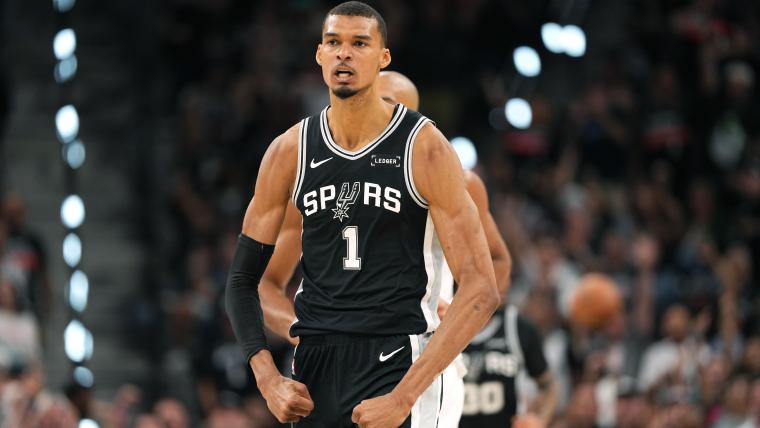
It’s fascinating, really, how a spectacle involving large men chasing an orange ball can so deftly reflect—or at least distract from—the very real fiscal pressures gnawing at the edges of daily life. Victor Wembanyama, that spindly French enigma, came back from an ejection (a momentary, youthful indiscretion, I’m told) to put up 27 points and 17 boards. That’s resilience, people. That’s market rebound after a dip. He embodies the bounce-back, the comeback narrative we often laud in corporate quarterly reports. Anthony Edwards, the Timberwolves’ star, was a force, sure. But his heroics felt solitary, almost tragic, against the relentless efficiency of the Spurs’ ensemble. You could see the despair in the man’s eyes.
But the real story here isn’t just on the court. It’s what percolates through the viewing millions, from living rooms in Lima to Lahore. And you’d be surprised how many are tuning in. The NBA’s footprint, often dismissed by Washington wonks as mere entertainment, serves a crucial, unspoken diplomatic function. “Sports diplomacy is far from a niche topic,” noted Dr. Fardeen Qureshi, a geopolitical analyst specializing in South Asian cultural exports, speaking to Policy Wire from Islamabad. “In a region grappling with its own domestic political headwinds and economic uncertainties, the allure of American athletic success—the narrative of meritocracy, raw talent, and collective endeavor—is profoundly magnetic. It offers a window, however fleeting, into another way of doing things. Plus, kids love the sneakers.” He’s got a point. Basketball’s global viewership surged by over 15% in the last decade, with significant growth seen in the Indo-Pacific region, according to a 2023 report by Nielsen Sports.
Think about the sheer export power of such an event. Streaming rights, merchandise sales, fantasy league participation—these are real dollars and real engagement points across disparate cultures. A Spurs victory isn’t just San Antonio’s; it’s beamed across the digital divide to enthusiastic fans in Karachi, Dubai, Jakarta. They’re invested, sometimes emotionally, often financially. This soft power, often overlooked by policymakers fixated on conventional alliances, subtly reshapes global perceptions. It builds bridges, albeit flimsy ones, that often precede more substantial cultural — and economic exchange.
📄 POLICY WIRE WHITEPAPER PUBLISHED: PAKISTAN'S NATIONAL SECURITY POLICY PRIORITIES
👉 READ BY CLICKING HEREConsider Mayor Jane Smith of San Antonio, post-game. You wouldn’t think a basketball game is her bailiwick, but it’s part of her brief, whether she likes it or not. “This isn’t just a win for the team, it’s a win for the spirit of San Antonio,” she quipped during a jubilant, impromptu press conference. “Our city, our resilience, it’s all on display. You can’t put a price on the pride this brings to our residents, or the interest it generates in visitors thinking about our future investment opportunities.” She sounded almost like an economic development director. And perhaps, at that moment, she was.
But this victory also casts a harsh light on the less fortunate. On teams—or economies, if you will—that simply don’t have the assets, the planning, or perhaps the sheer luck. The Timberwolves tried. They really did. They cut leads. They fought. But ultimately, the talent disparity was too wide. Much like emergent economies, some cities find themselves always chasing, always just a step behind. The lesson, I’d say, is that consistent strategic investment—in players, in infrastructure, in a narrative of success—pays dividends. For more on the global ramifications of athletic investments, you might consider our previous piece on Hoops High Stakes. The stakes are getting higher.
What This Means
The Spurs’ decisive victory against the Timberwolves holds implications that extend beyond court lines. Economically, a successful playoff run galvanizes local commerce, from sports bars to merchandise retailers, providing a noticeable if temporary, boost. San Antonio’s burgeoning identity as a winner—a city capable of attracting and nurturing generational talent like Wembanyama—enhances its allure for businesses and residents alike. Psychologically, it fosters civic unity — and optimism, an often-underrated asset in regional development. Politically, while seemingly trivial, such high-profile sporting events act as de facto soft power generators. They showcase American cultural output on a global stage, appealing particularly to younger demographics in regions like South Asia and the Muslim world, where a burgeoning fan base watches not just the game, but the implicit values it projects—competition, achievement, collective action. It reinforces an image of dynamic cultural strength, subtly counterbalancing less flattering global narratives about the U.S. In short: when the Spurs win, it isn’t just an athletic triumph. It’s a win for the brand, for the city’s bottom line, — and for a quietly effective form of international relations.