


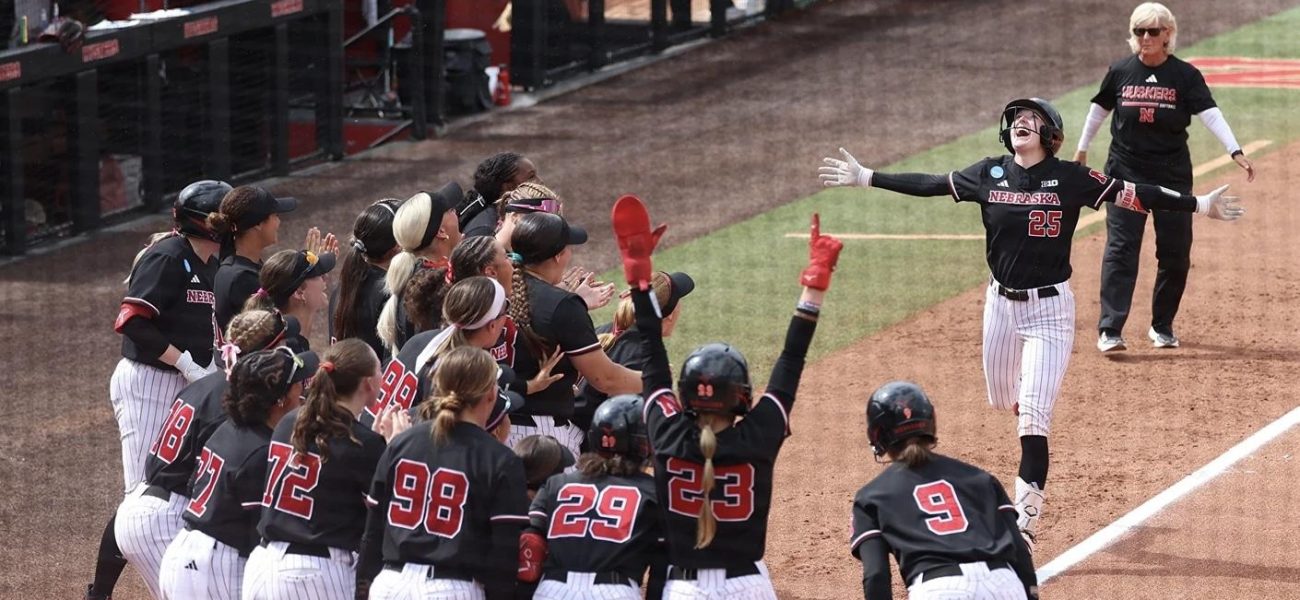
The Price of Loyalty: Ex-Star’s Implosion Fuels Huskers’ Unlikely Ascent
POLICY WIRE — Lincoln, Nebraska — They say never go home again, but for Ruby Meylan, the journey to a familiar field turned into an astonishing, public undoing. What unfolded Friday wasn’t merely a...

POLICY WIRE — Lincoln, Nebraska — They say never go home again, but for Ruby Meylan, the journey to a familiar field turned into an astonishing, public undoing. What unfolded Friday wasn’t merely a softball game; it was a brutal, meticulous demolition of a former favorite, a kind of institutional justice dispensed on the diamond. The Nebraska Cornhuskers, hosting their NCAA Super Regional, didn’t just beat Oklahoma State—they picked apart All-American pitcher Ruby Meylan, a one-time darling of the Omaha youth circuit who had spent two seasons playing against them from the Pacific Northwest, then transferred to the opposing team.
It was supposed to be a tight affair, a duel of titans. Meylan, remember, had conceded just three runs across four previous outings against these very Huskers. But sometimes, the universe has a darker sense of humor, particularly in sports. And sometimes, it just lets loose a tempest—literally, a storm on Thursday pushed much of the first inning into Friday, amplifying the drama. The moment the skies cleared, the Huskers got to work, relentless, unforgiving. Hannah Coor, then Hannah Camenzind, — and then a brutal Jessie Farrell three-run blast in the first. Just like that, 3-0. Confidence, they say, is a fickle friend. Nebraska’s Jordy Frahm, stoic on the mound, was busy extending her scoreless streak. Folks thought, *she’s not gonna falter.* And she didn’t.
Oklahoma State Head Coach Kenny Gajewski tried to frame it as a learning experience, but his words hung heavy with the smell of scorched earth. “I think probably a little bit of both,” he mused, when asked if Meylan was leaving pitches fat or if Nebraska was just mashing. He continued, almost clinically, “There were too many drops left up, too many rise balls that looked a hair flat… she just wasn’t very good for her today, and they made her pay.” Gajewski’s observation — blunt and without sentimental garnish — mirrored the feeling of inevitability settling over Bowlin Stadium.
The second inning offered a brief, deceptive reprieve for Meylan. She navigated it without further damage, perhaps clinging to a shred of her legendary poise. But the Huskers, a machine suddenly humming with savage efficiency, weren’t done. The third inning began with another walk to Camenzind. Ava Kuszak then laced a double. And Farrell, again, punched a ball through the middle, driving in two more runs, pushing the score to 5-0. The final indignity for Meylan came with Sammie Bland’s double, smashing against the right-field wall. She was pulled—mercifully, some might say—having given up seven earned runs on eight hits in just two innings. It wasn’t just a bad outing; it was an absolute drubbing, the kind that reshapes narratives, shattering the myth of invincibility built over years. It was less a strategic defeat — and more an emotional one, a former champion stripped bare.
But the Huskers weren’t only reliant on their usual suspects. The 4-9 hitters, previously in a slump (3-for-37 against South Dakota and Grand Canyon last regional outing, remember), suddenly found their rhythm, going 8-for-18 against the Cowgirls’ staff. Five players logged multiple hits, with Farrell leading the charge, her five RBIs telling a story of individual redemption intertwined with collective triumph. “That’s kind of been one of our mantras this whole year,” Nebraska Head Coach Rhonda Revelle remarked, her voice radiating quiet satisfaction. “Don’t get ready, be ready.” They were. And it showed.
📄 POLICY WIRE WHITEPAPER PUBLISHED: PAKISTAN'S NATIONAL SECURITY POLICY PRIORITIES
👉 READ BY CLICKING HEREThe psychological toll of such a performance, particularly against a former member of your own extended athletic community, shouldn’t be underestimated. In some ways, it echoes the fierce loyalties and sudden, surprising realignments one witnesses in geopolitical dynamics. Just as nations must navigate shifting alliances and internal dissent, college athletics, despite its veneer of innocent competition, plays out on a stage where identity, institutional pride, and individual ambition constantly clash. The narrative of an upset, of a formidable opponent unexpectedly humbled, is one understood universally, whether it’s a Nebraska-Oklahoma State showdown or the fierce cricket rivalries that captivate audiences from Karachi to Colombo. Such contests are deeply intertwined with national and regional pride, providing a release valve, a space for citizens to champion their local—or in the case of South Asian diplomacy, often national—identity.
What This Means
Beyond the foul lines, this emphatic win—one shy of the Women’s College World Series—carries real weight. For a university like Nebraska, whose brand is deeply interwoven with athletic success, particularly football, extending that dominance into other sports can yield substantial dividends. Consider this: a significant appearance in a major national tournament like the WCWS can generate millions in alumni engagement and donations. According to a 2022 National Collegiate Athletic Association (NCAA) report, successful athletic programs demonstrably boost university applications and alumni contributions by upwards of 5-10% in the immediate aftermath of major postseason runs. That’s tangible impact. hosting events like the Super Regional infuses direct economic activity into Lincoln—think hotel bookings, restaurant sales, and local consumer spending. And politically, strong athletic performance enhances state pride, a subtle but effective tool for galvanizing local support and showcasing regional vibrancy, especially for public institutions that often rely on legislative goodwill. The drama isn’t just about runs; it’s about reputation, recruitment, — and the bottom line.
The Huskers now stand on the brink. Game 2 is Saturday, with another pitcher, Alexis Jensen, likely to start, but with Frahm ‘locked and loaded’ for relief. You’ve got to wonder if Oklahoma State can possibly recover from such a psychological blow, particularly when the weapon was, in a twisted sense, their own.