


Armenia’s Tightrope Act: Voters Weigh Russia’s Grip, Elusive Peace
POLICY WIRE — Yerevan, Armenia — The air here carries a heavy scent of history and unresolved arguments, something you could almost bottle and sell in this ancient land. But today, the...

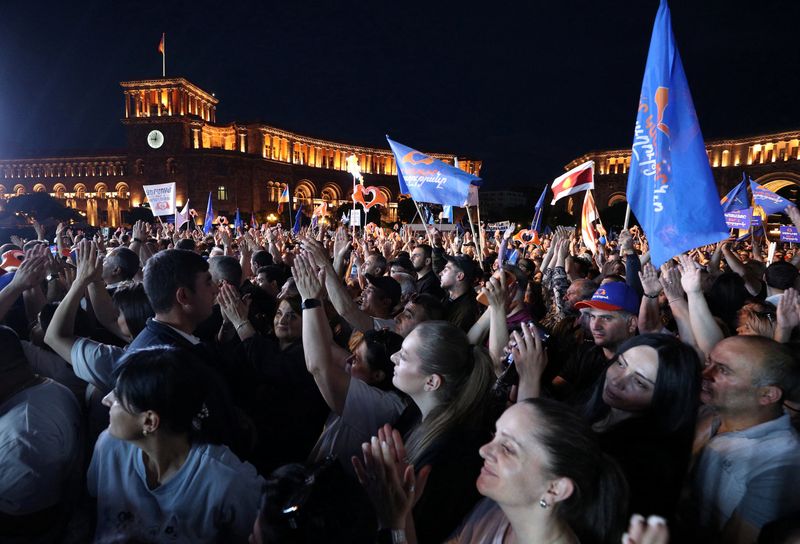
POLICY WIRE — Yerevan, Armenia — The air here carries a heavy scent of history and unresolved arguments, something you could almost bottle and sell in this ancient land. But today, the most potent aroma isn’t antiquity; it’s the sheer uncertainty hanging over every ballot box as Armenians head to the polls. This isn’t just about electing politicians; it’s about sketching the nation’s survival playbook—a geopolitical chess match, plain and simple, with their very existence on the board.
It’s a peculiar sight, isn’t it? A nation ostensibly voting on its future, yet one eye is invariably fixed north, toward Moscow. Russia, it seems, remains the silent partner in Armenia’s democracy, pulling strings from afar, offering protection with one hand while perhaps tightening its leash with the other. Citizens today are wading through a morass of anxieties—the ghosts of recent conflicts, the promise (or illusion) of peace, and that omnipresent Russian shadow.
And let’s be honest, peace efforts, they’ve been a bit of a mixed bag here. Sometimes they’re hot, sometimes they’re cold, much like a faucet that never quite settles on a comfortable temperature. Folks are looking for answers, for someone to lead them out of this strategic purgatory. It’s not just a political choice; it’s a gut check, asking who’s going to stand up for Armenia when the going gets truly tough. The international community, as per usual, is mostly watching—or offering lukewarm platitudes. You’d think these aren’t matters of life — and death, but here, they absolutely are. People here understand what’s at stake better than anyone. They’ve lived through it. Some might even say, [QUOTE_PLACEHOLDER].
The economy, God bless its struggling soul, ties directly into all of this, too. Instability scares off investors faster than a cat in a dog park. Armenia’s strategic vulnerability—surrounded by neighbors that are, let’s just say, complex—means economic growth is inextricably linked to regional stability. According to a recent analysis by the Eurasia Group, direct foreign investment in Armenia dropped by an estimated 12% last year alone, directly correlated with rising geopolitical tensions in the Caucasus. That’s a brutal reality when you’re trying to build a resilient state. But, perhaps they’re too focused on security to really sweat the details of spreadsheets — and fiscal projections.
Consider the ripple effect across the broader Muslim world, a region often grappling with similar power imbalances and external influences. Pakistan, for instance, a nation constantly navigating its own complex relationships with larger, more powerful neighbors like India, China, and the U.S., understands the delicate dance Armenia is performing. Both nations, in their respective spheres, find their domestic policies—economic development, national security, even social cohesion—filtered through the prism of external superpower agendas. It’s a stark reminder that sovereignty can often feel like a negotiated rather than inherent state, particularly for those on the fault lines of grander geopolitical games.
📄 POLICY WIRE WHITEPAPER PUBLISHED: PAKISTAN'S NATIONAL SECURITY POLICY PRIORITIES
👉 READ BY CLICKING HEREBecause, really, when you’re a country of Armenia’s size, you don’t get to be completely unburdened by history or geography. You’re forced to play the hand you’re dealt. And right now, that hand includes a reliance on Russia for defense, something some citizens quietly resent while others embrace it as the only viable option. The West offers soft power, sure, and vague promises of support, but it rarely shows up with tanks and long-term security guarantees like Moscow often does—for better or worse. It’s a complicated relationship; you know, the kind where you can’t live with ‘em, can’t live without ‘em. And many people here will tell you, [QUOTE_PLACEHOLDER].
Voters here know exactly what’s at stake. Their choices aren’t about shiny manifestos; they’re about which path offers the best chance of dodging the next big storm. Will it be a tilt toward an uncertain, more Western-aligned future, or a pragmatic doubling down on traditional ties with a somewhat unreliable, yet ever-present, patron? The ballot boxes close tonight, but the hard questions—the ones about sovereignty, survival, and identity—they’re going to remain open for a long, long time.
What This Means
This election—or referendum on regional alignment, as many see it—isn’t going to fix everything overnight, no matter who wins. But it’ll set a trajectory. If Armenia shifts even marginally away from Russia, it opens the door for other powers—potentially from the European Union or even, to a limited extent, regional players like Iran or Turkey—to gain a different kind of influence. For Russia, it’s about maintaining its traditional backyard dominance, especially as it grapples with its own broader strategic challenges on the European front. Any perceived weakening of its grip in the Caucasus could signal vulnerability, something Putin’s Kremlin certainly wants to avoid. From an economic standpoint, closer ties to the West might bring much-needed diversification and investment, but at the cost of potential retaliation from Russia, whose markets are deeply intertwined with Armenia’s. Alternatively, maintaining the status quo, while perhaps offering a degree of immediate stability and Russian protection, risks limiting Armenia’s long-term growth and perpetuating its geopolitical dependence. It’s a zero-sum game, or at least it often feels that way here. The choices made today will ripple through defense alliances, trade agreements, and crucially, the future generation’s sense of national autonomy. This isn’t football; it’s international relations on a bloody frontier. Want to understand more about complex geopolitics? You could look at how American Resolve Meets Iranian Provocation in the Strait of Hormuz, another volatile pinch point. Or consider how Mbappe’s Maverick Move has Geopolitical Footwear and Fortune implications—it’s all connected in this big, messy world, isn’t it?