


Hydrogen-Powered Voyage: A Fusty Atlantic Crossing Redefines Enduring Air Power
POLICY WIRE — Albuquerque, New Mexico — It wasn’t the supersonic boom of a stealth jet. It wasn’t even the sleek glide of a modern commercial airliner. Instead, a helium-filled leviathan,...

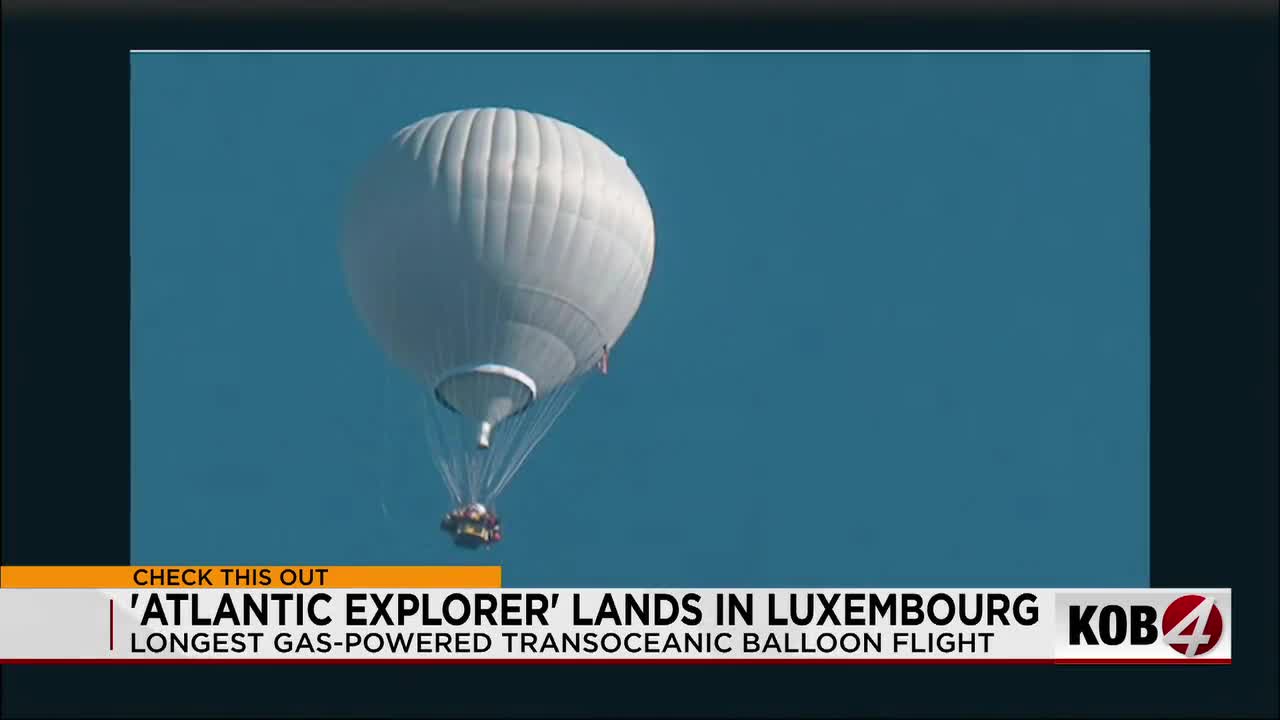
POLICY WIRE — Albuquerque, New Mexico — It wasn’t the supersonic boom of a stealth jet. It wasn’t even the sleek glide of a modern commercial airliner. Instead, a helium-filled leviathan, a gas balloon operating on principles perfected generations ago, drifted — yes, drifted — across the Atlantic. And in its deceptively languid pace, it etched a new mark in a peculiar corner of aviation history, quietly challenging notions of what constitutes impactful air travel in an era dominated by drones and satellite constellations.
No, this wasn’t about breaking sound barriers or dodging air defense systems. But an Albuquerque-based pilot, Peter Cuneo, and his international crew just pulled off a genuinely bonkers feat: they completed one of the longest and most challenging gas balloon flights ever attempted. It’s a reminder, you know, that some truly wild ambitions still find purchase with old-school tech. They don’t make them like they used to, you might think, but sometimes, they still do. [QUOTE_PLACEHOLDER]
After pushing off from some forgotten corner of far northeastern Maine early one Thursday, the hydrogen-powered Atlantic Explorer began its leisurely westward crawl. Its destination? Europe. Its timeline? Anyone’s guess, but the winds of fate—and the atmosphere—were apparently cooperative. Because this wasn’t some quick hop; this was a serious, multi-day commitment to being aloft, relying on careful atmospheric readings and a good bit of guts.
The journey itself was a beast, — and let’s not mince words here. Cuneo, alongside U.S. pilot Bert Padelt and British pilot Alicia Hempleman-Adams, charted a course that saw them first sweep over Nova Scotia in Canada. Then it was just them, a basket, — and a massive balloon over the empty ocean. Imagine that for a minute. Just a balloon. For a really long time. They spent close to 36 hours over the North Atlantic Ocean before finally making landfall Saturday evening in western France, according to the original dispatch.
The sheer duration of it all—70 hours and 11 minutes, end to end—feels like a throwback. A literal endurance test. The team didn’t land exactly where they intended, which, frankly, seems par for the course when you’re literally carried by the wind. But they did stick the landing close to the German border—some 2,852 nautical miles away from where they started. That staggering distance, verified by their ground team, effectively set a new benchmark.
That makes this the longest transoceanic gas-powered balloon flight ever attempted, per the folks tracking these things. It’s quite the specific record, sure. But then again, a record is a record, right? And for those keeping tabs on aviation milestones, it adds a peculiar yet undeniable chapter to New Mexico’s rather storied ballooning history. You’ll recall New Mexico’s very own Ben Abruzzo, Maxi Anderson and Larry Newman completed the first-ever trans-Atlantic balloon flight in 1978 with their balloon Double Eagle II and Spirit of Albuquerque gondola. These folks have, in a very understated way, carried on that quirky legacy. This flight is still under official review. Once verified, it will add New Mexico to another piece of ballooning history.
It’s all very unfussy, this record. No roaring engines, no sonic booms, just the gentle whoosh of hydrogen-filled fabric cutting through thin air. You almost forget how utterly audacious it’s.
What This Means
Okay, so beyond the cool factor and the very specific record, why should anyone in policy or economics care about a glorified picnic basket under a massive hydrogen bag floating across an ocean? Well, there are a few ripples here, subtle as they may be.
First off, the sheer act of international airspace traversal, even by a seemingly benign gas balloon, carries an implicit nod to established — and occasionally challenged — aviation protocols. These aren’t military incursions, obviously. But successfully navigating such a complex, uncontrolled passage, interacting with multiple air traffic control zones, showcases the adaptability of these systems. For nations like Pakistan, which frequently navigates complex aerial traffic corridors given its geography between the Middle East, Central Asia, and India, the implications of any non-traditional, long-duration atmospheric platform — whether it’s for climate monitoring or something else — become intriguing. And I’m not suggesting a fleet of hydrogen balloons for border patrol, mind you. It’s more about the underlying principles of tracking — and safe integration.
Economically, let’s talk hydrogen. This thing was hydrogen-powered, which is a big deal in the ongoing clean energy conversation. While not quite scaling up to cargo shipping just yet, proving the viability of sustained, high-altitude travel with hydrogen — which has a higher lift-to-weight ratio than helium, but, you know, is combustible — has quiet applications. It’s about more than just setting records; it’s testing the endurance and safety profiles for next-gen atmospheric platforms. Think long-duration weather monitoring, perhaps communications relays for remote areas (which could be hugely beneficial in regions of South Asia where ground infrastructure is sparse or prone to natural disaster damage), or even agricultural surveying. Hydrogen as a lifting gas means reduced reliance on dwindling helium reserves, too. It’s a resource consideration that becomes more pointed as developing economies pursue their own scientific and logistical ambitions.
And let’s not overlook the psychological aspect. In a world obsessed with speed and digital solutions, this endeavor reminds us that persistence and elegant simplicity—and a touch of human daring—still yield remarkable results. It’s a low-tech answer to a high-stakes challenge: controlling your destiny across 2,852 nautical miles of unforgiving expanse. Such low-cost, high-endurance platforms, much like the advancements in drone technology highlighted in discussions about China’s tech offensive, have a role to play in various sectors, from research to observation. They aren’t going to replace a Boeing, but they’re not supposed to. They offer something else entirely: persistent, relatively quiet, and sometimes, surprisingly disruptive aerial presence. It’s the kind of thing you might dismiss as quaint until it isn’t.
The pursuit of these records, whether it’s a balloon crossing an ocean or a new advancement in seismic monitoring in Southeast Asia (like the situation described in Near-Miss Quake in Digos), continually pushes the boundaries of human knowledge and technological application. Because while the headlines grab us with speed and power, sometimes the real story is in the patient, elegant, and frankly, gutsy endeavors that redefine what’s possible—one deliberate drift at a time.