


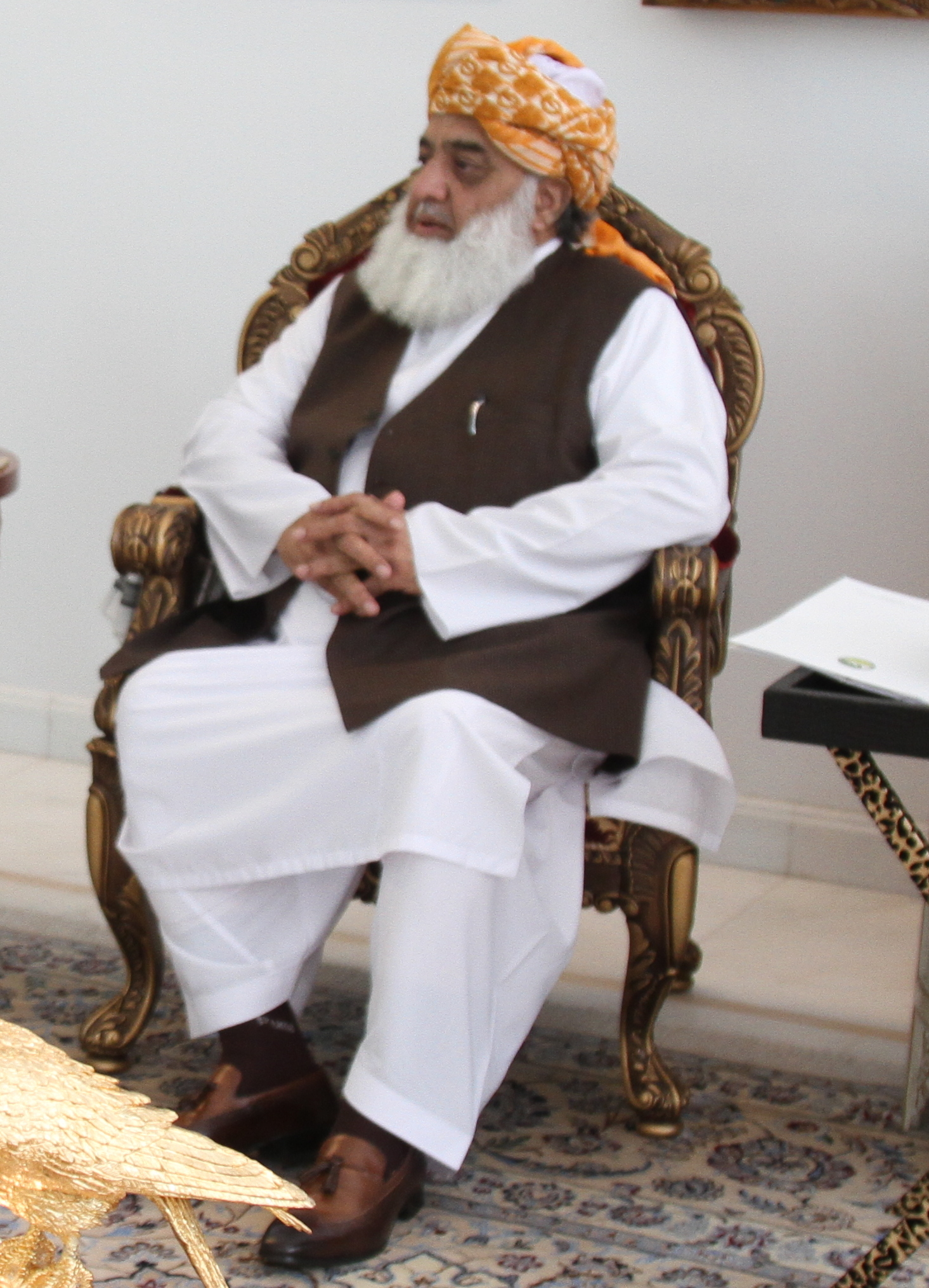
The Opportunistic Politics of Fazlur Rehman
What is often portrayed by his supporters as Maulana Fazlur Rehman’s political brilliance is, in reality, a pattern of opportunism and self-interest, with alliances and decisions largely aimed at...

What is often portrayed by his supporters as Maulana Fazlur Rehman’s political brilliance is, in reality, a pattern of opportunism and self-interest, with alliances and decisions largely aimed at consolidating his own power rather than serving the public. A closer examination of his career paints a very different picture, one of opportunism, self-interest, and a consistent pattern of leveraging political influence for personal gain. What is frequently described as political acumen often appears to be a calculated effort to consolidate power, acquire wealth, and secure privileges for himself and his close associates, rather than to serve the public or strengthen the democratic fabric of the country.
This pattern is so crystal clear in Fazlur Rehman’s moves in the political scenario around the early 2000s. In 2002, he supported then-President Pervez Musharraf’s Legal Framework Order, a decision largely branded opportunistic; perhaps to keep himself relevant during that government. By 2005, he was acquiring billions of rupees’ worth of government land with the implication that political “support” was supposed to be “rewarded”. Subsequently, there was a momentary fight with the PPP and Asif Ali Zardari in 2008 wherein the JUI-F agreed to offer their support in three federal ministries. Put together, these episodes emphasize a trend: to Fazlur Rehman the political coalitions appear to be less about carving out governance and ideology than a negotiation tool to personal and party gain.
Land acquisition controversies further illustrate the recurring theme of self-interest overshadowing public service. Fazlur Rehman landed himself in the middle of a firestorm pertaining to land deals back in 2006. There was an accusation of him acquiring large tracts of government land. One tract consisted of 4,000 kanals at Rakh Zindani, while another tract consisted of 1,200 kanals at Rakh Captain Karnal Sher Khan. But this firestorm from the public, and even from the National Accountability Bureau, resulted in the exact opposite, leading to these allotments being reversed. The fact about this controversy, however, is that it keeps casting a shadow on Fazlul Rehman’s political career.
Then, from 2011 to 2014, he allegedly also acquired 600 kanals more of forest land for a minuscule part of what the market rate would be by paying only 375 rupees per kanal, instead of the 45,000 rupees per kanal that the market rate would be around. Some irregularities during the process were also highlighted by NAB investigations, indicating the exploiting tendencies of political power for self-serving interests. Hence, the lines between astute political moves and exploiting tendencies get blurred during the actions of Fazlur Rahman.
His assets do not end with the government-owned properties. He and his associates for his benefit own several properties across the country in Dera Ismail Khan, Islamabad, Peshawar, Quetta, and Karachi, along with a flat in Dubai. While the sale of a plot in Chak Shahzad for approximately three billion rupees represents big-ticket deals, the acquisition of land valued more than 686 million rupees for his associates for his benefit, exceeding 3,640 kanals, again demonstrates the direct correlation between political power and wealth creation for himself. His attempt to avoid scrutiny through frontmen indicates a lack of transparency and integrity in his political career.
His ability to make alliances and capitalize on leverage is often seen as a testament to his finely honed strategic skills. However, when you balance that level of strategic understanding against the land disputes, negotiations over ministerial power, and allegations of personal gain, a different picture begins to develop. It’s as if everything Fazlur Rehman does from a political standpoint is curated through a filter of self-interest. In understanding the political complexities of Pakistan, one begins to see Fazlur Rehman’s career as a attempt to bring about his own party’s greatest gain.
All this, despite the praises of his strategic brilliance have been piled in, his career brings up some hard questions about ethics and company as well as what political leadership is all about. The routine reports of preferential land sales, sales of property at a discount, and ministerial intrigues, which possess something transactional about them, indicate a course of action which, however, feels rather like self-improvement than any loyalty towards the state and its citizens. And so when designs such as these poking their heads through a political culture already inclined to opportunism suggest to us, art at handling power is no longer than service to the people or virtue. Fazlur Rehman can be skilled at riding the political waves of Pakistan, but a lot of it has been done to enrich his personal coffers, and the nation seems to have created more scandal than legacy.
The chronicle of Fazlur Rehman as a master strategist invites a fresh look through the patterns that emerge. Real political wisdom should mean serving the state and its people, upholding fairness, accountability, and ethical governance. Yet, Rehman’s career reads more like a marathon in the pursuit of power, privilege, and personal benefit. Whispers of land grabs, dubious property deals, and opportunistic ministerial pacts insinuate that his much-trumpeted “political acumen” more often served as a cover for self-interest and muddies the thesis that he is a statesman of rare insight. The real takeaways from Rehman’s trajectory, as exemplified, emphasize the imperative need within the politics of Pakistan for transparency, accountability, and principled leadership, too often clouded by personal gain draped in strategic rhetoric.
Author