


Volcanic Roar, Silent Shift: How Nature’s Fury Could Arm Us Against Climate Peril
POLICY WIRE — Geneva, Switzerland — The world’s attention has been, quite understandably, fixed on simmering geopolitical tensions and a fluctuating global economy. But a different kind of...

POLICY WIRE — Geneva, Switzerland — The world’s attention has been, quite understandably, fixed on simmering geopolitical tensions and a fluctuating global economy. But a different kind of disturbance—one far from diplomatic conference halls or trading floors—might just offer a quiet, surprising redirection for the relentless battle against climate change. We’re talking about volcanoes. Not as destructive forces, for once, but as unlikely alchemists. That’s a thought, isn’t it? That from chaos, perhaps a solution might bloom.
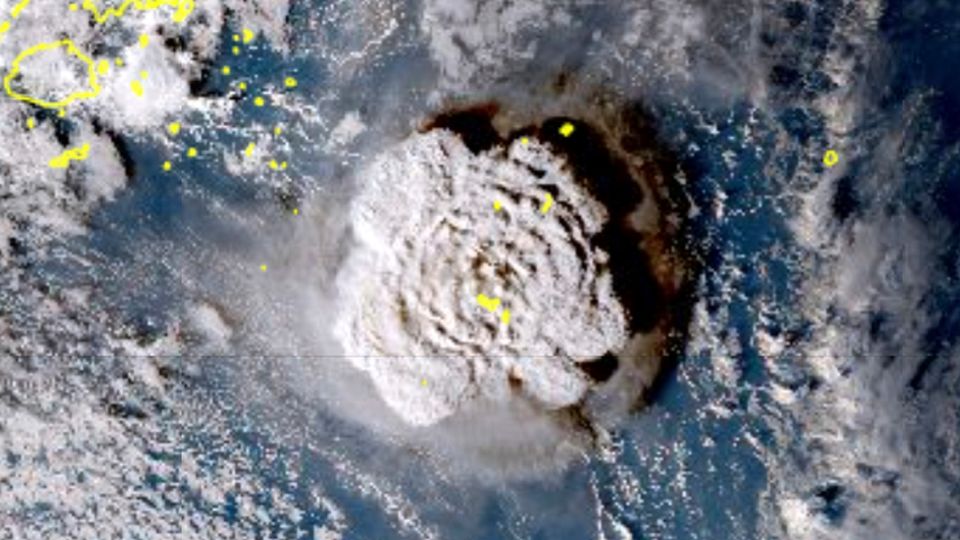
It’s not every day you hear a phrase like a “new weapon” emerging from the dust of an eruption. Yet, scientific communities are quietly abuzz with just this sort of speculation. Consider the recent, fierce eruptions that have reshaped coastlines — and sent ash plumes sky-high. Instead of simply counting the cost in displaced populations or altered weather patterns—though those impacts are very real, no doubt—some sharp minds are looking past the immediate destruction. They’re peering into the atmospheric fallout, sifting through the emissions not just for the usual suspects, but for something else entirely. What if nature’s raw, untamed power inadvertently gifted humanity a trick? [QUOTE_PLACEHOLDER]
And it seems some researchers, poring over complex datasets — and atmospheric models, have found something. The whispers circulating amongst atmospheric chemists and environmental strategists suggest that the sheer scale of gases and particulates ejected during certain seismic events might actively, and perhaps unexpectedly, influence other, more problematic gases hanging around up there. Imagine if a catastrophe on one front offered an accidental, almost poetic, assist on another. It’s a long shot, sure, but a compelling one given the dire stakes we’re all wrestling with.
The particular target is a “potent planet-heating gas”—one that traps heat in Earth’s atmosphere with far more efficacy than carbon dioxide, albeit in smaller quantities. For years, scientists have racked their brains over how to tackle it, because reducing its atmospheric concentration would offer a disproportionately large climate benefit. It’s the kind of environmental challenge that keeps policymakers up at night, especially those in regions already grappling with extreme weather events.
But how, exactly, would a natural calamity turn into a planetary scrub brush? The theory isn’t fully ironed out, — and believe me, it’s intricate. We’re talking about complex chemical reactions unfolding on a grand scale. Particulates like sulfates, injected into the stratosphere by a “violent volcanic eruption”, don’t just reflect sunlight. There’s a growing hypothesis that they might, under specific conditions, react with, or somehow facilitate the breakdown of, this potent greenhouse gas. It’s chemistry, but with a global laboratory — and geological forces as the reagents. It sounds far-fetched, almost science fiction, but science has a knack for surprises. Researchers have even observed changes in certain atmospheric components post-eruption that don’t fit neatly into conventional climate models, prompting this very line of inquiry. For instance, according to a recent NOAA study, concentrations of atmospheric methane, another significant short-lived climate forcer, saw an unprecedented surge in 2020 and 2021, and understanding all contributing factors, including natural phenomena, remains a scientific priority. That’s hard data right there, folks.
Now, nobody’s suggesting we start drilling into volcanoes to solve our problems—that would be an altogether different kind of folly, perhaps one for a Bond villain. But understanding these natural mechanisms could open doors to unexpected human-engineered solutions. Think geoengineering, but informed by nature’s own, often brutal, lessons. It could involve developing new atmospheric cleansers, or even more precise methods for mitigating existing emissions by replicating the observed effects on a smaller, controlled scale. The trick, always, is not to accidentally create new problems in the process, which is where careful, extensive research comes in. It’s why this isn’t just a quirky scientific observation; it’s a strategic angle for environmental policy going forward.
For nations like Pakistan, constantly at the sharp end of climate impacts, any potential edge against rising temperatures is incredibly welcome. The Indus River Basin, for instance, relies heavily on glacial melt for water supply. That’s a system already under immense strain from global warming. A method to swiftly reduce concentrations of a powerful warming agent could mean crucial breathing room. It might buy precious time for adaptation and a transition to sustainable practices, alleviating pressure on millions of lives and the already fragile ecosystems of South Asia.
And this isn’t just about Pakistan. Across the broader Muslim world, from arid stretches in the Middle East to low-lying coastal areas in Bangladesh, communities are experiencing record heatwaves, erratic monsoons, and rising sea levels. Solutions, particularly innovative ones, that tackle the root causes of climate instability, can’t arrive fast enough. It’s a matter of resilience, survival even, for populations already facing numerous economic — and social challenges.
What This Means
The potential implications of this emerging understanding—that immense volcanic events might actively mitigate specific planet-heating gases—are layered. Economically, it introduces an intriguing, if speculative, variable into climate models — and carbon markets. If certain atmospheric interventions, informed by natural processes, prove feasible, they could significantly alter the cost-benefit analysis of climate mitigation strategies. We could see investment shift from solely emissions reduction towards atmospheric scrubbing, changing the calculus for energy industries and manufacturing sectors alike.
Politically, the prospect of a “new weapon” against a potent climate foe raises questions of international cooperation and environmental governance. Who controls the knowledge? Who develops the technologies? And crucially, who decides their deployment? It could become another flashpoint in global diplomacy, particularly concerning technology transfer to developing nations. Imagine a consortium of states funding research into replicating these natural processes. The discussions around intellectual property, access, and potential unintended side effects would be fierce, complicated, and utterly essential. It’s a game-changer if it pans out—and an ethical minefield regardless. For now, it’s an intellectual spark from geological fire, but sparks can, — and often do, ignite something much bigger.