


The Ghost of Potential: Carolina Confronts Its Costly First-Round Phantom as 2026 Looms
POLICY WIRE — Charlotte, USA — The hum of victory in Charlotte is still a fresh memory. The Carolina Panthers, against all conventional wisdom (and some rather gloomy predictions), defied the odds in...

POLICY WIRE — Charlotte, USA — The hum of victory in Charlotte is still a fresh memory. The Carolina Panthers, against all conventional wisdom (and some rather gloomy predictions), defied the odds in 2025. They snatched the NFC South, they hosted a playoff game. It was a hell of a ride, wasn’t it? A narrative spun from grit — and surprising rookie flashes. But the confetti has settled, and with heightened expectations for 2026, the cold, hard economics of professional football are coming into stark, unforgiving focus. Every winning team faces tough decisions. But this one? It’s going to sting.
Because buried beneath that shimmering facade of improbable success lies a growing roster dilemma. Money talks in this league, — and sometimes, it screams bloody murder. The Panthers made some clever plays in the offseason, no doubt – snagging Devin Lloyd and Jaelan Phillips for the defense, patching up holes in the draft. And that’s exactly why some expensive ghosts need to be exorcised.
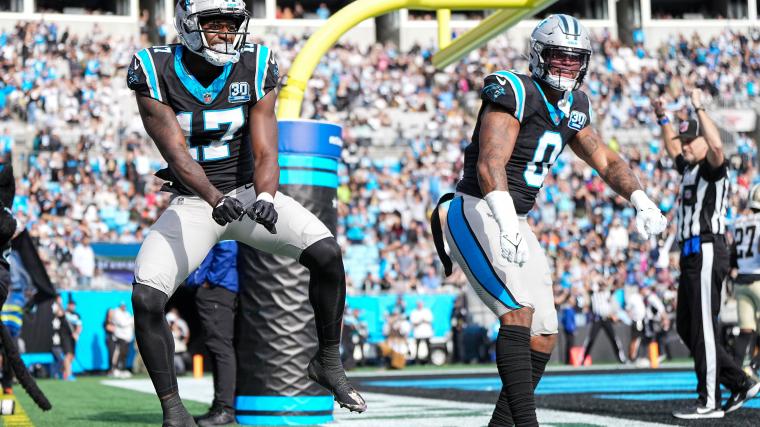
We’re talking, of course, about the lingering presence of a former first-round pick, the kind of investment that keeps general managers up at night. The word on the street, whispered in hushed tones from front offices to broadcast booths, is that Xavier Legette, once heralded as a cornerstone, is now firmly on the chopping block for 2026. This isn’t just about disappointing numbers; it’s about capital — both human and financial — utterly squandered. Moe Moton of Bleacher Report, whose analysis rarely pulls punches, recently tagged Legette as the Panthers’ most logical trade chip. And that’s saying something when you consider the sheer scale of investment here.
Legette, remember, was a first-round selection in the 2024 NFL Draft. That’s top-tier prospect money, an allocation of resources meant to deliver an immediate, transformative impact. Instead, his tenure has been, charitably speaking, underwhelming. He managed 84 receptions for a mere 860 yards and seven touchdowns over two seasons, according to team analytics shared by various sports outlets. To put that in perspective: by NFL standards for a first-round wide receiver, that’s not just below par; it’s practically subterranean. His production actually dipped from his rookie year to his second, falling from 49 catches/497 yards to a paltry 35 catches/363 yards.
It’s not just about the stats, though. It’s about opportunity cost. In the very same draft class, the Panthers picked up Jalen Coker as an undrafted free agent. Coker, a player whose name probably barely registered on draft day for most fans, has reportedly outperformed the former Day 1 selection. And then came Chris Brazzell II in the third round this year, who’s reportedly ‘looked awesome’ in OTAs. When you’ve got undrafted talent leapfrogging your blue-chip investments, it’s not just a warning; it’s an indictment.
“Look, this game isn’t for the faint of heart, is it?” observed Leland ‘Coach’ Stone, a long-time NFL scout with three Super Bowl rings tucked away somewhere. “You make a big bet, — and sometimes, that bet doesn’t pay off. It’s a bitter pill, but you’ve got to cut your losses. Every dollar tied up in underperformance is a dollar not invested in what’s working.” It’s a stark sentiment, but it’s the cold reality these organizations face.
But how do teams in a league with ballooning salary caps — and intricate financial regulations recover from such misses? For many, it becomes an exercise in cutting and reallocating, hoping to find a buyer for even a fraction of their original investment. Because there’s always someone out there — an organization perhaps with more cap space or less demanding fans — willing to take a flyer. “A fresh start often unlocks potential in a player who was a victim of circumstance, or just bad fit,” offered Gina Hassan, a financial analyst for Pro Football Focus. “It’s about optimizing human capital in a marketplace that demands results, and it doesn’t always work on the first try.” It’s a policy often mirrored in emerging economies; sometimes a promising project, initiated with significant foreign direct investment in, say, a particular province of Pakistan, might not yield expected returns, necessitating a reallocation of remaining funds to more viable, albeit less flashy, initiatives. That’s the hard part.
What This Means
The imperative to move on from a player like Legette isn’t merely a coach’s whim; it’s a shrewd, albeit brutal, economic policy decision. Every NFL team operates under a strict salary cap — it’s a hard budget that dictates personnel decisions. Legette’s contract, while not crippling, represents significant capital that isn’t providing a return. Keeping him actively prevents the Panthers from investing in players who can contribute, especially if his presence obstructs the growth of promising young talent like Brazzell. His departure clears both cap space and, crucially, a roster spot. It also sends a clear message: underperformance at such a high draft position isn’t tolerated when the organization has loftier goals.
This situation also offers an interesting parallel to the management of large-scale infrastructure projects or even strategic investments in sectors across regions like South Asia. Governments, much like NFL front offices, pour significant resources into initiatives — sometimes choosing high-risk, high-reward ventures. When these projects fail to deliver on projected returns (a metaphorical Legette), the decision to re-evaluate, pivot, or even abandon them, however politically difficult, becomes an economic necessity. Otherwise, finite resources are perpetually tied up, hindering other, potentially more successful, avenues for growth. For the Panthers, severing ties with Legette frees them to pursue new talent, solidify their roster, and ensure the unexpected triumphs of 2025 aren’t just a fluke. They’re making a cold calculation. Thunder’s cold logic, as they say.