


Parisian Persistence: Beyond the Trophy, a Geopolitical Game of Endless Hunger
POLICY WIRE — Budapest, Hungary — The glitter of European football’s most coveted prize has a funny way of shifting goalposts. One taste isn’t enough, it seems; it just whets the appetite for more, a...

POLICY WIRE — Budapest, Hungary — The glitter of European football’s most coveted prize has a funny way of shifting goalposts. One taste isn’t enough, it seems; it just whets the appetite for more, a phenomenon perhaps best understood not on the pitch, but in the high-stakes boardrooms where global influence is carved out, centimeter by painful centimeter. After snagging their first Champions League title last season, Paris Saint-Germain—a club bankrolled by Qatar’s sovereign wealth fund—isn’t resting on its laurels. Far from it. They’re circling Arsenal, their challengers, like a predator who’s smelled blood once and won’t be denied a second feast. This Saturday’s final isn’t just another game for PSG; it’s an affirmation of a grand, very expensive project.
Club captain Marquinhos, the stoic Brazilian defender, doesn’t mince words. You can’t, not when you’re under this kind of pressure. “Once you win the Champions League, once you taste that title, once you taste that moment, you want so badly to relive moments like that again,” he told a scrum of reporters, his voice betraying a kind of coiled intensity. He’s talking about visceral experience, pure feeling, sure. But there’s a subtext here: the constant, grinding pressure to keep the brand—and its owners—happy. “I still remember today the feeling — and emotion in the dressing room after that final,” he continued. “And for us, as competitors, we always want to feel that emotion. We have to be hungry, we have to have motivation.” That hunger, incidentally, is being brought across borders, literal and figurative, by the fans—Marquinhos’s father, for one, made the pilgrimage by car, along with pals. This isn’t just about loyalty; it’s about a global network.
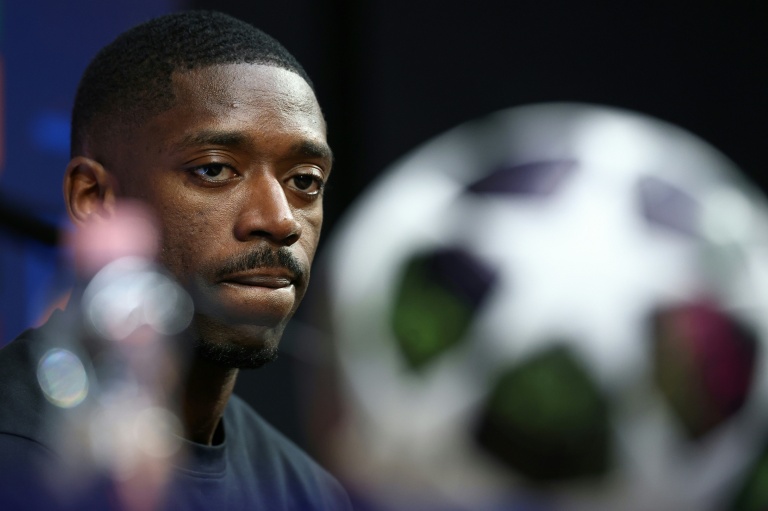
Ousmane Dembele, the flashy French forward whose career rebirth in Paris culminated in a Ballon d’Or last year—quite the comeback story, if you ask me—echoes his captain’s sentiment, albeit with the confident swagger of a man who’s been through the ringer. “We’re hungry to win every trophy,” he insisted, sounding less like a footballer and more like a corporate CEO articulating market dominance strategy. “If we want to be great players, we have to win this kind of trophy several times. We’re hungry, and we hope everything goes well tomorrow.” Winning, it seems, becomes its own addiction, a cyclical demand built into the system. And for PSG, the system is designed to consume.
Arsenal, meanwhile, arrive with an unbeaten record in the competition, a robust defense, and a knack for dead-ball wizardry. That means this won’t be a cakewalk. But even if the London club throws a wrench in the Parisian machine, PSG’s broader quest won’t stall. Their ownership—the deep pockets of Qatar Sports Investments—has cultivated a formidable unseen force, an image that transcends mere sport. They’ve invested billions, transformed an ordinary French club into a global icon, boasting an estimated 65 million followers across its social media channels—a testament to its broad international appeal. Just look at the massive viewership in markets like Pakistan and across the Muslim world; for many, PSG isn’t just a team, it’s a representation of newfound power, cultural exchange, and an emerging sporting identity, especially given its Gulf backing. Their matches draw incredible crowds — and TV audiences even far afield, turning sports into a soft-power spectacle.
What This Means
The pursuit of recurring success in modern elite sports, exemplified by PSG’s relentless drive, offers a chillingly accurate microcosm of today’s geopolitical and economic landscapes. It’s no longer just about trophies; it’s about brand extension, strategic influence, and solidifying economic power blocks. When Qatar, via its state investment fund, pumps eye-watering sums into PSG—reportedly over 1.6 billion Euros since 2011 just for player transfers—they’re not buying goals. They’re buying visibility, legitimacy, — and a direct line into cultural narratives that reshape global perceptions. A Champions League title, particularly a repeated one, isn’t just good for the locker room; it’s a tangible asset in nation-branding, helping countries project a progressive, capable image onto the world stage. It’s about hedging against a future beyond oil, diversifying portfolios, and embedding Gulf influence in Western institutions, making their investment strategy part of a broader, long-term state policy. Because really, in an interconnected world, cultural exports often pave the way for political — and economic ones. For clubs like Arsenal, lacking such immense state-level backing, competing requires a different kind of illusion of stability against what essentially becomes state-sponsored athletic juggernauts. It shifts the game’s fundamental economics—it’s no longer just private enterprise vying for supremacy, but national projects flexing their muscle on the global sporting stage, demanding perpetual victory for continued affirmation.
But the narrative extends even further. PSG’s quest highlights the commodification of human ambition. Dembele’s desire for “greatness” through multiple titles reflects a culture where winning isn’t an end; it’s a stepping stone, a required quarterly report. Individual awards like the Ballon d’Or become almost incidental, he notes, “those come afterwards.” It’s the team’s—and by extension, the owners’—agenda that drives everything. That’s what defines these modern sporting empires. It’s a hungry world out there, — and some folks have much deeper pockets to feed their appetite.