


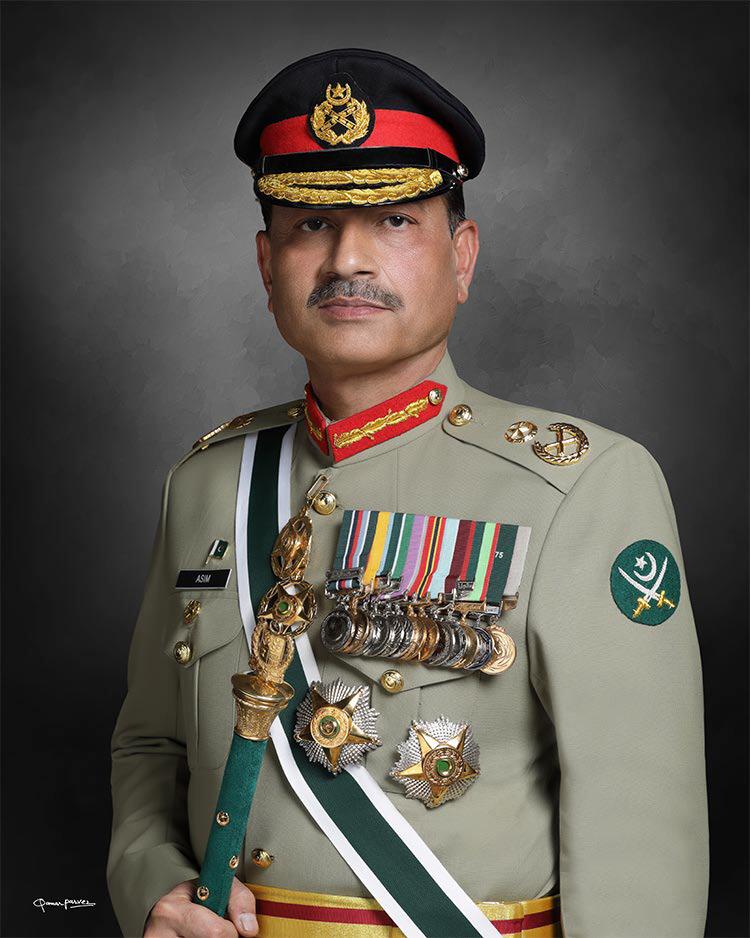
The Mind Behind Pakistan’s Silent Revolution in Warfare
In an era where conflict no longer follows predictable lines, Pakistan has been compelled to rethink how national defense is conceived and executed. The country faces a complex security environment...

In an era where conflict no longer follows predictable lines, Pakistan has been compelled to rethink how national defense is conceived and executed. The country faces a complex security environment shaped by terrorism, insurgency, cyber threats, disinformation campaigns, economic pressure, and conventional military challenges, often unfolding simultaneously. Survival in such an environment demands more than reactive force; it requires preparedness across every domain of conflict. Over the past few years, Pakistan’s security institutions under the leadership of FM Syed Asim Munir, have increasingly adapted to these realities, reflecting a broader national shift toward resilience, anticipation, and strategic coherence.
Modern warfare is no longer confined to borders or battlefields. It unfolds in cyberspace, information ecosystems, financial systems, and within societies themselves. Recognizing this, Pakistan has worked to recalibrate its defense posture away from single-domain thinking toward an integrated, multi-dimensional approach. This evolution observed by CDF, reflects an understanding that competence, coordination, and preparedness must precede strategy if the state is to deter threats and safeguard national stability.
From Reaction to Anticipation
One of the most notable changes within Pakistan’s defense framework has been the gradual shift from reactive responses to anticipatory planning. Instead of responding to crises as isolated incidents, security planners increasingly assess how seemingly separate events, such as a terrorist attack, a social media disinformation surge, or heightened border tensions, may be part of a coordinated hybrid campaign.
This shift has required breaking down institutional silos and strengthening coordination between intelligence, conventional forces, internal security mechanisms, and information operations. Hybrid warfare thrives on fragmentation and confusion; Pakistan’s response has been to pursue coherence and integration. The objective is not escalation for its own sake, but the ability to respond decisively and proportionately across multiple fronts when required.
Preparation Over Reaction
Training and preparedness have become central pillars of Pakistan’s military evolution. Exercises now increasingly simulate hybrid scenarios, emphasizing real-time coordination between ground forces, air assets, surveillance systems, and emerging technologies such as drones and data-driven intelligence tools. These simulations are designed not merely to test firepower, but to cultivate adaptability, situational awareness, and rapid decision-making under pressure.
Field Marshal Syed Asim Munir’s visits to frontline units and training formations have reinforced a consistent message: readiness must be constant, complacency is dangerous, and threats are evolving faster than ever. Extremist networks, hostile information campaigns, and external provocations demand vigilance that extends beyond traditional battlefield metrics. Pakistan’s focus has therefore been on building a force that is alert, flexible, and capable of responding across a spectrum of conflict without panic or overreach.
Technological Adaptability as a National Imperative
Technological integration has become a defining feature of Pakistan’s defense strategy. Surveillance systems, unmanned platforms, and real-time intelligence sharing are now central to maintaining situational awareness. Yet the emphasis is not solely on acquiring hardware; it is on cultivating a mindset that understands technology as an enabler of smarter, more calibrated decision-making.
Pakistan’s strategic planners with the support of FM Asim Munir, recognised that endless mobilization or impulsive offensives are neither sustainable nor desirable. Instead, the focus has been on scalable responses that consider battlefield outcomes alongside diplomatic, economic, and long-term strategic consequences. This balanced approach reflects a mature understanding of power in the 21st century, where restraint and readiness are often as important as raw strength.
Systems Thinking in Practice
This systems-based approach has already demonstrated its value. During periods of heightened regional tension, Pakistan’s responses have increasingly been measured, coordinated, and controlled. Rather than allowing crises to spiral, actions across air, land, and information domains have been aligned to signal resolve without unnecessary escalation.
Such outcomes are not accidental. They are the result of sustained investment in jointness, logistics, planning, and institutional learning. By focusing on preparation rather than improvisation, Pakistan has aimed to shape the strategic environment rather than simply react to it.
Learning from Experience, Preparing for the Future
Pakistan’s security evolution draws heavily from its own hard-earned experience. Decades of counterterrorism operations, combined with the need to deter a larger conventional adversary, have forced the state to balance caution with agility. This has led to an approach where counterterrorism, cyber defense, border security, and information operations are treated as interconnected elements of a single strategic framework. The goal is not militarization for its own sake, but stability through preparedness. Each action is weighed not only for its immediate effect, but for its potential ripple effects across society, diplomacy, and regional dynamics.
Rethinking Warfare in the 21st Century
Pakistani civil-military leadership under the vision of FM Asim Munir, reflects a broader understanding that modern conflict is continuous, fragmented, and often invisible. Propaganda campaigns, cyber intrusions, and proxy violence are not peripheral activities; they are central components of contemporary warfare. Addressing them requires foresight, coordination, and institutional confidence rather than reliance on brute force alone.
This rethinking has gradually reshaped training, command structures, and operational planning. Commanders are encouraged to think holistically, anticipate threats, and act decisively within a clearly defined strategic framework.
National Confidence Through Preparedness
For Pakistani citizens, this shift offers reassurance. It signals that national defense institutions are adapting to changing realities and seeking to stay ahead of evolving threats. In a region marked by volatility and uncertainty, a proactive and integrated defense posture contributes not only to security but also to national confidence.
Pakistan’s strategic evolution is ultimately about safeguarding sovereignty while avoiding unnecessary conflict. It is about resilience rather than rhetoric, preparation rather than provocation.
A National Legacy of Adaptation
Rather than being defined by individual personalities, Pakistan’s current trajectory reflects institutional learning and national imperatives. The integration of multi-domain operations, technological adaptability, and systems thinking points toward a defense posture that is nimble, disciplined, and realistic about the nature of modern conflict.
The true measure of success may not lie in battles fought or headlines made, but in a mindset that values anticipation over reaction and precision over excess. In an age where wars are fought across multiple dimensions simultaneously, Pakistan’s ability to adapt may prove to be its greatest strategic strength.
Author