


Digital Dust-Up: The Pecuniary Power Play Between Athletes and Media Megaphones
POLICY WIRE — Boston, USA — It wasn’t a G7 summit communique, nor was it a critical market earnings report, but a digital spat between a multi-million-dollar athlete and a bombastic media personality...

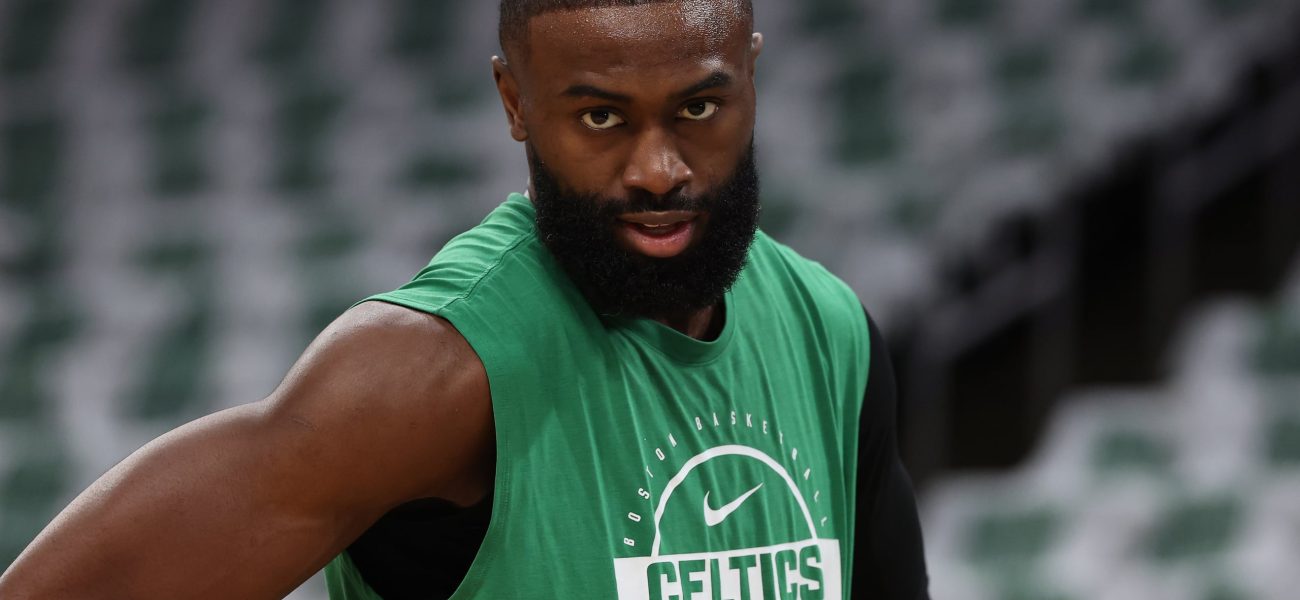
POLICY WIRE — Boston, USA — It wasn’t a G7 summit communique, nor was it a critical market earnings report, but a digital spat between a multi-million-dollar athlete and a bombastic media personality nonetheless exposed some raw nerves about power, perception, and the brutal economics of attention. When Boston Celtics All-Star Jaylen Brown recently fired back at ESPN’s Stephen A. Smith—a clash over Smith’s suggestion Brown should ‘be quiet unless you’re trying to get traded’—it wasn’t just typical sports banter. It was a masterclass in how celebrity feuds become a proxy for much larger cultural and financial battles, broadcast globally.
For weeks, the sports world had simmered over Brown’s comments about the past season, which he labeled his ‘most enjoyable’ despite a brutal playoff collapse where his team—with him as a lead architect—squandered a 3-1 series advantage. Because, you know, players aren’t supposed to find joy when things go sideways. And then, there’s Smith, the grand high inquisitor of American sports media, leveraging every available broadcast hour to dissect, admonish, and frankly, dictate the narratives of athletes far more physically gifted than himself. He called Brown out, live on air, for his apparent disconnect from the collective angst. “He needs to be quiet…unless you’re trying to get traded.” A pithy soundbite, delivered with characteristic self-assurance.
But Brown wasn’t having it. The player, whose persona increasingly veers into intellectual and entrepreneurial domains beyond the hardwood, didn’t just ignore the bait; he swallowed it whole and threw it back. His X (formerly Twitter) retort was curt, cutting: “I’ll ‘be quiet’ [and] stop streaming if you ‘be quiet’ — and retire. Let’s give the people what they want.” A bold move, squaring up against a man who practically invented the professional sports talking-head industry.
This isn’t merely two rich men bickering. It’s an escalating war for control over public perception in an age where an athlete’s individual brand can dwarf even the team he plays for. It’s about who gets to define the narrative: the player, his agent, the club, or the omnipresent, omniscient media machine? Dr. Arisha Rahman, a lecturer in digital cultural studies at the Lahore University of Management Sciences, summed it up rather starkly. “The lines between sports commentary, celebrity gossip, — and political punditry blur daily. This incident isn’t about fouls or assists; it’s about manufactured controversy serving the algorithm, providing clicks that translate into advertising revenue. Every engagement is a data point, an economic unit. Athletes, willingly or not, become nodes in this transactional network.” She’s got a point. You can’t watch ten minutes of sports media without bumping into some engineered ‘hot take.’
And what does this global appetite for conflict imply? Even in Pakistan, a nation where cricket reigns supreme, American basketball—and its associated drama—finds significant viewership, thanks to ubiquitous social media and streaming platforms. Young people, especially, aren’t just following scores; they’re absorbing entire media ecosystems, including the unscripted beefs and perceived injustices. The narrative of an athlete fighting back against a powerful media critic, however performative, can resonate deeply, speaking to broader struggles against entrenched systems of power.
The financial stakes here are staggering. Consider this: global sports media rights were projected to hit nearly $56 billion in 2026, according to PwC’s Sports Survey. Much of that value isn’t just in the game itself, but in the narratives spun around it—the debates, the personality clashes, the human interest angles that keep viewers hooked and ad revenue flowing. Smith, a veteran provocateur, understands this landscape intimately. But now, athletes like Brown—sophisticated, media-savvy, and financially independent—are increasingly unwilling to play only the roles assigned to them. They’re demanding authorship over their own stories, wielding their social media platforms like independent publishing houses. And, as we’ve seen, it gets noisy.
This back-and-forth between athlete — and analyst reflects a broader tension playing out across various industries. Who owns the narrative when the talent becomes a media powerhouse in their own right? But the traditional gatekeepers—television networks, established news desks—they aren’t ceding ground without a fight. Because their empires, their livelihoods, depend on maintaining control over the stories we consume.
What This Means
This wasn’t just a tempest in a sports tea cup; it was a potent demonstration of the shifting media landscape and the evolving relationship between celebrity, media power, and public discourse. Politically, such incidents subtly contribute to an erosion of traditional media authority. When athletes directly challenge—and, importantly, engage in a tit-for-tat—with established commentators, it decentralizes the narrative. This makes it harder for any single entity to control public opinion, reflecting a broader trend where citizen journalism and direct digital communication challenge legacy institutions. Economically, it underscores the lucrative nature of engineered conflict. Every retweet, every headline generated by such a spat, translates into digital engagement, which fuels advertising models that now dominate the media industry. For policy makers and regulators concerned with information flow and media monopolies, it highlights the increasing fragmentation and hyper-personalization of content, complicating oversight and the promotion of a unified, fact-based public sphere. And for Brown, it burnished his image as someone who won’t just ‘shut up and dribble’—or in this case, stream.