


Forgotten Field, Felled Life: Gallup Grapples with Shadowy Death
POLICY WIRE — Gallup, New Mexico — Out past the usual urban sprawl, where sagebrush still clutches at forgotten bits of earth, an indifferent patch of ground recently relinquished a dark secret. It...

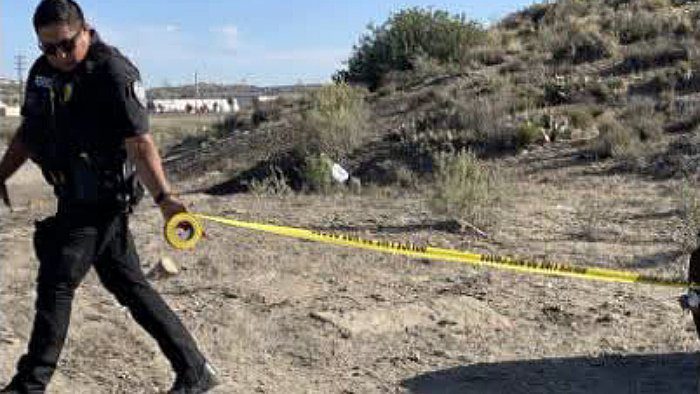
POLICY WIRE — Gallup, New Mexico — Out past the usual urban sprawl, where sagebrush still clutches at forgotten bits of earth, an indifferent patch of ground recently relinquished a dark secret. It wasn’t a lost wallet or some discarded junk but a human life, found silently on a recent Tuesday, stark against the landscape. This isn’t just about a discovery; it’s about a sudden, violent cessation—and the yawning void of information that follows. The anonymous field itself, near 631 North 6th Street, whispers nothing. But now, it’s been forced into the public discourse, a grim marker in a small New Mexico town’s quiet history.
It’s a peculiar kind of municipal urgency, isn’t it? The sirens blare, — and the uniforms descend, all because a silent fact refused to stay buried. Local authorities, combining the forces of the Gallup Police and Fire Departments, responded to what was tersely described as a [QUOTE_PLACEHOLDER] Sounds routine enough on paper, I guess, a tick-box item in a day’s dispatch log. But it’s never just routine when life has been extinguished. Not truly.
Investigators, working against the clock — and the encroaching silence of an undeveloped lot, processed the scene. They were looking for clues—any breadcrumbs left behind by whatever events led to this unfortunate end. They don’t have much to go on, apparently. No immediate declarations of foul play beyond the umbrella of an unknown. And they’re upfront about it, stating [QUOTE_PLACEHOLDER] They aren’t trying to hide the thinness of their thread. That’s refreshing, in a bleak sort of way.
Because every missing piece in such a puzzle screams of a life perhaps unseen, unheard, until its abrupt finish demands attention. It’s the stark reality of how easily a person can vanish from the fabric of society, only to resurface in the most undignified of circumstances. The police are treating this as a [QUOTE_PLACEHOLDER]—a phrase heavy with implied questions, hinting at a narrative yet to unfold, one perhaps touched by violence, desperation, or negligence.
Such discoveries resonate far beyond the desert reaches of New Mexico. In sprawling megacities like Karachi or Lahore, bodies are routinely found in similar states of anonymity, often in construction zones, alleys, or along canal banks. These aren’t just statistics; they’re often migrant workers, victims of petty disputes, or individuals lost to the ravages of poverty and addiction—lives rendered expendable, their absence hardly registered by the official apparatus until their corporeal presence demands recognition. The challenges of identification, motive, and justice are eerily similar across these distant geographies, a shared testament to urban alienation and fragmented communities.
But the local angle here in Gallup centers on cooperation. Detective Tasheena Wilson is the point person; [QUOTE_PLACEHOLDER] Plainspoken, direct. And for those wary of stepping into the spotlight, there’s always the shroud of anonymity. [QUOTE_PLACEHOLDER] Crime Stoppers, for its part, has dangled a financial incentive, offering up to $1,000 for intelligence leading to an arrest. It’s a familiar tactic, monetizing what should, ideally, be a civic duty—but then, desperation sometimes needs a nudge.
📄 POLICY WIRE WHITEPAPER PUBLISHED: PAKISTAN'S NATIONAL SECURITY POLICY PRIORITIES
👉 READ BY CLICKING HEREThe urgency to find answers isn’t just about this one person; it’s about what such an incident signals for the community at large. The sheer number of similar unresolved cases nationwide—a 2021 report by the Bureau of Justice Statistics indicated that the national homicide clearance rate was roughly 50%—means countless families never get closure. But every piece of local information helps to improve those odds, drawing lines in a sprawling investigation. And for a case of [QUOTE_PLACEHOLDER] like this, every fleeting glance or overheard whisper becomes a crucial piece of testimony in the shadows of persuasion.
What This Means
This localized tragedy, unfolding on an otherwise ordinary Tuesday, spotlights the often-overlooked vulnerabilities lurking beneath a community’s surface. It’s more than a singular incident; it reflects broader issues of social dislocation and the sometimes-fragile safety nets in small towns. Politically, unresolved suspicious deaths can erode public trust in law enforcement, fostering a sense of insecurity among residents. It puts pressure on municipal budgets to allocate resources not just to investigation but also to prevention programs, particularly if the death is linked to social scourges like drug abuse or homelessness. Economically, even an isolated crime can subtly affect perceptions of safety, potentially deterring minor investments or contributing to a generalized hesitancy that impedes local economic development. The ongoing request for public help, incentivized by a reward, starkly illustrates that even in an era of advanced forensics, community engagement remains paramount in the pursuit of justice, underscoring both the strengths and systemic weaknesses of localized crime fighting. Such cases also inadvertently push the boundaries of media engagement, testing how quickly a local news story can become a national conversation.