


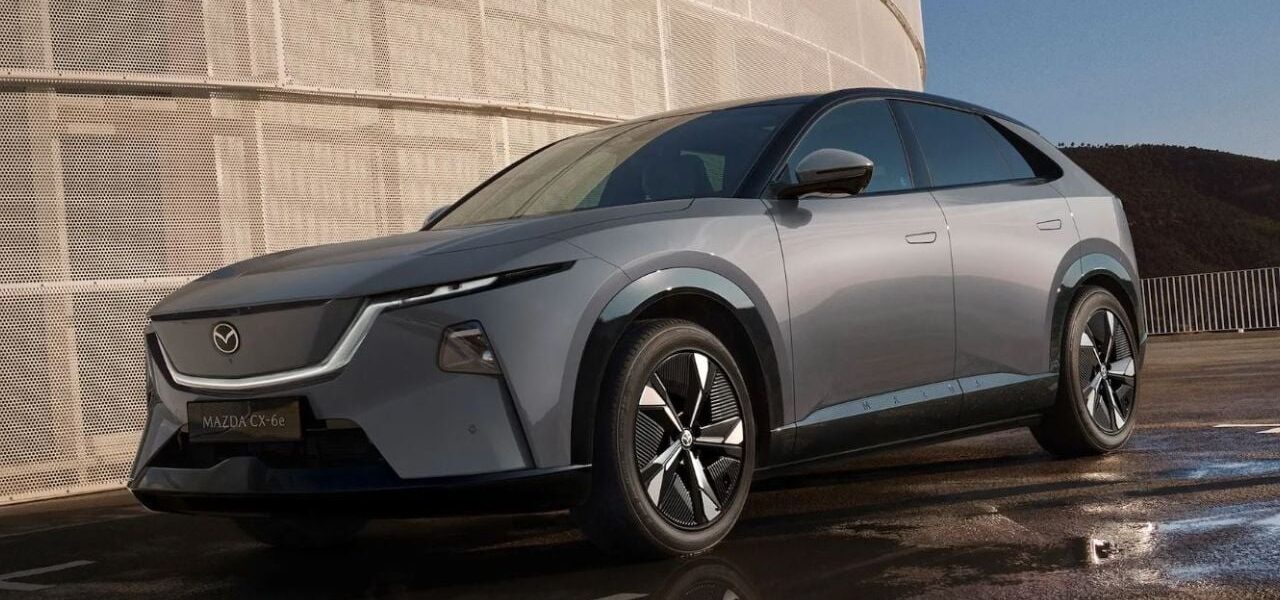
EV Hype Challenged: Auto Titan Calls Sales a ‘Blip’
A top auto executive questions the global EV sales frenzy, calling it a temporary blip. Explore the real-world challenges, market realities, and policy implications.

POLICY WIRE — Tokyo, Japan — Sometimes, the quietest voices whisper the loudest truths. While the global automotive industry races full throttle towards an electric future—or what it fiercely promotes as one—a dissenting opinion from one of Japan’s enduring players throws a bucket of cold water on the collective enthusiasm. It isn’t a Luddite’s lament, not by a long shot, but a shrewd observation from deep within the engine room.
It’s easy, see, to get caught up in the shimmering mirage of innovation, where every new battery factory and charging station promises a greener, cleaner tomorrow. But a certain executive, no stranger to the long game of car manufacturing, dares to suggest the current electrifying sales surge is, in fact, just a temporary blip. And that’s a thought that ought to make policymakers—and anxious investors—sit up straight, shouldn’t it? [QUOTE_PLACEHOLDER]
For years, governments across the world, fueled by environmental mandates and the shiny appeal of technological progress, have incentivized the pivot to electric vehicles. Tax breaks, preferential lanes, grand declarations about combustion engine bans—you know the drill. This push, it’s been said, was going to transform transportation, clean our cities, — and generally save us all. Many swallowed it whole. But real-world data, you’ve gotta admit, can be stubbornly uncooperative.
The sentiment from this Japanese carmaker isn’t new. But its timing, right when some early adopters are wrestling with range anxiety, charger availability, and the gnarly economics of battery replacement, feels particularly potent. He points to market forces, perhaps consumer habits that shift slower than boardroom decrees, or infrastructure that remains frustratingly behind schedule. And let’s not forget the sticker shock for the average family, even with subsidies. The man essentially said the current EV sales spike is temporary. He’s looking past the hype cycle, considering things like production realities, charging grid stability, and, let’s be honest, people’s actual buying power.
Think about the complexities involved. The push for electric mobility demands vast amounts of rare earth minerals. Global supply chains, already under considerable strain thanks to—well, you name it, really—are stretched taut trying to meet this new appetite. Cobalt, lithium, nickel—their sourcing often comes with geopolitical baggage, ethical questions, and considerable price volatility. For emerging economies, say in South Asia, these resource challenges aren’t abstract business worries; they’re real constraints. Pakistan, for instance, a nation grappling with its own energy independence and burgeoning automotive market, might see this kind of sober assessment from an established industry player as a quiet affirmation of their own pragmatic pacing rather than a reason for panic. Their automotive sector is often driven by affordability and existing infrastructure, not just aspirational technologies.
The policy implications here stretch further than just car sales charts. Global strategies regarding climate targets, national energy grids, and even international trade agreements might need recalibration if this temporary spike indeed proves to be temporary. The belief has been that we’re on an irreversible trajectory. What if we’re not? What if the path forward is a lot bumpier, less linear, than the brochures suggest?
And where’s the real human cost of a rapid, perhaps unsustainable, transition? Many are invested in internal combustion engine (ICE) manufacturing—entire workforces, engineering specialties, economic ecosystems. An overzealous rush might leave those behind, sparking social unrest or industrial dislocation. Contrast this with China, whose aggressive EV investments from battery tech to mining have granted it a near-monopoly in some critical areas, altering the global competitive landscape significantly.
📄 POLICY WIRE WHITEPAPER PUBLISHED: PAKISTAN'S NATIONAL SECURITY POLICY PRIORITIES
👉 READ BY CLICKING HEREJust look at the broader market. Electric vehicles comprised approximately 15% of total new car registrations in Europe during 2023, according to figures from the European Automobile Manufacturers’ Association (ACEA). That’s not insignificant, but it’s far from a complete takeover. It shows progress, sure, but also a long road ahead before ICE cars become a historical curiosity. And for a veteran like this CEO, who’s ridden out plenty of economic waves and technological shifts, 15% means there’s a hell of a lot of road left to travel, often with considerable friction.
For an auto company in a market like Pakistan, where the average consumer still weighs upfront cost and readily available fuel sources heavily, an EV-only future isn’t just aspirational—it’s borderline theoretical right now. They’ve got different priorities, different constraints. Geopolitical tremors can disrupt fuel supply chains or impact foreign investment in new technologies, forcing a more cautious approach to expensive technological leaps. It’s never just about the car itself, is it? It’s about everything that surrounds it, the entire apparatus of modern life. We aren’t talking about simple upgrades; we’re talking about systemic overhauls, the kind that strain nations on a good day.
What This Means
This executive’s cautious prognostication isn’t a rejection of electrification as a concept, but rather a cold shower on its current velocity and universal applicability. It’s a challenge to the simplistic narrative that EVs are the sole, immediate solution to every automotive problem. For global policymakers, this means diversifying strategies beyond mere blanket subsidies. It necessitates investing not just in charging networks but also in grid stability—especially in rapidly developing regions like South Asia, which simply can’t afford widespread blackouts from power strain. The conversation shifts from just ‘how fast can we go electric?’ to ‘what’s the most resilient, equitable, and realistic pathway forward for mobility worldwide?’ That includes exploring hybrid technologies and sustainable synthetic fuels more aggressively, not just as interim steps, but as viable long-term components of a diversified fleet. The implication is that we might be experiencing a natural market correction, or perhaps even buyer’s remorse, and that true, sustainable adoption takes more than just a marketing blitz. It’s a marathon, not a sprint, — and some of the frontrunners are already looking tired. And for emerging markets, this might well be a cue to step more deliberately, not to follow the rush off a cliff. Economic realities, not ideological fervor, must eventually prevail.