

The Information Battlefield Behind the Kabul Strike
Today, war is not fought using military force alone; it is fought via narratives and perceptions management as well. In counterterrorism efforts today, the battle for the narrative is just as...

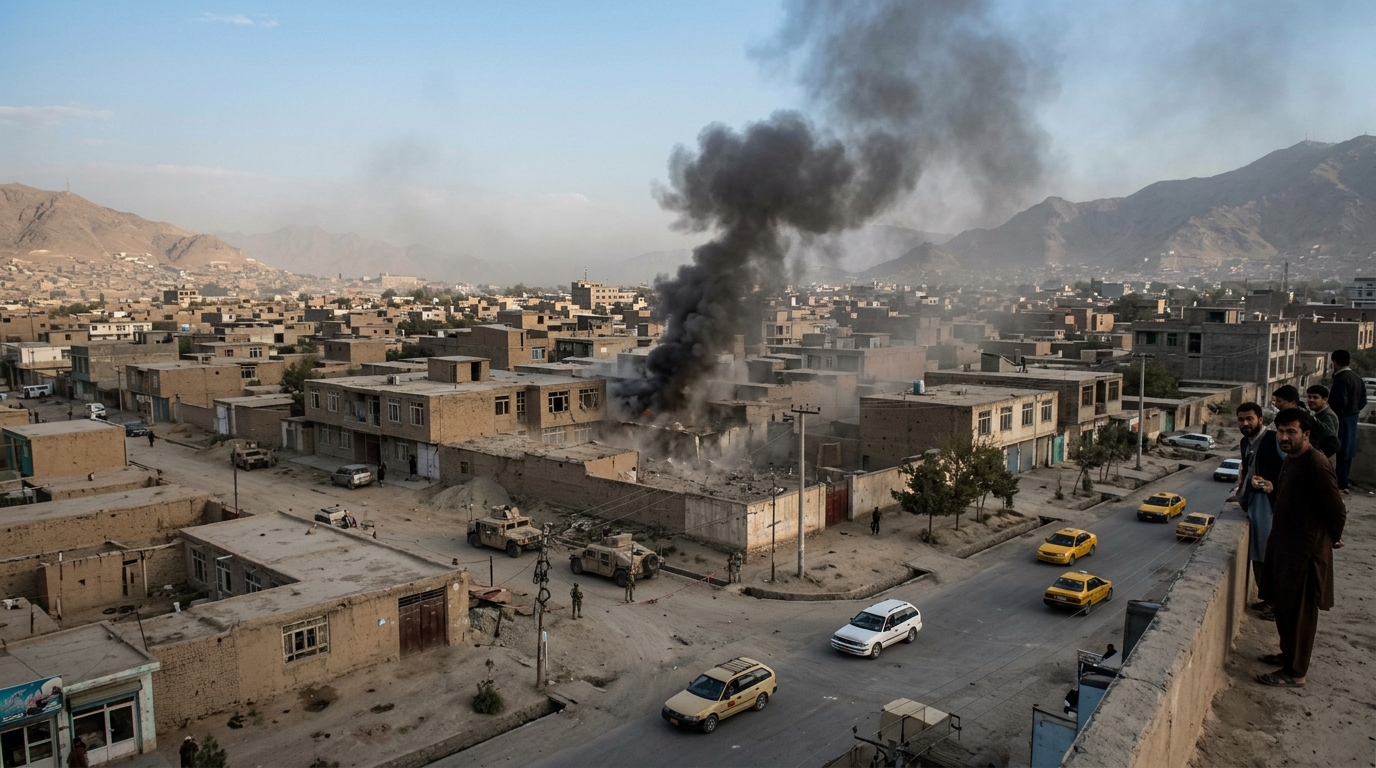
Today, war is not fought using military force alone; it is fought via narratives and perceptions management as well. In counterterrorism efforts today, the battle for the narrative is just as important as the victory on the ground. The latest global media coverage about Pakistan’s cross-border offensive inside Afghanistan, especially how BBC portrayed the situation, shows how the narrative becomes more important than the strategic environment in which these strikes are conducted.
The main issue here is not whether the attack happened. It is far more crucial to ask why militant groups opposed to Pakistan have been allowed to exist, organize themselves and conduct their attacks from Afghan soil after years of terror attacks in Pakistan.
In relation to securitization theory by the Copenhagen School of security studies, which claims that states act exceptionally when they feel that there is an existential threat to their survival and national security, this debate has become very relevant.
The ever-changing stance of Pakistan against terrorism can be attributed precisely to such a securitization process, where acts of aggression associated with militants based out of Afghanistan have changed the issue of cross-border militancy from an everyday issue related to border management into an issue relating to national security that is threatening for Pakistan. Acts of aggression carried out recently in Bannu and Lakki Marwat within 48 hours, resulting in the killing of 22 police personnel and civilians and injuring many others, have once again reiterated Pakistan’s old stance on the issue of sanctuaries used by groups associated with Hafiz Gul Bahadur.
In fact, most of the media reports covering the Kabul strikes tend to analyze Pakistan’s reaction without considering the larger picture related to the network of violence preceding such acts. This is reflective of a tendency toward analyzing conflicts without taking into consideration the broader context of infiltration, terrorism, and attacks across borders that impact the conduct of state affairs.
However, there is a significant amount of information regarding allegations made towards Pakistan, yet comparatively little about the presence of TTP and its affiliates operating out of Afghanistan. This is significant because modern militant organizations operate in the context of a hybrid warfare, where operations on both fronts – military and information – are closely intertwined.
Modern conflicts are characterized by an approach of a militant organization aiming not only at physical but at narrative survival as well. This means that such organizations are becoming more and more adept at positioning themselves in civilian zones and dual-use facilities. It does so because this provides them with a strategic advantage in the form of international condemnation.
However, this pattern is not only characteristic of Pakistan’s security setting. The Turkish state has frequently argued that their military offensives across the borders against the PKK fighters are based on the presence of militant safe havens outside Turkey which threaten the state’s security constantly. Irrespective of the arguments that may be put forward internationally regarding the tactics, the core strategy behind it is quite obvious in the field of security studies: states are reluctant to have transnational insurgent movements which operate from safe havens across their borders persistently.
In Pakistan’s case, the situation is not much different either. Pakistan argues that groups like TTP and Hafiz Gul Bahadur keep taking advantage of Afghanistan’s territory for their recruitments, facilitations, training, and attacks into Pakistani soil where Afghan Taliban lacks the capacity or desire to neutralize them.
Here lies the crux of the issue. It is not simply a question of an incident.
Such a permissive environment has become increasingly threatening due to the alignment between insurgents’ mobility, ideology, and lack of accountability within Afghanistan. Despite official denials from Afghan Taliban authorities concerning any involvement of their country in attacks on other nations via Afghan soil, anti-Pakistan militant outfits have nevertheless found room for maneuvering. This results in creating a security dilemma that is referred to by security experts as the grey zone security dilemma.
Pakistan’s strategic approach towards its security, on the other hand, has changed over the years from reacting to attacks on its borders to engaging in the prevention of militant ecosystem activities even before they reach Pakistani soil. Strategic security experts would term this move as Pakistan switching from passive defense measures to active defense and disruption tactics. While some might question certain elements of this strategy, its validity cannot be undermined.
Just as significant is the question of selective humanitarian visibility within the international narrative. Pakistani victims of terrorism are not accorded consistent global attention relative to the intensity of their ordeal. Over the years, hundreds of Pakistani soldiers, policemen, and civilians have been killed in acts of terrorism linked to bases within Afghanistan. The global discourse, however, often focuses more on the consequences of counterterrorist missions than on the ongoing process of terrorism preceding such action. A hierarchy of victims thus emerges from this dynamic, with the suffering of certain civilian casualties being highlighted globally, while others are sidelined strategically.
The government of Pakistan unequivocally denies efforts to create an ethical equivalency between counterterrorist missions and the acts of terror perpetrated against civilians. It has been claimed by the Pakistani authorities that there was no targeting of any hospitals or civilians, but rather the target areas were those involved with terrorist elements that threatened the national security of the country.
Indeed, the whole controversy about the strikes in Kabul should be put behind the sensationalized headlines and biased discourse. However, the real core of the problem lies elsewhere, in understanding why the infrastructure of militant groups hostile to Pakistan keeps on functioning and operating from Afghan soil in spite of all the warnings. As long as this problem remains unaddressed, the dynamics of both violence and narratives in the region will go hand in hand with each other, perpetuating a vicious circle of conflict for South Asia.
Author