


Diamonds & Diplomacy: Brewers’ Brawl Exposes Unwritten Rules, Global Scrutiny
POLICY WIRE — Milwaukee, United States — A baseball diamond, it turns out, is rarely just about baseball. Not when the competitive fire of a regional rivalry—or a pitcher’s animated...

POLICY WIRE — Milwaukee, United States — A baseball diamond, it turns out, is rarely just about baseball. Not when the competitive fire of a regional rivalry—or a pitcher’s animated celebrations—collides head-on with established codes of conduct. On Tuesday night, after the Milwaukee Brewers managed a 6-0 shutout against the St. Louis Cardinals, it wasn’t the home runs or the sterling pitching that captured the full measure of attention. No, it was a gesture, an ‘emote’ if you will, hurled towards the opposing dugout, that turned a routine victory into a microcosm of broader diplomatic tension.
It was eighth inning reliever Abner Uribe who initiated the spectacle, following a pair of strikeouts with a new emote to his end-of-inning celebration, the DX chop. Directed at the Cardinals dugout. An immediate, visceral reaction in the stands. Later, Brewers manager Pat Murphy didn’t mince words. He strongly condemned Uribe’s celebration, saying [QUOTE_PLACEHOLDER], ‘That’s unacceptable. I don’t know what got over him. I mean, he’s been an emotional guy, but that kind of thing, that’s just not how we do things. And I was embarrassed by it.’ Strong stuff, particularly when delivered post-victory. But isn’t that always the way? Triumph, then reckoning.
Uribe, though, offered a different story, telling reporters through translator Daniel de Mondesert: ‘I understand that that’s unacceptable to go out there and react in a way like that, but at the same time I don’t think it’s professional for their manager to be making signs towards our dugout that he’s going to be hitting guys and there was an event that occurred during the practice today too, and I don’t think that was right and I have my teammates’ back always.’ He declined to comment on what the pre-game incident actually was, a vague premonition of sorts, adding another layer to the simmering animosity. And this, precisely, is where a game of balls and strikes devolves into something far more intricate, a tangle of perceived slights and protective instincts.
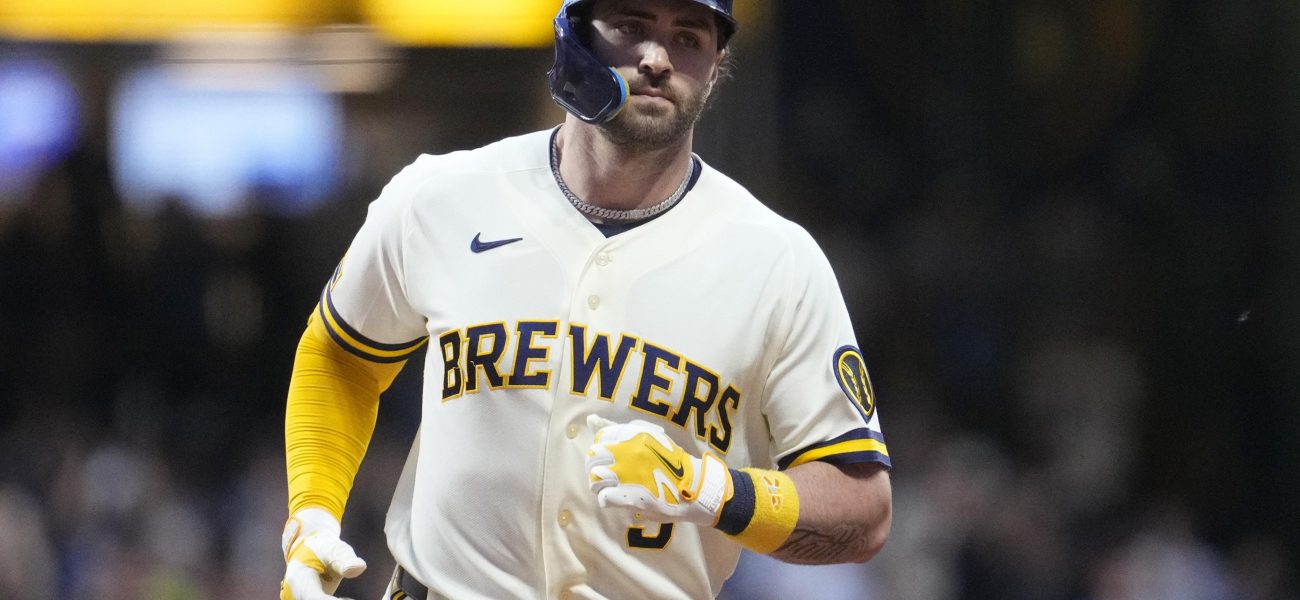
Against this backdrop of brewing discord, one almost forgets there was a game played. Indeed, it wasn’t just a win, it was a somewhat uncharacteristic power surge for the Brewers. Entering the night with just 35 long balls this season – a low mark for the entire league – the team managed to go yard twice. Jake Bauers started it with a solo shot in the 4th inning, his 8th of the season, leading the team. But it was Garrett Mitchell who truly sent Bernie Brewer down his slide with gusto, sending a ball 421 feet to dead center, giving the Brewers a 6-0 lead in the 5th after William Contreras had already brought home two runs. For an offense typically starved for dingers, this was, well, a feast. And that’s saying something, it really is.
Meanwhile, Kyle Harrison, the Brewers’ ace-in-training, was simply magnificent. He was twirling a gem once again, carving through the Cardinals lineup with ease. He extended his scoreless innings streak to 18 IP, covering his last three starts, a testament to consistency often overshadowed by the theatrics of the late innings. Only two base runners reached scoring position all night against him. But when the dust settled on the field, the narrative had already shifted decisively off it. Because even the most brilliant pitching can’t always outshine human drama.
📄 POLICY WIRE WHITEPAPER PUBLISHED: PAKISTAN'S NATIONAL SECURITY POLICY PRIORITIES
👉 READ BY CLICKING HEREThe manager’s swift disciplinary tone, mirroring statements one might hear from foreign ministers navigating contentious bilateral meetings, certainly provides an interesting lens for this sporting fracas. Organizations, regardless of their operational purview, find themselves continually tasked with managing the perceived decorum of their members, especially when actions could be interpreted negatively in global media or among diverse fan bases. Take, for instance, how similar displays of emotional excess or perceived disrespect are often viewed in countries with strong cultural emphases on modesty or deference, such as Pakistan or elsewhere in the South Asian subcontinent. There, the ‘optics’ of conduct frequently weigh as heavily as any outcome, often dictating public and political response. One might see a reflection of this broader institutional caution when navigating the nuanced diplomatic challenges, as chronicled in discussions around Dhaka’s high-stakes gamble concerning cross-border relations and resource allocation.
After all, Uribe apologized to his Brewers teammates, coaches, and all the higher-ups, but declined to apologize to the Cardinals. It speaks volumes, doesn’t it? It says, loudly, that the internal pacts of loyalty often trump external mandates of sportsmanship, at least in the heat of the moment. It also ensures the rivalry with the Cardinals sure seems to be alive and well, potentially even escalated, making Wednesday’s game for a sweep an even hotter ticket.
What This Means
This incident, seemingly trivial in the grand scheme of geopolitical maneuvers, pulls back the curtain on a critical aspect of modern institutional management: brand control versus individual expression. For Major League Baseball, Uribe’s emote isn’t just about a potential fine; it’s about the league’s global image, particularly as it seeks to expand into new markets. What’s considered passionate within a domestic context can easily translate to disrespect in an international one. Baseball isn’t just America’s pastime anymore; it’s an exported product, subject to myriad interpretations. For the Brewers, the manager’s quick condemnation, and Uribe’s defiant-yet-apologetic stance, signals an internal power dynamic that managers universally face: maintaining authority while also defending your players’ fiery instincts. This small dust-up has magnified the enduring friction between personal honor, team loyalty, and professional obligation, a universal dilemma that, sometimes, takes center stage on a baseball field instead of a negotiating table. And you can bet both dugouts remember it. The brutal truth of fleeting moments has a way of leaving a lasting mark, no matter the context.