


Gridiron Green: Inside the NFL’s Rookie Brand Blitz
POLICY WIRE — Los Angeles, California — The roar of a stadium, the dream of a Super Bowl ring—these are the siren calls for countless young athletes. But long before a rookie takes his first...

POLICY WIRE — Los Angeles, California — The roar of a stadium, the dream of a Super Bowl ring—these are the siren calls for countless young athletes. But long before a rookie takes his first professional snap, another, perhaps more powerful, engine of American sports has already engaged: the brand-building apparatus. In mid-May, in the shimmering heart of Los Angeles, this machine hums into overdrive for a select group of gridiron hopefuls, teaching them not just to play, but to capitalize. It’s an immersion into capitalism, really, far removed from the dusty college fields where their legends were forged.
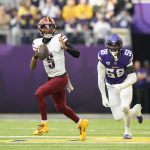
Forty-two newly minted professional footballers, including Arizona Cardinals’ promising running back Jeremiyah Love and quarterback Carson Beck, converge for what’s officially dubbed the NFLPA Rookie Premiere. Yet, “premiere” scarcely captures the intensity. It’s less a welcome party and more a crash course in personal brand monetization, a whirlwind of photo ops, autograph sessions, and carefully choreographed content creation. Imagine the typical business convention, only with chiseled athletes in pristine new uniforms replacing suited executives. They’re here to be sculpted, polished, and presented—like fresh merchandise on a global shelf.
It’s no accident that the bulk of these attendees are offensive skill players. Those are the faces fans buy, the jerseys kids clamor for. And, if they make it big, these are the athletes whose personal narratives translate into endorsement gold. The NFL isn’t just selling a game anymore; it’s a global entertainment conglomerate, a multi-billion-dollar enterprise that views its players as both performers and walking, talking profit centers. According to Statista, the global sports sponsorship market alone is projected to hit nearly $100 billion by 2027—a slice of that pie awaits these young men, if they play their cards right.
DeMaurice Smith, a former executive director of the NFL Players Association, reportedly once quipped, “These young men aren’t just athletes anymore; they’re walking, talking, profit centers from day one. Our job is to teach ’em how to manage that storm, not just weather it.” That’s the cold, hard truth. Union leadership runs sessions focused on group licensing and long-term income strategies—it’s a financial education program in camouflage. For the rookies, it’s a necessary transition from aspiring athlete to savvy businessman.
For someone like Jeremiyah Love, a first-round pick, the market impact starts almost immediately. Fans already know his name, they’re ready for the gear. For Carson Beck, a third-round quarterback, the trajectory might be slower, but the potential upside—if he eventually leads a franchise—is immense. Team executives know this. “Drafting a player today isn’t just about his 40-yard dash time; it’s about his marketability, his social footprint,” a seasoned NFL general manager, Michael Bidwill, might observe. “You’re investing in a brand, really, and these rookies—they’ve got to understand that quickly.” It’s a pragmatic approach to team-building, marrying on-field prowess with off-field allure.
Because the NFL, you see, isn’t contained by American borders. Its brand reach extends across continents. And for players, their influence stretches, sometimes unexpectedly, into disparate cultures. Consider how deeply American sports have penetrated economies from Riyadh to Karachi. The burgeoning interest from the Middle East and South Asia in American entertainment and lifestyle brands—driven by youthful demographics and increasing disposable income—means that an athlete’s endorsement in Los Angeles can literally translate to merchandise sales in Lahore. It’s not just about what happens on the field; it’s about what’s packaged and consumed thousands of miles away, shaping perceptions and fueling an insatiable appetite for American soft power. TikTok’s presence as a partner isn’t accidental, either. They’re targeting those global, often younger, demographics who will latch onto these new stars.
Content partners range from trading card giants like Topps to gaming behemoths like EA Sports and consumer product titans such as Procter & Gamble. These aren’t simply photo sessions; they’re bespoke content farms. And there’s an entire ecosystem around these rookie ventures. Gatorade, Pepsi, SONY, Oakley—they’re all vying for a slice of the pie, pushing products, integrating players into promotional campaigns that last the entire season, maybe even a career. It’s about cultivating celebrity, leveraging youthful appeal. Some of these players—it’s wild to think about—will be millionaires solely off endorsements before ever making their mark on a stat sheet.
But the pressure is real. One misstep, one social media faux pas, and the meticulously constructed brand can unravel faster than a bad screen pass. This ‘premiere’ is less about celebration — and more about instruction: Welcome to the big leagues, kid. Now, make us some money.
What This Means
This event encapsulates the modern intersection of professional sports, athlete empowerment, and unchecked corporate ambition. It signals a shift where the player, once solely a performer, now operates as a multifaceted brand entity, responsible for cultivating a public persona that extends far beyond athletic feats. The emphasis on business orientation by the NFLPA isn’t just about protecting players; it’s about making them more effective assets in the sports-industrial complex. This proactive approach by the union demonstrates a shrewd understanding of the contemporary sports landscape, acknowledging that players’ economic power now resides as much in their marketable image as in their on-field statistics. The broader implication? It suggests an increasingly transactional relationship between fans, teams, and athletes, where loyalty is often predicated on commercial appeal as much as performance. The monetization of every aspect of a player’s existence—from their college renown to their first professional uniform photo—isn’t just the status quo; it’s the future. This, of course, raises questions about authenticity versus manufactured image, a debate as old as celebrity itself, but magnified exponentially in the age of instant digital dissemination.