
The Ghost in the Rubble: Israel’s Latest Strike on Gaza’s Shadow Leadership
POLICY WIRE — Tel Aviv, Israel — Another name, another shadow commander. You’d think, after all this time, the grim arithmetic of this enduring conflict might change. But it rarely does. Just...

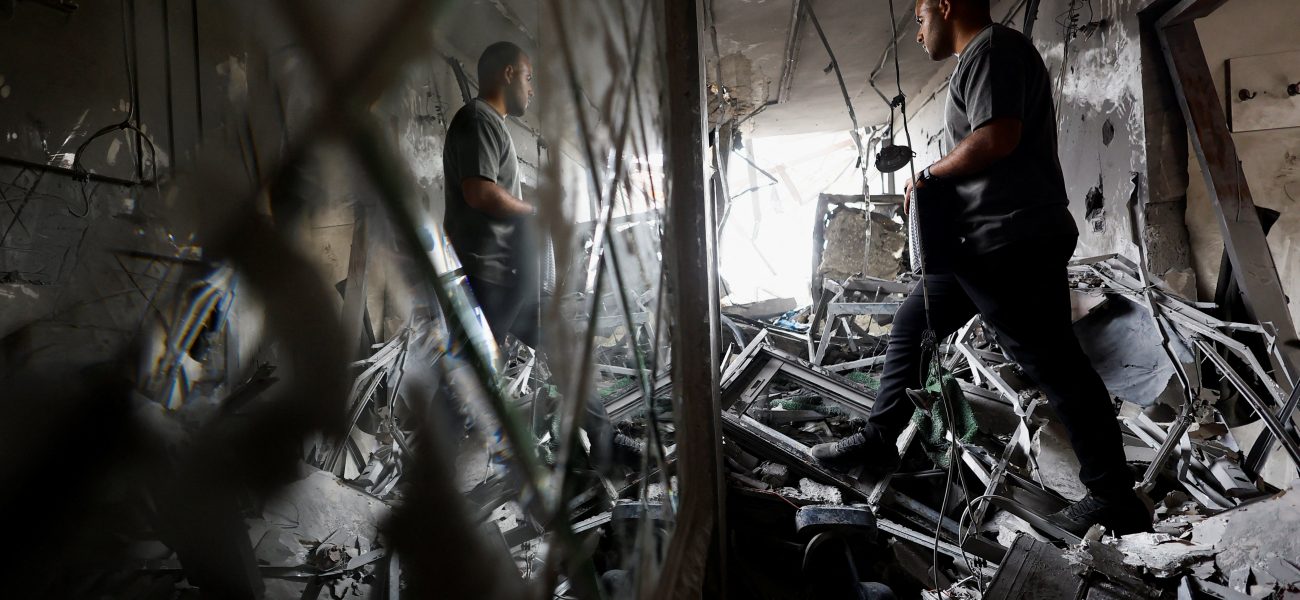
POLICY WIRE — Tel Aviv, Israel — Another name, another shadow commander. You’d think, after all this time, the grim arithmetic of this enduring conflict might change. But it rarely does. Just yesterday, amidst the perpetual churn of violence, Israeli defense forces let it be known they’d taken out Raed al-Attar, who they fingered as a top dog in Hamas’s military wing—a man, they claim, whose hands were deep in tunnels, arms smuggling, and general mayhem across the Gaza Strip. Never start with the most obvious fact. What truly defines this grim ballet isn’t the explosion, but the stubborn insistence of both sides that *this time* the cycle will break their way. Spoiler: it probably won’t.
Israeli intelligence, ever diligent (and sometimes a bit smug), confirmed the alleged targeting of al-Attar in an aerial bombardment near Rafah, deep within the southern enclave. They said the precision strike was part of an ongoing effort to dismantle Hamas’s operational capabilities. We’ve heard that song before. According to an official statement released this morning, the Israel Defense Forces (IDF) declared al-Attar “neutralized,” describing him as a lynchpin in the group’s underground command structure. A rather clinical term, isn’t it, for a person who once walked — and talked?
The Israeli government wasted no time trumpeting the alleged success. “We’re systematically degrading the terrorist infrastructure that threatens our citizens,” stated Rear Admiral Daniel Hagari, an IDF spokesperson, his voice likely broadcast from a sterile media briefing room. “Every senior commander brought to justice is a message: nowhere is safe for those who plot against Israel.” And that’s the party line, delivered straight from the playbook.
But on the other side, the narrative twists, doesn’t it? A different tune. Palestinian officials in Gaza were quick to paint a starker picture of collateral damage, of lives simply wiped out. They don’t dwell on military hierarchies; they count the dead. “These are not surgical strikes; they’re acts of desperation that breed only further grievance,” lamented Dr. Mustafa Barghouti, a prominent independent Palestinian legislator, when asked for his reaction. “You can’t bomb an idea out of existence, only strengthen the resolve of those who suffer.” It’s an old argument, certainly, but one that continues to sting.
And what does this mean for the grander scheme of things, for the delicate web of regional ambitions? Pakistan’s Foreign Ministry, often a vocal critic of Israeli actions, issued a boilerplate condemnation, emphasizing the need for a ‘just and lasting peace’ that respects Palestinian rights. It’s the kind of diplomatic language you could set your watch to. But it speaks to a broader unease across the Muslim world, where such incidents are seen not just as isolated attacks, but as symbols of an ongoing injustice that reverberates from the Levant to the fringes of Southeast Asia. You can’t separate the conflict’s local implications from its global, sectarian undertones. Geopolitical scrimmages often have deep, messy roots.
Because every claimed victory by Israel—or perceived martyr for Hamas—stokes the fires of public opinion in capitals like Islamabad and Jakarta, where humanitarian crises in Gaza often become defining political moments. Protests, social media outrage, parliamentary debates—they all feed into a complex domestic policy landscape. These aren’t merely distant conflicts; they’re emotional flashpoints.
According to the United Nations Office for the Coordination of Humanitarian Affairs (OCHA), over 80% of Gaza’s population has been displaced since the recent escalation, a staggering statistic that casts a long, dehumanizing shadow over any claims of tactical success. It doesn’t really matter who was killed; the deeper catastrophe continues to unfold for ordinary people. Don’t forget that.
📄 POLICY WIRE WHITEPAPER PUBLISHED: PAKISTAN'S NATIONAL SECURITY POLICY PRIORITIES
👉 READ BY CLICKING HEREWhat This Means
The alleged elimination of Raed al-Attar, assuming the Israeli claims hold up, is unlikely to be the game-changer Israel hopes it to be. While temporarily disrupting Hamas’s top brass—it’s like lopping off a hydra’s head, isn’t it?—history suggests that new leaders quickly emerge. The organization’s command structure, honed by decades of conflict, is designed to be resilient, almost like an ancient desert plant. Strategically, this move offers Israel a fleeting narrative victory but doesn’t solve the core political quagmire. It certainly doesn’t end the fight, or the tunnels, or the rockets.
Economically, the endless cycle of violence translates directly into perpetual instability. This isn’t just about destroyed infrastructure; it’s about stifled growth, humanitarian aid dependencies, and a profound disincentive for any meaningful foreign investment in Gaza. Reconstruction efforts, no matter how well-intentioned, often turn into Sisyphean tasks, as fragile truces are shattered by the next eruption. For donor nations, it’s a demoralizing rinse-and-repeat cycle, pouring resources into a region that constantly needs rebuilding rather than truly developing. And this isn’t some abstract policy wonk concern; it’s the daily reality for millions.
such strikes heighten regional tensions, complicating already fraught diplomatic efforts. Countries like Egypt and Qatar, often mediators, find their efforts undermined as new provocations restart the clock on peace initiatives. It’s a cruel feedback loop, isn’t it? The more intense the military action, the less space there’s for dialogue, and the more entrenched extremist elements on both sides become. Every major incident, even one cloaked in precision, sends shockwaves across borders, influencing everything from trade relations to regional alliances. This isn’t just an Israeli-Palestinian issue; it’s a global hot potato, simmering and ready to flare up, often with little warning. Maybe we’ll see another round of strained international ties, because that’s just how it usually works.
For Policy Wire, this isn’t just a casualty report. It’s another chapter in a never-ending saga, where victory is fleeting and peace remains an elusive, almost mythical beast, always just beyond reach.