


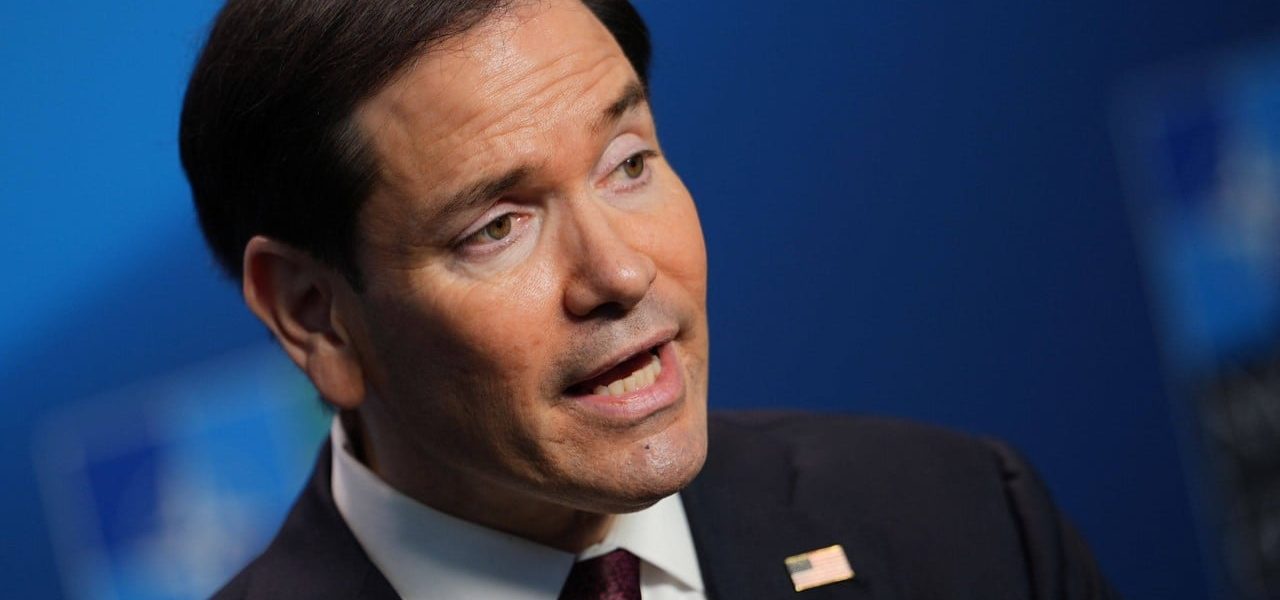
Rubio’s Rocky Landing: India Visit Confronts Shattered Optimism, Strained Ties
POLICY WIRE — New Delhi, India — The honeymoon, if it ever truly blossomed beyond diplomatic overtures, seems decisively over. It wasn’t long ago, barely a year perhaps, that Washington’s...

POLICY WIRE — New Delhi, India — The honeymoon, if it ever truly blossomed beyond diplomatic overtures, seems decisively over. It wasn’t long ago, barely a year perhaps, that Washington’s confirmation of Marco Rubio as Secretary of State ignited genuine enthusiasm among India’s policy wonks.
There was a specific kind of anticipation in the air. We heard it. We wrote about it. [QUOTE_PLACEHOLDER] They really did, you know? It wasn’t some diplomatic fantasy. The thinking here was clear, unambiguous, even.
[QUOTE_PLACEHOLDER] That quote captures the prevailing mood—a sense of imminent, unbreakable synergy. They saw an architect, an anti-China hardliner who truly got it, who’d solidify an axis against Beijing, forever changing the geopolitical map of Asia.
But Washington moves in mysterious ways, — and sometimes, those ways feel awfully transactional. Because what Senator Rubio championed from afar as a vocal legislator often gets diluted, complicated, or frankly, just shifted, when you’re steering the global ship from Foggy Bottom. Geopolitics is rarely about unwavering convictions when there’s a new crisis erupting hourly.
So, Marco Rubio now touches down, [QUOTE_PLACEHOLDER] A veritable grand tour. It’s meant to convey warmth, importance, partnership. A cultural embrace. Yet, beneath the pomp and circumstance, under the carefully choreographed photo ops at historical sites, something else hums: a low-grade tremor of disillusionment, if you ask sources close to South Block. He doesn’t enter some burgeoning paradise of partnership; he enters something more frayed.
In fact, he walks into [QUOTE_PLACEHOLDER] — and it’s that ellipses that contains the real story. The unease isn’t imagined. It’s tangible. It’s the silent sigh in many a think-tank discussion, the coded language in official statements. What was Washington’s [QUOTE_PLACEHOLDER] misstep? For many in New Delhi, it’s the perceived softening on China, the quiet diplomatic shifts, or the re-prioritization of issues that don’t put India first and foremost in every calculation. There’s a gnawing suspicion that American policy, ever shifting, is less about ideological alignment and more about managing immediate threats or securing short-term economic wins.
This dynamic plays out across the broader region. While New Delhi carefully crafts its strategy regarding Beijing, often eyeing Washington for support, the U.S.’s attempts to engage other regional players — say, Pakistan—or indeed, the very complex nature of China’s economic integration, don’t always align with India’s singular focus. It’s an elaborate, multi-player game, — and America isn’t exactly a disinterested observer.
And these aren’t just gut feelings. Numbers tell part of the story. For instance, despite an almost 20% increase in U.S. defense aid to countries in the Indo-Pacific region in the past five years, as per a recent report by the Congressional Research Service, the proportion explicitly channeled to enhance capabilities against direct Chinese aggression has seen only marginal growth compared to counter-terrorism efforts or general regional stability programs. This slight tilt in priorities has, quite frankly, left some in New Delhi wondering about the true depth of America’s strategic commitments against Beijing, particularly if those commitments require substantial domestic sacrifice.
📄 POLICY WIRE WHITEPAPER PUBLISHED: PAKISTAN'S NATIONAL SECURITY POLICY PRIORITIES
👉 READ BY CLICKING HERERubio’s mission, therefore, isn’t merely about exchanging pleasantries. He’s there to put a gloss on a narrative that’s started to chip. He needs to convince the Indian leadership that Washington’s long-term vision aligns with theirs, that the past year hasn’t been a flirtation with geopolitical inconsistency. But it’s not an easy sell. When dealing with regional partners, trust, once eroded by perceived inconsistencies, can be awfully tough to rebuild. Sometimes, even the most eloquent speeches just feel like more transactional politics, masked under lofty words.
Because every nation looks out for its own skin, doesn’t it? That’s just the nature of the beast. And India, a rising power itself, certainly doesn’t plan to be a pawn in anyone else’s grand strategy. But it sure wants a predictable partner.
What This Means
Rubio’s visit highlights a simmering anxiety within the U.S.-India strategic relationship. Economically, this transactional undercurrent translates into less certainty for American companies looking to invest big in India, particularly in defense or advanced technology sectors where strategic trust is paramount. India, meanwhile, continues its cautious dance with Western partners, always aware of its need to balance these relationships with its own self-reliance goals and its complex borders.
Politically, the [QUOTE_PLACEHOLDER] many envisioned seems to have dissolved into a more pragmatic, if somewhat uneasy, alliance. For the wider South Asian region—and indeed, for countries like Pakistan, who closely monitor India’s diplomatic alignments—this fluctuation in U.S. foreign policy toward New Delhi could be interpreted in various ways: perhaps as an opportunity for re-engagement with Washington, or conversely, as a signal of continued U.S. unpredictability that warrants a broader hedging strategy. A wavering U.S. posture towards China affects everything—trade, security, regional influence. This kind of nuanced dance on the global stage reflects the complexities seen even in smaller, more contained arenas like the intricate player dynamics in a league, as observed in Bollywood of the Bat: IPL’s Gaudy Spectacle Delivers High Drama, Strategic Aftershocks, where underlying strategic tensions shape outcomes.
It’s not that the U.S.-India relationship is collapsing. It’s evolving, painfully perhaps, into something far more nuanced — and less idealistic than initially hoped. The challenge for both sides is navigating this reality without alienating each other, especially when powerful regional dynamics, like those explored in Mounting Intelligence Rattles Canada-India Truce, Exposes Khalistani Shadow Play, often complicate partnerships built on paper-thin optimism.