


Senate Theater or Serious Inquiry? Hirono’s Confirmation Stance Ignites Scrutiny
POLICY WIRE — Washington D.C., USA — It’s never just about the law, is it? Not really. More often than not, it’s political theater disguised as legislative procedure. The latest act came...

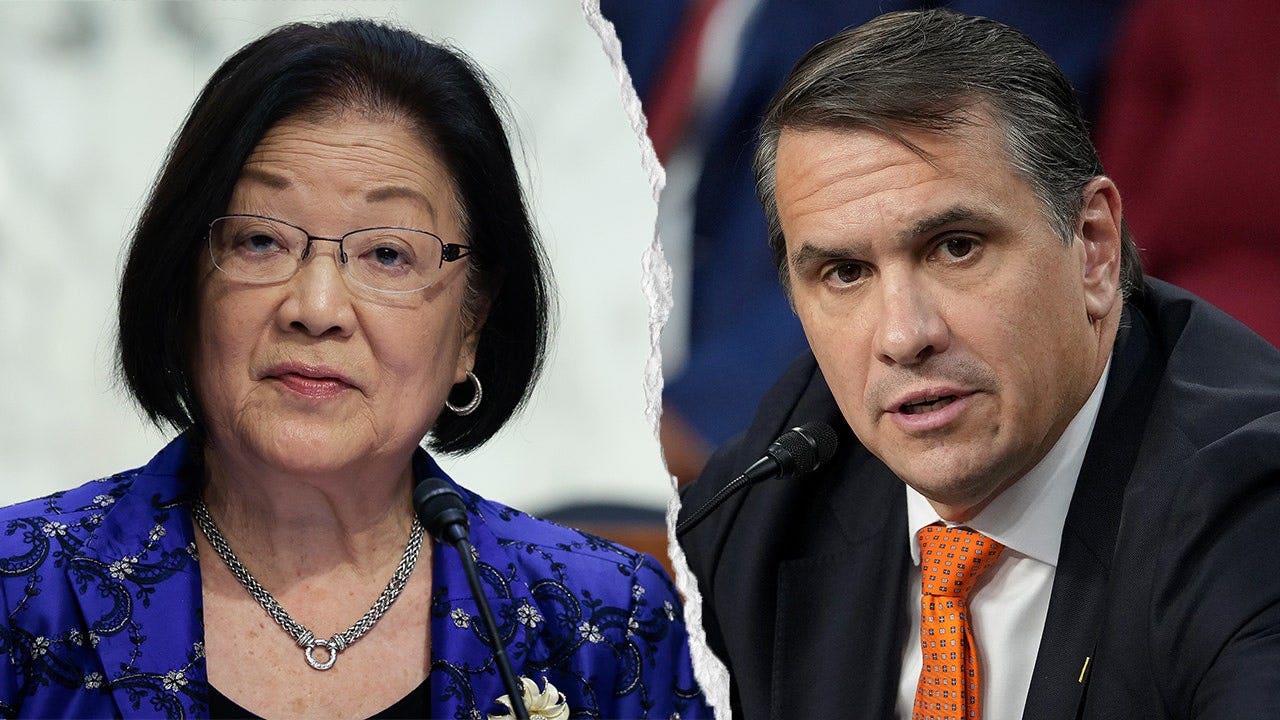
POLICY WIRE — Washington D.C., USA — It’s never just about the law, is it? Not really. More often than not, it’s political theater disguised as legislative procedure. The latest act came courtesy of Senator Mazie Hirono during a recent judicial confirmation hearing, where her pointed questions to nominee [QUOTE_PLACEHOLDER] Blanche didn’t just ruffle feathers; they sparked a brushfire of criticism, forcing a fresh look at the thin line between oversight and ideological sparring.
The Hawaii Democrat, known for her unsparing interrogations, drew immediate pushback for an opening line of questioning described by some observers in frankly uncharitable terms. And why wouldn’t she? In the current climate, Senate confirmation hearings have less to do with dispassionate assessments of qualifications and more with setting the stage for future campaign soundbites. Every exchange is scrutinized, every utterance weaponized, and genuine intellectual inquiry seems increasingly absent from the equation. It’s a performative art, plain — and simple.
Her approach elicited a chorus of strong rebukes from commentators and rival politicians, many dismissing the exchange as little more than a political stunt. Social media, that ever-reliable echo chamber of instant judgment, lit up. But what does it mean when the fundamental process of vetting public servants devolves into an opportunity for grandstanding? It erodes public confidence, for starters. And it certainly doesn’t foster any sense of national unity, especially on something as consequential as lifetime appointments to the federal bench. The implications for the judiciary’s perceived impartiality can’t be overstated here. Judges, after all, aren’t supposed to be partisan figures—they’re meant to interpret the law. Yet, they’re born from a system saturated with partisan pressures.
Such episodes also reveal a deeper current of ideological purity tests replacing a substantive review of competence. Senator Hirono, by some accounts, was seeking to ascertain specific perspectives or leanings from [QUOTE_PLACEHOLDER] Blanche, venturing into areas many critics found irrelevant or unfairly provocative. But then again, one person’s provocation is another’s necessary line of inquiry, particularly when seeking to safeguard particular democratic norms or legislative interpretations.
It’s an increasingly common scenario on Capitol Hill, reflecting an institutional shift that favors confrontation over collaboration. Just look at the battles over virtually every presidential nominee in recent years, regardless of party affiliation. Confirmation votes that once sailed through unanimously now often pass on razor-thin margins, if they pass at all. A recent study by the Pew Research Center indicated that public trust in the U.S. federal government dipped to a mere 16% in 2023, down from over 75% in the early 1960s—a trend accelerated, not reversed, by these public spectacles.
This dynamic isn’t confined to America’s borders, either. Consider the reaction across parts of the Muslim world, including nations like Pakistan, to perceptions of U.S. political dysfunction. When domestic American institutions are seen as internally conflicted or driven by aggressive partisanship, it weakens Washington’s ability to project stable leadership on the global stage. It undercuts its credibility when advocating for democratic values abroad, especially in regions grappling with their own internal political tensions. South Asia, with its delicate balance of powers — and simmering geopolitical issues, watches these signals from the U.S. with keen interest, trying to decipher if America’s commitments—and even its basic democratic functionality—remain steady.
Her blunt style isn’t new; Hirono has a long track record of pushing nominees on sensitive topics. And while her supporters champion her tenacity and willingness to hold appointees accountable, opponents frequently lambaste it as unconstructive badgering. It makes for compelling television, no doubt. But that doesn’t make for good governance.
What This Means
This latest fracas isn’t an anomaly; it’s a symptom. It illustrates the entrenchment of confirmation hearings as ideological battlegrounds rather than objective examinations of judicial temperament and qualifications. Politically, it energizes specific bases on both sides, making nuanced debate all but impossible. Democrats see Hirono as a bulwark against conservative judicial overreach; Republicans view her tactics as evidence of liberal obstructionism and bias. There’s no middle ground left, it seems.
Economically, this hyper-partisanship, when applied to judicial appointments, fosters instability. Businesses thrive on predictable legal frameworks, but an ideologically charged judiciary can create an environment of uncertainty, especially concerning regulatory interpretations, property rights, and contract law. When judges are perceived as political operatives, faith in the rule of law diminishes, potentially chilling investment and long-term economic planning. This is more than just about a single Senator asking a provocative question—it’s about how such moments contribute to a broader atmosphere that, over time, can impact the very foundations of commerce and public order. It certainly gives leaders in Islamabad something to ponder when considering bilateral relationships, much like the complexities of past investigations can ripple through international diplomacy. What we see is the constant negotiation of power—political, economic, and cultural—unfolding with each question asked and each answer deflected.