


Chalk Dust and Echoes: Lebanon’s Youth Education Dries Up Amidst Regional Firestorm
POLICY WIRE — Beirut, Lebanon — It isn’t the explosion that marks the end; it’s the quiet. The sudden, eerie silence in schoolyards once buzzing with children’s shouts, now only...

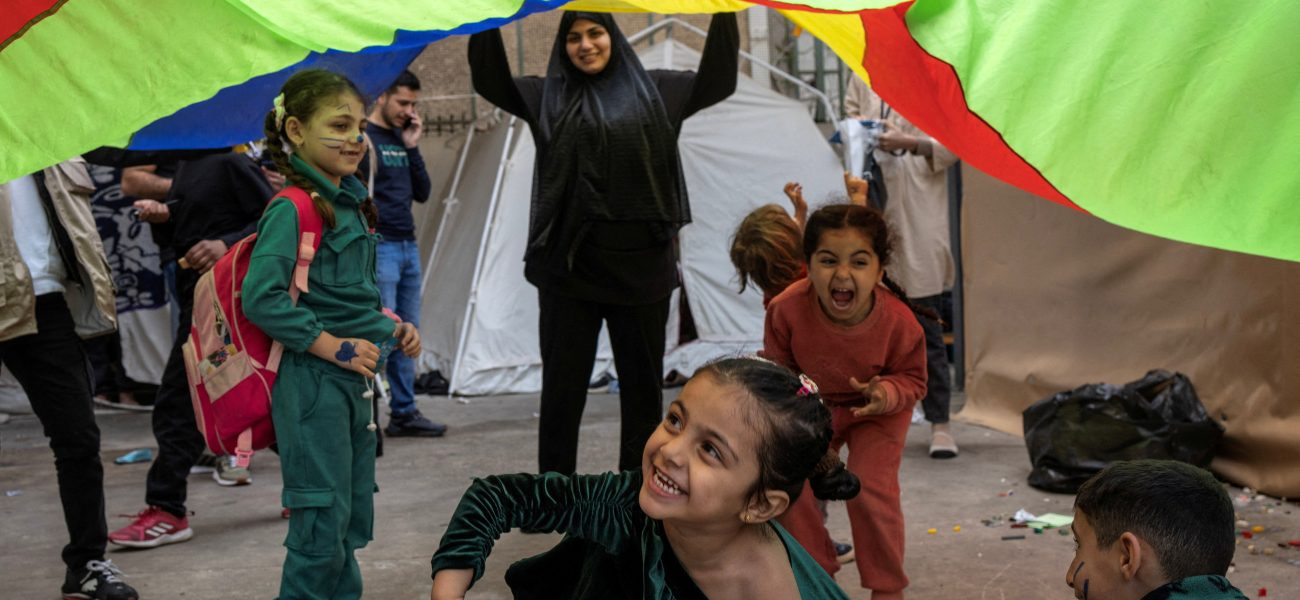
POLICY WIRE — Beirut, Lebanon — It isn’t the explosion that marks the end; it’s the quiet. The sudden, eerie silence in schoolyards once buzzing with children’s shouts, now only punctuated by the distant rumble of artillery, a constant, low-frequency hum of a world tearing itself apart. For Lebanon’s children, particularly those nestled perilously close to the Blue Line, formal education isn’t just disrupted—it’s steadily eroding, brick by dusty brick.
Because the cross-border skirmishes—what Israel terms a ‘defensive posture’ and many Lebanese call an open wound—aren’t merely about strategic objectives or contested territories anymore. They’re about something far more insidious: a slow-motion unraveling of childhood, a systematic forfeiture of potential. Education, that great equalizer, that universal passport to a better life, is quickly becoming a privilege only for those who can flee.
“We’re not just losing textbooks; we’re losing futures,” stated Lebanese Education Minister, Dr. Abbas Halabi, his voice heavy during a recent, sparsely attended press conference in Beirut. “The international community, it’s gotta wake up before this generation is irretrievably damaged. We’re staring down an economic collapse compounded by an educational vacuum.” His plea, like so many before it, seems to have fallen largely on deaf ears, or perhaps ears too preoccupied with their own security paradigms.
And security, of course, is what Jerusalem prioritizes. “Our defensive postures, they’re non-negotiable,” an Israeli Foreign Ministry spokesperson, Eylon Levy, remarked to this wire service, speaking anonymously as per protocol. “While we regret civilian hardship, regional stability demands firmness against aggression.” A convenient euphemism, some might say, for the kind of actions that leave entire school systems in tatters.
Take, for instance, the southern districts. Before the current flare-up, these areas housed hundreds of thousands of children in primary — and secondary education. Now? An estimated 75,000 children are out of school in the south, according to UNICEF data from late 2023, displaced by hostilities and with little prospect of returning to functional classrooms. Many of them haven’t seen a teacher’s face in person for months, learning — if they’re learning at all — from patchy online resources or through aid efforts trying to salvage what they can from the ruins of normality. It’s a triage operation for an entire generation.
📄 POLICY WIRE WHITEPAPER PUBLISHED: PAKISTAN'S NATIONAL SECURITY POLICY PRIORITIES
👉 READ BY CLICKING HEREBut the damage isn’t contained to the immediate conflict zone. It radiates, like a fever through a struggling economy. Lebanon, you see, it’s already grappling with a financial meltdown—its currency has shed over 90% of its value since 2019, turning even the price of a pencil into a luxury. Parents, when they can find work, they’re battling hyperinflation just to put food on the table. School fees, transportation, even adequate lighting for homework; these become monumental obstacles. This financial decay fuels a stark economic disparity, cementing inequalities before children even learn basic arithmetic.
This educational abyss, it isn’t a unique phenomenon in the Muslim world. Across South Asia, countries like Pakistan frequently contend with their own challenges—geopolitical tensions, poverty, and internal conflicts often hobbling their educational infrastructure. Pakistan, for instance, continues to face difficulties enrolling and retaining millions of children, especially girls, in formal education, often due to security concerns or economic pressures. Lebanon’s situation now, it’s a grim mirror, showing how quickly external pressures can dismantle even relatively robust systems. The flight of skilled educators, a creeping brain drain, it’s a symptom these nations share, each bleed leaving an intellectual void.
What This Means
The long-term implications for Lebanon are grim, — and they won’t respect borders. A generation denied adequate schooling—they’re not simply falling behind; they’re becoming unemployable, disaffected, and tragically, more vulnerable to radicalization or recruitment by militant groups that often step into state vacuums with promises of stability, however illusory. You know the narrative. This educational crisis isn’t just an academic problem; it’s a national security nightmare, a human catastrophe unfolding in agonizing slow motion. It intensifies the already palpable sense of desperation, exacerbating the price of fear that pervades daily life. We’re talking about a country being stripped of its future, one classroom at a time. The echoes from empty school halls? They won’t just be a reminder of lost potential; they’ll be a silent scream, a harbinger of deeper instability for the entire volatile region.