

The Enduring Thorn: Pakistan’s Reluctant Entanglement with Afghanistan in the Post-US Withdrawal Era
In the annals of geopolitics, few relationships embody the inexorable pull of geography as profoundly as that between Pakistan and Afghanistan. Since the Soviet invasion of 1979, Pakistan has...

In the annals of geopolitics, few relationships embody the inexorable pull of geography as profoundly as that between Pakistan and Afghanistan. Since the Soviet invasion of 1979, Pakistan has endeavored to maintain a cautious distance from its tumultuous western neighbor, yet the inexhaustible currents of history and proximity have inexorably drawn the nation back into the fray. As the poet Allama Iqbal once mused in his reflections on national destiny, “The caravan of life halts not for the weary traveler,” a sentiment that resonates with Pakistan’s perennial predicament: a nation striving for sovereignty amid the shadows of an unruly borderland. Afghanistan, that congeries of tribes ensconced in rugged terrains, has long defied the Weberian archetype of a modern state lacking a monopoly on violence, centralized authority, or cohesive national identity. Through centuries, from the Durrani Empire’s fragile confederations in the 18th century to the fractious monarchies of the 20th, Afghanistan has persisted as a mosaic of tribal allegiances rather than a unified polity. Historians like Louis Dupree in Afghanistan (1973) describe it as “a land of tribes, not a nation-state,” where loyalties to clan and qawm eclipse state institutions, perpetuating cycles of fragmentation that no imperial or modern overlay has fully subdued. This enduring tribal essence, impervious to colonial demarcations like the Durand Line, has rendered Afghanistan a perpetual source of instability, compelling Pakistan’s involvement despite ardent desires for detachment, primarily due to the unyielding dictates of shared geography.
The Soviet incursion marked a pivotal escalation in Pakistan’s reluctant immersion. In 80s, Pakistan became the conduit for Mujahideen resistance, channeling American arms to repel the Red Army. This Afghan war, while victorious, sowed seeds of militancy that would haunt the borders for decades. As historian Ahmed Rashid elucidates in Taliban: Militant Islam, Oil and Fundamentalism in Central Asia (2000), “Pakistan’s involvement in Afghanistan was not a choice but a necessity imposed by superpower rivalry,” a necessity that birthed the very extremists now plaguing the frontiers. Post-Soviet withdrawal in 1989, Pakistan sought disengagement, focusing inward on economic reforms and domestic stability. Yet, the civil war that ensued in Afghanistan spilt over, flooding Pakistan with refugees and narcotics, binding the two in an unwelcome embrace dictated by contiguous borders and porous mountain passes.
Geography’s tyranny has been the unrelenting force pulling Pakistan into Afghan affairs. Sharing over 2,600 kilometers of frontier, Pakistan cannot escape the ripple effects of Afghan instability. Tribal affinities across the Pashtun belt blur national boundaries, turning kinship into a conduit for conflict. Efforts to erect border fences and implement biometric controls since the mid-2010s reflect Pakistan’s attempts to insulate itself, yet cross-border movements, licit and illicit, persist, underscoring the futility of defying topographic realities. As geostrategist Halford Mackinder warned in his heartland theory, control over peripheral lands is often imposed upon proximate powers, a principle that has ensnared Pakistan repeatedly.
The 9/11 cataclysm reignited this cycle. Aligning with the US-led coalition, Pakistan facilitated the ousting of the Taliban, only to face accusations of duplicity as remnants sought sanctuary in tribal areas. For two decades, Pakistan balanced precarious alliances, enduring drone strikes and economic sanctions while combating homegrown insurgents. The US withdrawal in August 2021, culminating in the Taliban’s reconquest of Kabul, further exposed Afghanistan’s inherent fragility as a state and reinforced Pakistan’s geographical vulnerabilities, drawing it deeper into cross-border security dilemmas.
Scholars have long critiqued Afghanistan’s failure to embody modern statehood. As articulated in the Fund for Peace’s Fragile States Index, Afghanistan ranks perennially among the world’s most fragile entities, beset by factionalism and absent governance structures. Max Weber’s definition of a state, an entity wielding legitimate monopoly over force within defined territories, eludes Afghanistan, where tribal jirgas and warlords supplant formal institutions. In The Failure of the Failed States Index by Beehner and Young (2012), Afghanistan exemplifies a “tribal society masquerading as a nation-state,” its Pashtunwali code overriding constitutional norms. This tribal ethos, romanticized in Kipling’s tales of the Great Game, manifests today in the Taliban’s decentralized rule, where edicts from Kabul falter against local potentates, spilling instability into Pakistan via shared ethnic corridors.
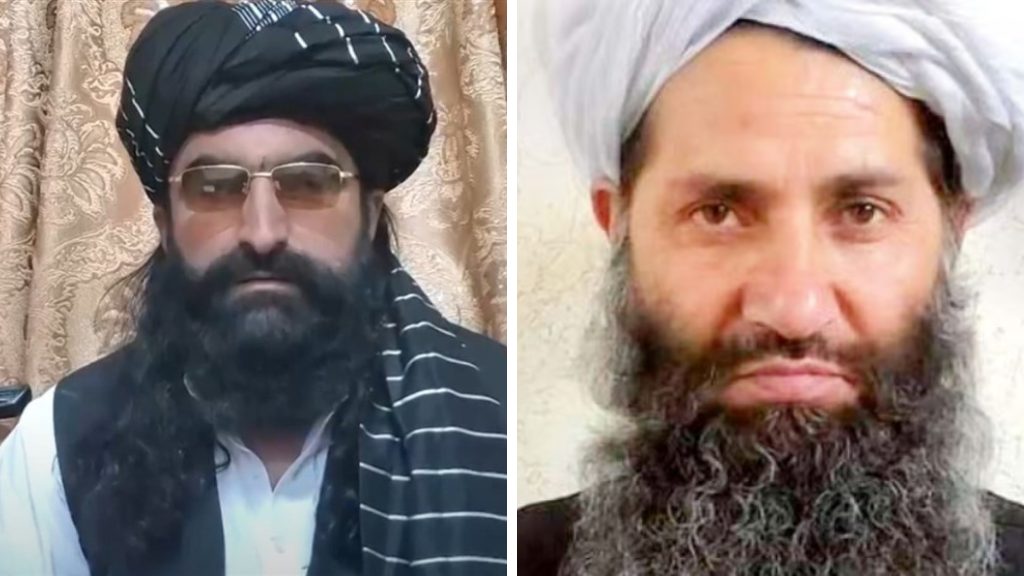
In the post-withdrawal era, this structural infirmity has intensified bilateral strains, with geography amplifying every tremor into a crisis. The resurgence of the Tehreek-e-Taliban Pakistan (TTP), harbored in Afghan sanctuaries, has unleashed a relentless wave of cross-border terrorism, marking a low-intensity conflict that shows no signs of abating. A 2024 UN report estimated 6,000-6,500 TTP fighters in Afghanistan, armed with abandoned NATO weaponry, but by early 2025, attacks had escalated, prompting Pakistani airstrikes in March that killed 16 militants amid rising border tensions. Islamabad accused (with proof) the Afghan Taliban of sponsoring and harboring these groups, leading to retaliatory threats and civilian casualty claims from Kabul. As of September 2025, Pakistani envoys at a UN Security Council meeting on terrorism voiced ongoing concerns over terrorists operating from Afghan soil, dismissing Taliban rebuttals as unfounded and highlighting TTP as a major irritant in relations. Incidents like the January 2025 wave of airstrikes and subsequent TTP raids have exacerbated the situation, with Pakistan’s security forces committed to eliminating the menace while enduring reasonable fatalities from terrorism since 2021.
From a Pakistani vantage, these provocations stem from Afghanistan’s inability to govern its peripheries, transforming shared geography into a liability. Prime Minister Shehbaz Sharif, addressing the UN General Assembly, decried “the threat posed by major terrorist groups operating from Afghanistan, especially… TTP,” urging global intervention. Previous Foreign Minister Bilawal Bhutto Zardari echoed this, insisting Pakistan “does not want to take a solo flight” in recognizing the Taliban sans progress on counterterrorism. Border disputes over the Durand Line, unrecognized by Kabul, have fueled clashes, with previous Interior Minister Rana Sanaullah warning that TTP involvement in attacks “should be a matter of concern for the Taliban.” Despite repeated diplomatic overtures to foster distance through managed borders, geographic imperatives demand vigilance and occasional intervention, as seen in the enduring “borderland struggles” that have increased domestic terrorism in Pakistan.
Economic imperatives further ensnare Pakistan, as landlocked Afghanistan relies on Pakistani ports and routes, intertwining fates. Instability has begotten refugee influxes over 1.3 million since 2021, with recent deportations straining ties further while trade via Chaman and Torkham suffers intermittent closures amid skirmishes. Yet, glimmers of pragmatism emerge. In literary terms, Afghanistan remains Pakistan’s Sisyphean boulder, eternally rolling back due to mountainous proximities despite Herculean efforts to ascend. As analyst Mustafa Hyder Sayed observes, militant networks pose a “shared threat,” necessitating Afghan action beyond rhetoric. Pakistan’s Operation Azm-e-Istehkam, launched in 2024 and intensified in 2025, exemplifies the resolve to sever this Gordian knot unilaterally if needed, yet geography ensures no complete severance.
In 2025, Pakistan’s Operations have intensified against Fitna al Khawarij (TTP) and Fitna al-Hindustan, targeting Indian-backed proxy networks fueling terrorism in Khyber Pakhtunkhwa and Balochistan. Over 200 militants, including 33 TTP fighters in August and 14 Indian-sponsored operatives in Zhob, were neutralized, with intelligence revealing India’s use of Afghan safe havens to arm TTP and BLA, claiming a large number of Pakistani lives since 2021. Lt Gen Ahmed Sharif Chaudhry condemned “India’s organized conspiracy to destabilize Pakistan,” citing recovered foreign weaponry as evidence. Afghanistan’s failure as a modern state, lacking centralized control, enables its territory and people to be exploited by external actors like India against Pakistan’s security.
Ultimately, Pakistan’s policy oscillates between engagement and estrangement, dictated by the immutable logic of contiguity. To paraphrase Clausewitz, war and by extension, relations is the continuation of politics by other means, but in this theater, politics itself is tribal alchemy shaped by terrain. Until Afghanistan transcends its congenital frailties, embodying a modern state in deed rather than decree, Pakistan remains ensnared in this quagmire, a thorn that pricks yet cannot be excised without geographic reconfiguration; an impossibility. The path forward demands multilateral diplomacy, as evinced by Beijing’s brokerage, to forge stability from chaos, allowing Pakistan to mitigate, if not escape, the burdens of its western flank.
Author