

Luxury Cruise, Ominous Cargo: French Hantavirus Scare Exposes Thin Veil of Global Health Security
POLICY WIRE — Marseille, France — It was supposed to be another gilded escape, sun-drenched days adrift on azure waters. Instead, a recent passenger’s diagnostic revelation has thrown a cold spray...

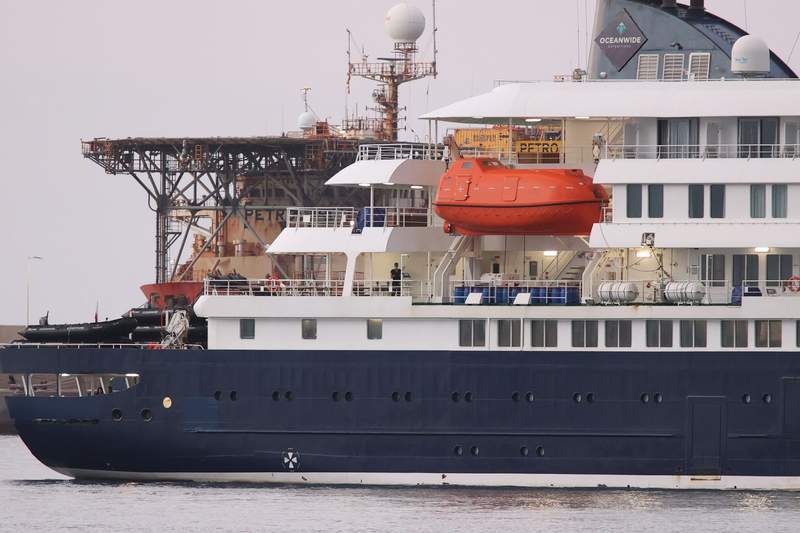
POLICY WIRE — Marseille, France — It was supposed to be another gilded escape, sun-drenched days adrift on azure waters. Instead, a recent passenger’s diagnostic revelation has thrown a cold spray across the usually placid veneer of maritime travel. The cruise ship, docked now with its human cargo mostly dispersed, became an unlikely stage for a quiet, persistent worry: infectious disease, showing up where you least expect it. No, we’re not talking about some exotic, bio-engineered pathogen cooked up in a lab, but good old hantavirus. Rodent-borne. Simple stuff, really, yet its appearance on a vessel, and in a Western European port city, has public health officials in France—and a few other places, too—itching.
One poor soul, reportedly French, stepped off that boat only to discover they’d picked up an uninvited hitchhiker, a hantavirus infection. Details are scant, deliberately so, presumably to avoid a full-blown public frenzy. But this isn’t just about one person or one ship. It’s about a fragile equilibrium. We’re in a world where a sneeze in Wuhan can ground flights in London. And now, a microscopic pathogen, usually associated with wild mice — and rural environs, has gone yachting. It certainly raises eyebrows (and some alarm bells, frankly) when something so localized surfaces within the globalized arteries of leisure and commerce.
“We’ve initiated standard tracing protocols; the public shouldn’t assume contagion is running rampant,” stated Dr. Jeanne Dubois, Director of Infectious Diseases at the French Ministry of Health, in a surprisingly candid exchange yesterday. She added, rather pointedly, “But this isn’t a situation where complacency is advised, either. It’s a perpetual dance with these things.” Indeed, it’s. A very awkward dance.
But what does this kind of scare really mean? For starters, it’s a pain for everyone involved, especially for the hundreds of other passengers who now get the dubious honor of being on a contact list. It’s also a low-key gut punch to the beleaguered tourism industry, perpetually clawing its way back from the brink. “France remains an open, safe destination, a magnet for global visitors,” insisted Monsieur Laurent Fouché, spokesperson for the National Tourism Office, his voice carrying the weary weight of someone who’s had to say this exact thing, with minor variations, far too many times already. And who can blame him? These incidents, however isolated, cast shadows. It’s the cost of hyper-connectivity; the good, the bad, — and the distinctly rodent-borne.
Consider the far-reaching economic ripples. A health alert in Marseille won’t directly empty souqs in Marrakech or silence the hawkers of Lahore. But it’s part of a larger, interconnected health calculus. Imagine if such an incident had been identified, say, on a container ship from Karachi bound for Rotterdam—a less glamorous, but far more economically critical, vector. The virus’s echoes ripple far beyond the immediate disembarkation point. The flow of goods, and the people who facilitate it, are the same arteries that carry potential contagion. Global health preparedness isn’t just for pandemics; it’s for the everyday, localized, and easily overlooked threats, too.
📄 POLICY WIRE WHITEPAPER PUBLISHED: PAKISTAN'S NATIONAL SECURITY POLICY PRIORITIES
👉 READ BY CLICKING HEREThis little episode throws into sharp relief the differing realities of public health infrastructure around the world. A diagnosis of hantavirus in France means robust tracing — and containment. What if a similar scenario unfolds in a port city within, say, Bangladesh, where medical resources aren’t exactly abundant? The stakes would be dramatically higher. A study published in the journal PLOS Neglected Tropical Diseases, in 2021, highlighted how rodent-borne diseases, though often geographically specific, have an increasing capacity to ‘travel’ due to globalization, especially in regions with burgeoning populations and close human-animal interfaces. The median case fatality rate for hantavirus pulmonary syndrome (HPS), for instance, sits at a chilling 38%, underscoring the severity, despite its rarity.
What This Means
This particular hantavirus case, while certainly not catastrophic on its own, is a fresh reminder of global vulnerability. Politically, it forces governments, especially those reliant on travel and trade, to constantly refine border health controls. And it’s not cheap. The mere suspicion of illness on an incoming vessel can trigger logistical nightmares and impose hefty financial burdens on port authorities and shipping companies. Economically, even minor health scares contribute to a general atmosphere of uncertainty, prompting wary travelers to think twice about cruises or international travel in general. It also puts pressure on pharmaceutical companies and research institutions; this is their never-ending arms race against evolving pathogens, even the ancient ones.
The geopolitical angle here? It’s subtle. Because health events often expose fault lines in international cooperation. We saw it during the COVID mess, right? Countries closing borders without coordination, hoarding supplies. A hantavirus case in France isn’t going to start a diplomatic spat with Pakistan, for example, but it feeds into the same overall narrative of fragmented global responses to shared biological threats. Every little incident, even one with a modest profile, serves as a dress rehearsal for something bigger, demanding constant vigilance from Brussels to Cairo. It’s a lot to consider over a croissant, but then again, that’s life in the perpetual flux of global policy.