

Bagram Air Base Standoff: Implications for Peace and Cooperation in the Region
The recent exchange of statements between the United States and the Taliban-led government in Afghanistan over the future of Bagram Air Base has escalated tensions, highlighting persistent frictions...

The recent exchange of statements between the United States and the Taliban-led government in Afghanistan over the future of Bagram Air Base has escalated tensions, highlighting persistent frictions in bilateral relations. On September 20, 2025, U.S. President Donald Trump posted on Truth Social, stating, “If Afghanistan doesn’t give Bagram Airbase back to those that built it, the United States of America, BAD THINGS ARE GOING TO HAPPEN.” Speaking to reporters at the White House on the same day, Trump elaborated, “We’re talking now to Afghanistan and we want it back and we want it back soon, right away. And if they don’t do it, if they don’t do it, you’re going to find out what I’m gonna do.” Earlier, during a state visit to the United Kingdom on September 19, 2025, Trump underscored the base’s strategic value, noting, “We want that base back. But one of the reasons we want the base is, as you know, it’s an hour away from where China makes its nuclear weapons.”
In response, on September 21, 2025, Taliban officials firmly rejected the demands, emphasizing Afghan sovereignty. Fasihuddin Fitrat, Chief of Staff at the Ministry of Defense, declared, “Recently, some voices claim that we are in talks with the Islamic Emirate of Afghanistan to negotiate the return of Bagram Airfield… We assure the people of Afghanistan that no agreement over even an inch of our soil is possible.” Foreign Ministry official Zakir Jalaly added, “Afghans have never accepted foreign military presence in their land throughout history,” while advocating for economic and political ties based on mutual respect. The Afghan government collectively affirmed, “Afghanistan’s independence and territorial integrity are of the utmost importance,” urging the U.S. to pursue “a policy of realism and rationality” rather than coercive measures. These statements reflect a deepening impasse, with no immediate resolution in sight.
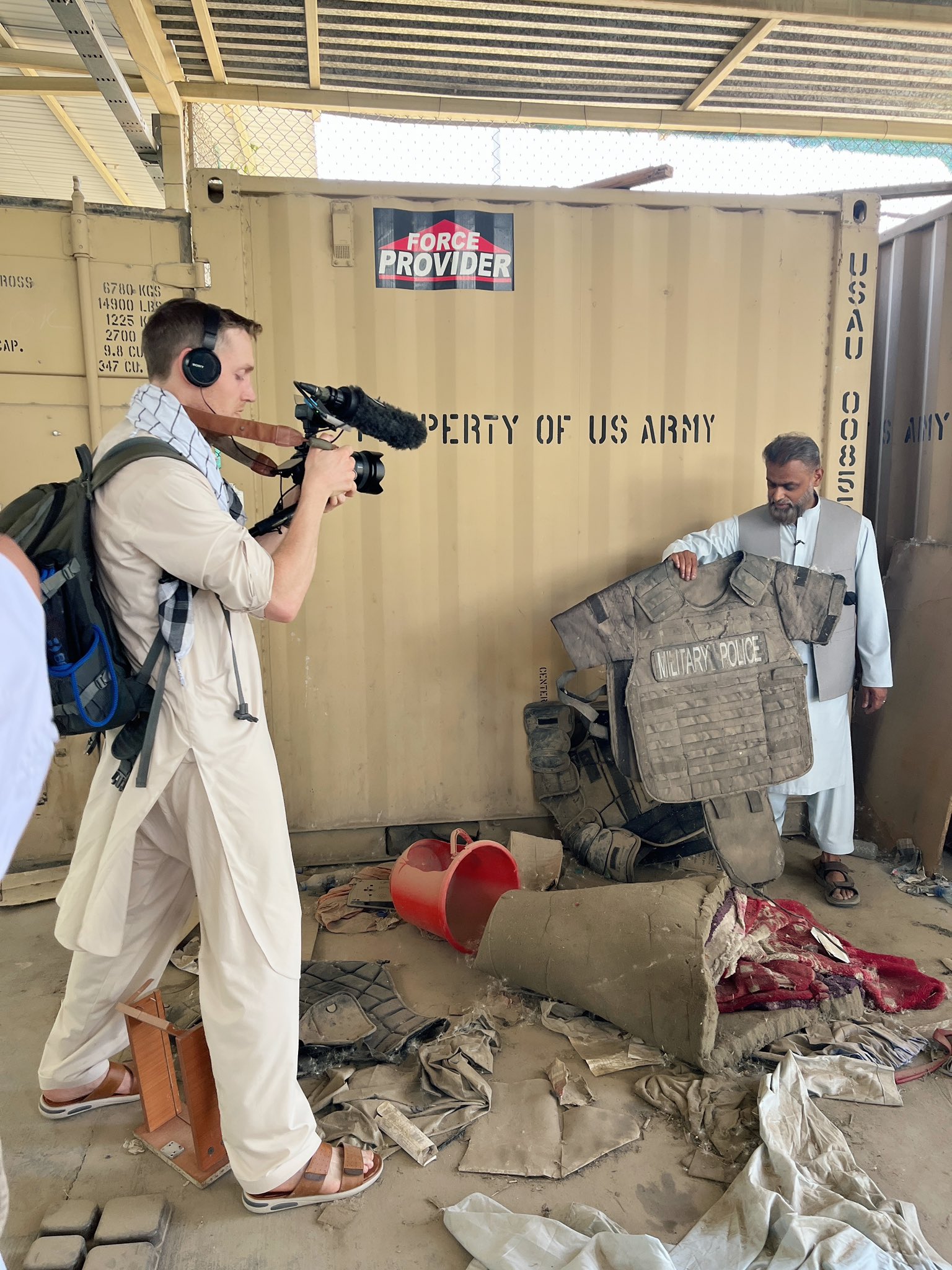
The history of Bagram Air Base traces back to the mid-20th century, when it was constructed by the Soviet Union in the 1950s as a key airfield. It became a central hub during the Soviet occupation of Afghanistan in the 1980s, serving as the primary base for their military operations. Following the Soviet withdrawal, the facility lay largely dormant until the U.S.-led invasion in 2001, when American forces repurposed it as the linchpin of their presence in the country. Over the next two decades, Bagram evolved into the largest U.S. military installation in Afghanistan, housing up to 40,000 troops at its peak, facilitating logistics, air operations, and even functioning as a detention center for terrorism suspects in its early years. The base was abruptly evacuated by U.S. forces in July 2021 amid the chaotic withdrawal, falling under Taliban control shortly thereafter, a move that symbolized the end of America’s longest war.
For the United States, Bagram holds enduring strategic value that extends beyond its Afghan footprint. Its location, roughly 40 miles north of Kabul and in close proximity to Central Asia, positions it as an ideal launchpad for regional operations, including counterterrorism efforts against groups like al-Qaeda and ISIS-K. More critically, as Trump highlighted, the base offers unparalleled oversight of China’s western frontier, including nuclear facilities in Xinjiang province, just an hour’s flight away. Regaining control could enhance U.S. intelligence gathering, rapid response capabilities, and deterrence against emerging threats in a volatile neighborhood, without relying on less stable host nations like Pakistan or Tajikistan. In an era of great-power competition, Bagram represents a rare asset for projecting influence in South and Central Asia.
From the Taliban’s perspective, relinquishing Bagram is untenable for several intertwined reasons rooted in sovereignty, ideology, and pragmatism. The base embodies their hard-won victory after two decades of resistance, and ceding it would undermine their legitimacy as rulers, potentially fracturing internal cohesion amid economic hardships and rival insurgencies. The 2020 Doha Agreement, which facilitated the U.S. withdrawal, explicitly bars foreign military bases on Afghan soil, making any handover a violation of that pact and a concession to perceived American overreach. Moreover, the Taliban views foreign military presence as a historical affront, echoing Soviet and prior occupations, and fears it could invite renewed instability or serve as a pretext for intervention. With Afghanistan already grappling with humanitarian crises and isolation, trading territory for aid risks portraying the regime as weak, alienating hardliners and eroding public support.
This standoff over Bagram portends broader chaos for Afghanistan’s neighbors, jeopardizing fragile prospects for regional peace and cooperation. Heightened U.S.-Taliban friction could exacerbate cross-border militancy, spilling violence into Pakistan through intensified ISIS-K activities or Taliban infighting, while straining already tense relations with Iran over refugee flows and water disputes. China, invested in Afghan minerals and Belt and Road connectivity, faces risks to its security interests if the base becomes a flashpoint, potentially disrupting economic corridors and prompting Beijing to bolster its own military footprint. Central Asian states like Tajikistan and Uzbekistan, wary of extremism, might see refugee surges and arms trafficking intensify, undermining multilateral forums like the Shanghai Cooperation Organization. Without diplomatic off-ramps, the impasse risks entrenching isolation, perpetuating cycles of instability that hinder collective efforts toward security and development in the region
Author